We use Google Cloud Translation Services. Google requires we provide the following disclaimer relating to use of this service:
This service may contain translations powered by Google. Google disclaims all warranties related to the translations, expressed or implied, including any warranties of accuracy, reliability, and any implied warranties of merchantability, fitness for a particular purpose, and noninfringement.
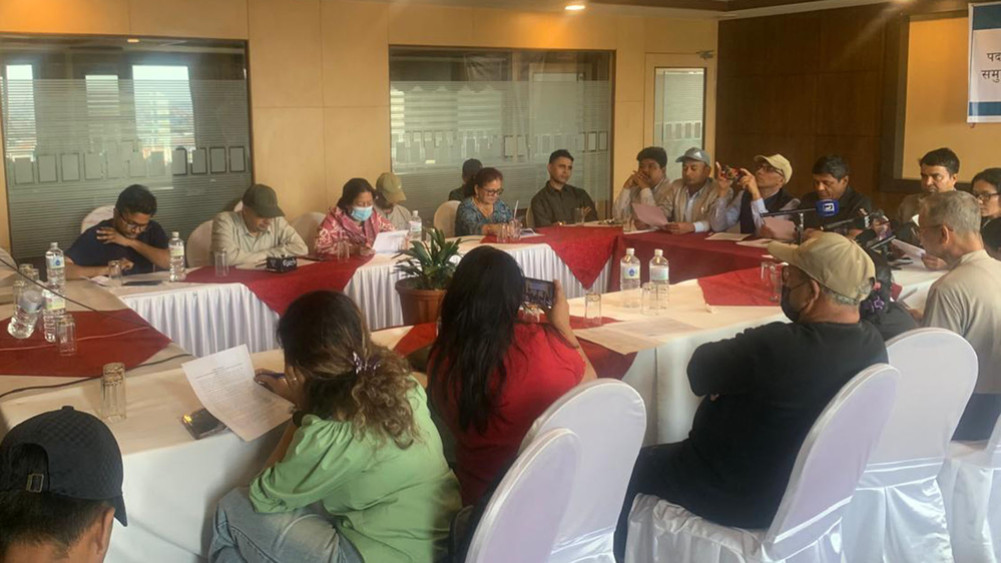
The conflict-affected community has expressed serious disagreement and objection to the recent appointment of officials in the Commissions on Transitional Justice, the Truth and Reconciliation Commission and the Commission of Inquiry into Disappeared Persons. The community, including the conflict-affected Sajah Chowtari, has issued a seven-point opinion on Friday, strongly protesting the appointment process as opaque, arbitrary, and based on party divisions.
They have held that this process of forming a commission based on party divisions has insulted the victim community and violated the spirit of the constitution.
People who have not done any work in the field of transitional justice and have no information have been protesting at various stages since they found out that the three major parties are going to appoint their representatives to the Truth and Reconciliation Commission and the Investigation Commission of Disappeared Persons.
According to the recommendation date made in conjunction with former Chief Justice Omprakash Mishra, the Council of Ministers formed a commission under the leadership of former Chief Secretary Leela Gadtaula, former Acting Attorney General Mahesh Thapa Bepatta Commission, and former Acting Attorney General Mahesh Thapa Bepatta Commission, as per the recommendations of five people including the chairperson in both the commissions last Monday.
They conclude that this appointment is 'opaque, arbitrary, unreliable, directed, and based on party divisions'. They demand that this appointment process should be corrected as it undermines the main purpose of transitional justice.
Calling the appointment process without meaningful consultation, participation, and representation as completely unacceptable, they said that they are not looking for "observance or ritual reconciliation from the government, but instead want a dignified and lasting solution to transitional justice."
They believe that the intolerant behavior of the government and the selection committee has not only humiliated them but also insulted the preamble of the Constitution of Nepal.
Although the preamble of the constitution highly respects the sacrifices and contributions of the conflict-affected community, they claim that this appointment process has violated it. On December 18, 2070, the Supreme Court ordered the meaningful participation of the victim community in the transitional justice process and the formation of an independent commission, but the government did not comply with the order, and the victims claimed that the court was also referred to the court.
The conflict-affected community, through a press statement on 6 Baisakh, 2082, demanded to adopt a credible, transparent, and consultative selection process and to publicize the criteria, basis, and process of the short list. They also recommended listing people who are capable and trusted by the society. However, they have expressed anger that the government and the selection committee have completely ignored these demands and proceeded with an opaque and mechanical process. The entire conflict-affected community has started a movement against this kind of behavior and it is their stand that they will continue protesting until a transparent appointment is made.
The victim community has said that their movement will be decisive for the respectable practice of the right to truth, justice, and reparation. They have also appealed to the common citizens, human rights organizations, people's representatives, international community, and UN agencies for their support in this movement. They call on everyone to take interest in transitional justice not only for the victims but also as the foundation of lasting peace and prosperity in the country.
The conflict-affected community has also called upon the people who have been recommended by the selection committee to give up their desire for jobs and refuse the appointment. They said that people who understand that the key to the success of the transitional justice process is the ownership and trust of the victim community should show solidarity with the victim. They believe that this move will create pressure to improve the process by raising questions on the legitimacy of the appointment.