We use Google Cloud Translation Services. Google requires we provide the following disclaimer relating to use of this service:
This service may contain translations powered by Google. Google disclaims all warranties related to the translations, expressed or implied, including any warranties of accuracy, reliability, and any implied warranties of merchantability, fitness for a particular purpose, and noninfringement.
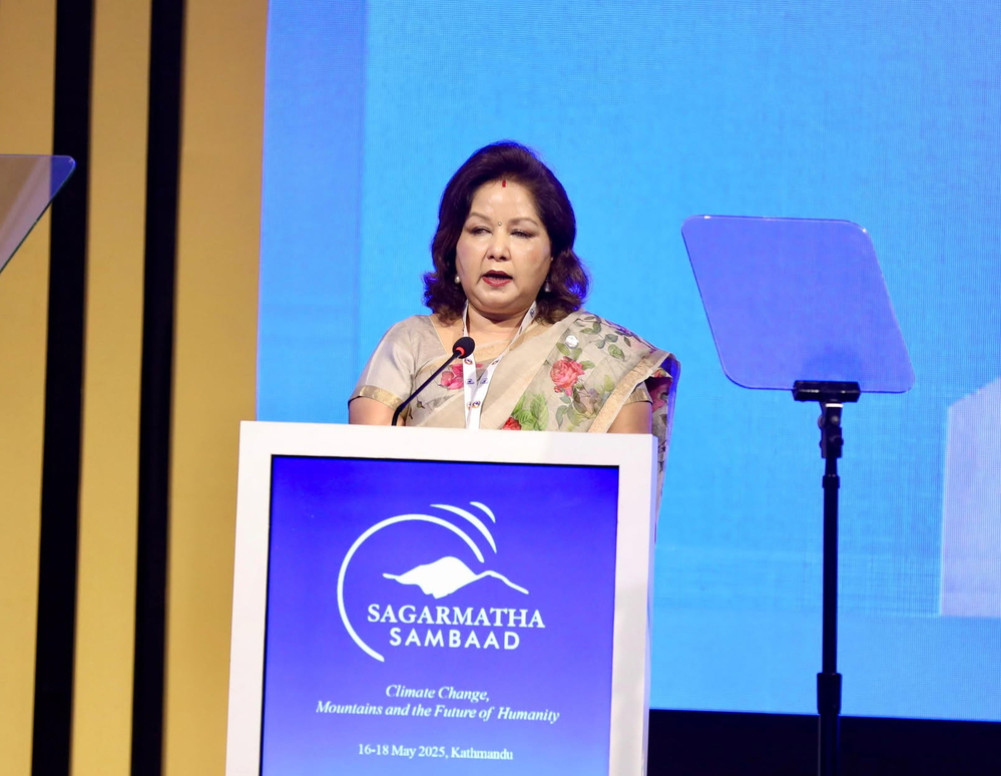
Foreign Minister Arju Rana Deuba said that the mountains are the common resource of the human race. In the inaugural session of the 'Sagarmata Dialogue' held on the topic of 'Climate Change, Mountains and the Future of Mankind', Minister Rana said that the mountains are the source of fresh water for millions of people.
Saying that the Himalayas are bearing the brunt of climate-induced disruption today, he She said that due to the effects of the glacial climate, the process of melting has increased rapidly. Because of this, in the daily life of the Himalayan community, She said it is having a negative impact.
'Climate-induced disasters are shaking the foundation of human existence and livelihood,' she said, 'Due to climate change, floods and glacier explosions have caused great destruction. Drought and fire have caused immense pain to humans.'
Minister Rana said that this dialogue is an attempt to provide an opportunity for reflection and introspection and to prevent climate disasters from the mountains to the sea and from the northern to the southern hemisphere. He informed that Nepal, a country with a fragile mountain ecosystem, is suffering from climate change. 'As conscious guardians of our rivers, forests and mountains, we are contributing more than we can to the health of the earth. However, we are forced to face the heavy and disproportionate burden of the negative effects of climate change,' she said.
There are incredible examples of local communities fighting hard against climate change, she said, recognizing and valuing their local knowledge and lived experience, and emphasizing on being adaptive.
Nepal has committed to achieve the goal of zero greenhouse gas emissions by 2045. Hydropower, a clean form of energy, has become Nepal's largest source of electricity. According to Minister Rana, Nepal's pioneering natural resource management program, Community Forestry, has not only helped Nepal significantly increase its forest area, but has also emerged as a model of participatory conservation worldwide.