We use Google Cloud Translation Services. Google requires we provide the following disclaimer relating to use of this service:
This service may contain translations powered by Google. Google disclaims all warranties related to the translations, expressed or implied, including any warranties of accuracy, reliability, and any implied warranties of merchantability, fitness for a particular purpose, and noninfringement.
28-year-old Raj Ghimire from Vanasthali had symptoms of fever, body ache, cough, sore throat and sluggishness. Although he recovered after two weeks of rest at home, he still has a mild cough.
Sanu Khadka from Bhaktapur felt this year's flu hard. He said that for the first time he had to face the problem of persistent cough for a long time. 'The cough has been going on for a very long time. I could not raise my head for a week. Life has become lazy and very weak', said Khadka.
Not only them, this time most of them are complaining that they have to face the same problem. Dr. Naveen Kumar Mishra, a chest and asthma specialist, also said that even after the flu season is over, flu with prolonged symptoms is still appearing. In general, the flu is more common in Nepal during January-March and July-September, but this time it was much longer.
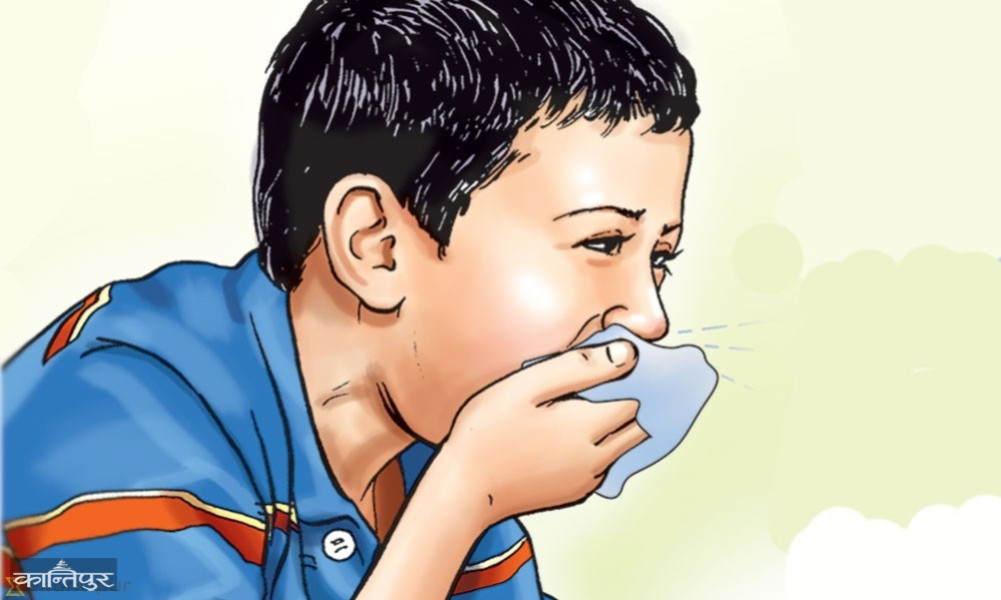
According to Dr. Mishra, the symptoms of seasonal cold usually disappear within a week, but for some, it can cause complicated problems. With the change of weather, flu patients have started to appear. Many have severe symptoms. Especially the problem of coughing for a long time has been observed. Symptoms may include sudden onset of fever, dry cough, headache, muscle pain, feeling unwell, sore throat, runny nose, etc. A flu-like cough can be severe and last for two weeks or more.
Infectious disease specialist Dr. Sher Bahadur Pun said that as it causes infection in the respiratory system, the victim may also be at risk of viral or bacterial pneumonia (lung infection) and other infections. Shukraraj Tropical and Communicable Disease Hospital Research Unit Coordinator said that currently many patients are coming with the problem of holding cough for a long time. Pun said, 'Flu causes pain for a long time. In general, the flu, which usually lasts for a week or 10 days, seems to be prolonged for a few more weeks. A cough that lasts for weeks is called 'post viral cough'.
He said that the symptom of not being able to recognize the smell and taste of covid is also seen in the flu, so it can be estimated that it could be a 'sub-variant' of covid. Infectious disease expert Dr. Pun said that climate change and air pollution also increase the risk of flu.
'Hong Kong flu has recently been observed. Children, senior citizens, and chronic patients are more at risk. It is necessary to be more cautious because it is possible to stay in the doctor's consultation and if the condition is serious, it is necessary to be more careful, he says, wearing a mask, paying attention to hygiene, being careful of infected people, and taking enough rest if the infection is seen. It is better to get vaccinated against the flu.'
According to the World Health Organization (WHO), there are four types of seasonal cold viruses, namely 'A', 'B', 'C' and 'D', but mainly in epidemics, 'A' and 'B' viruses are more prevalent. According to WHO, 300,000 to 500,000 cases of seasonal flu are diagnosed worldwide every year. Statistics show that among them, 290,000 to 650,000 people died due to respiratory complications.
Although the vaccine does not provide 100% protection, it helps to prevent complications and hospitalization. According to doctors, symptoms of influenza usually start two days after being infected by a person with the virus. People at high risk may have serious problems, hospitalization and even death.
Dr. Mishra, who is also the head of respiratory diseases department of Kathmandu Medical College, said that there is a risk of flu in patients with asthma, children under five years old and people over 60 years old, who have less ability to fight the disease. He says, 'Symptoms are getting worse, if there is a decrease in oxygen You should see a doctor immediately. If the symptoms are normal, rest and recovery. You should eat a lot of relaxing, soft foods. Most of them disappear by themselves.' In case of
complications, pneumonia, heart rhythm disturbances, and blood infection may also occur, so he suggests that high caution should be taken.