”Any decision made by the Council of Ministers is policy-based and the legal system that the authority cannot investigate such decisions has raised questions about the good governance of the country.”
We use Google Cloud Translation Services. Google requires we provide the following disclaimer relating to use of this service:
This service may contain translations powered by Google. Google disclaims all warranties related to the translations, expressed or implied, including any warranties of accuracy, reliability, and any implied warranties of merchantability, fitness for a particular purpose, and noninfringement.
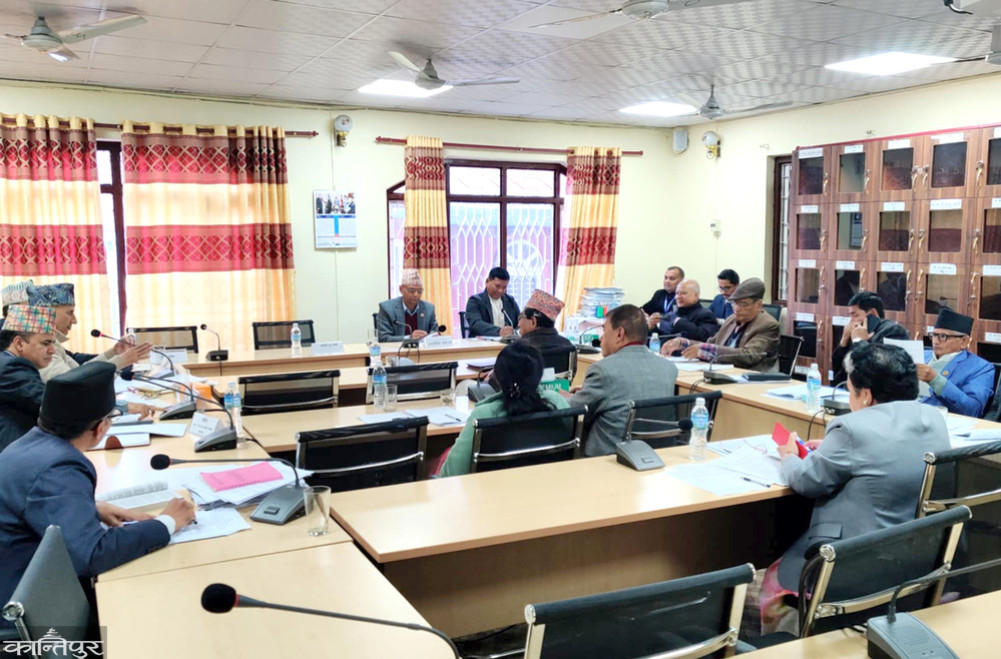
The sub-committee under the State Order and Good Governance Committee of the House of Representatives has passed the 'Abuse of Power Investigation Commission (Third Amendment) Bill' explaining that all the decisions of the Council of Ministers are not political. If the bill is passed by the House through the committee, the way will be opened for the authority to investigate the decisions made by the union and state governments.
In the bill passed by the sub-committee formed by the State Administration Committee chaired by Congress MP Hridayram Thani, it has been explained which decisions of the Council of Ministers are not considered to be policy decisions.
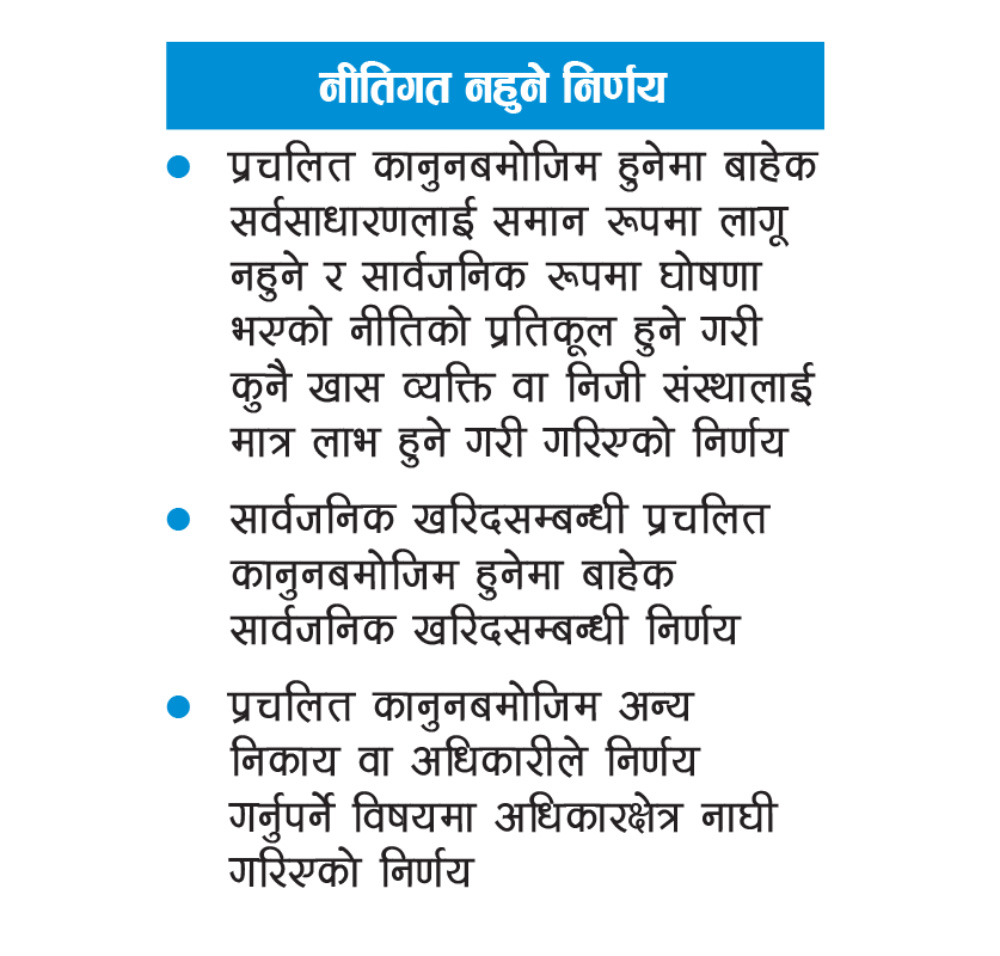
Decisions made to benefit only a specific person or private organization that are not equally applicable to the general public and are contrary to the publicly announced policy, except those in accordance with the prevailing laws, decisions made in relation to public procurement other than those in accordance with the prevailing laws and other bodies in accordance with the prevailing laws It is mentioned in the bill that the jurisdiction is exceeded in the matter that the officer has to decide on.
Earlier, the authority could not investigate any decision of the Council of Ministers. Therefore, the Ministry's Joint Secretary, Secretary or other government officials have a tendency to make a decision from the Council of Ministers to avoid legal action. "Any decision made by the Council of Ministers is a policy decision and the legal system that does not allow the authority to investigate the policy decisions of the Council of Ministers has raised questions about the governance of the country," said Madhav Prasad Paudel, former law minister and legal expert.
Former Minister Paudel says that since the task of questioning the good governance of the country is from the Council of Ministers, there is a need for a legal system that allows the Authority to investigate its decisions.
The decision made by the Council of Ministers has an adverse effect on good governance, so there was a situation where such a system had to be put in place. In the past, questions have been raised publicly because of our cabinet's shortcomings,' he said.
Former Law Minister and UML MP Leelanath Shrestha said that since the Constitution has given executive authority to the Council of Ministers, the law should not bind its hands and feet. The Constitution is the basic law. The Constitution has given the executive authority to the Council of Ministers, it should not be called swimming with hands and feet tied," he said.
A question was raised in the sub-committee meeting that the Prime Minister and Minister who make policy decisions will not be investigated, but the Secretary who takes the proposal will be prosecuted.
According to MPs and legal experts, the rule that the decision of the Council of Ministers will come under the scope of investigation by the authority establishes the belief that the prime minister, ministers and high officials of the government must do the right thing, but the law does not allow wrongdoing.
The sub-committee of the state system also discussed whether the decision made by the provincial council of ministers was policy-based or not. In the end, the sub-committee has arranged that, like the central government, the provincial council of ministers will also be able to make policy decisions except for those matters that are prohibited by the provincial council of ministers.
Ghanshyam Upadhyay, secretary of the authority, said that a law should be made that does not consider the decisions of the provincial council of ministers as policy. "It is better not to consider the decision made by the provincial cabinet as a policy decision," he said.
The parliamentarians said that since the country has gone to federalism and the provincial structure is a key part of the current system, it is not possible to create a law that does not give the right to make policy decisions to the provincial council of ministers. Maoist MP Hitraj Pandey asked the secretaries to clarify what would go wrong if the state government was given the right to take policy decisions.
JSP Nepal MP Prakash Adhikari said that according to the spirit of federalism, the right to take policy decisions on matters within the province should be given to the provincial council of ministers. Phaninder Gautam, Law Secretary of the Prime Minister's Office, argued that good governance in the province is weak and that such authority should not be given as the human resources to distinguish between what is a policy decision and what is not has not been developed.
Since the country has gone to federalism, a sub-committee was prepared on the matter of the provincial council of ministers also having the right to make policy decisions.
The provision of filing a complaint with the Abuse of Authority Investigation Commission without mentioning your name and address will remain unchanged. It has been agreed not to amend the provisions of the Commission for Investigation of Abuse of Authority (Third Amendment) Bill to register complaints without the name and address of the complainant to be registered with the authority. The sub-committee on state administration has decided not to decide on the amendment proposal registered in the bill to remove the current provision of benami complaints.
The amendment to remove the provision of 'Benami' complaints to the authority was proposed by three Congress MPs. Purna Bahadur Tamang, who is currently the Minister of State for Energy, along with Rama Koirala and Sunil Kumar Sharma, had amended the bill saying that there should be a legal provision not to register anonymous complaints with the Authority.
Tamang and Koirala proposed an amendment to provide a provision that the complainant should submit a copy of the citizenship (digital or photocopy) when filing a complaint or petition with the authority. Thani, coordinator of the sub-committee, said that since there is a provision in the House of Representatives rules that the government cannot amend the section that is not open for amendment, the amendment proposal regarding the benami complaint was not submitted for decision.
The sub-committee passed the Commission on Abuse of Authority Act amendment bill on Tuesday. Sub-committee coordinator Thani informed that the report is ready to be submitted to the full meeting of the committee on Wednesday.
The bill to amend the Abuse of Authority Investigation Commission Act, 2048 has been pending in the Parliament for 5 years. The government registered the bill in the National Assembly in January 2076. The National Assembly passed the bill in March 2079 and sent it to the House of Representatives.