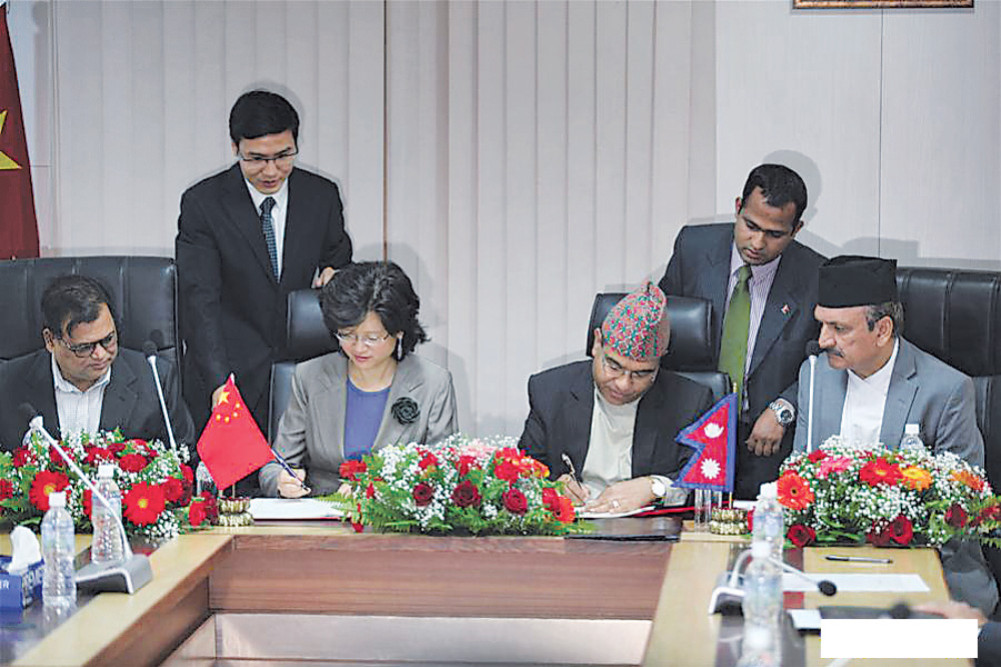
Thailand, Indonesia, Laos, Peru, Kenya and other countries have succeeded in benefiting from the BRI project, while Sri Lanka, Pakistan, Bangladesh and other countries have disputed.
We use Google Cloud Translation Services. Google requires we provide the following disclaimer relating to use of this service:
This service may contain translations powered by Google. Google disclaims all warranties related to the translations, expressed or implied, including any warranties of accuracy, reliability, and any implied warranties of merchantability, fitness for a particular purpose, and noninfringement.
With the aim of strengthening relations and connections with various countries, the Chinese government is advancing the global infrastructure development strategy 'Belt and Road Initiative (BRI)' with priority. Many projects under BRI have been launched in different countries.
Some countries have benefited from such projects, while others have had bad experiences.
BRI is conceived by Chinese President Xi Jinping. Initially it was called 'One Belt One Road (OBOR)', in 2016 it was renamed as BRI. Xi, who became president in March 2013, announced the 'Silk Road Economic Belt' during his visit to Kazakhstan in September of the same year.
Four months after that, he reached Jakarta, the capital of Indonesia, and spoke about the "Silk Road" of the twenty-first century. Since 2017, BRI has been included in the Constitution of the Chinese Communist Party. BRI is also considered to be the focal point of Xi's foreign policy.
Xi launched the BRI project to connect Europe and East Asia. Recently, under this framework, China has significantly expanded its economic and political influence in Africa, Oceania and Latin America.
By December 2023, 150 countries have joined the BRI. Nepal joined in 2017 by signing a memorandum of understanding under the BRI framework. According to the World Economic Forum, China has already spent more than 10 billion US dollars on BRI. Experts estimate that China will spend up to 80 billion US dollars in BRI.
Under BRI, China has been investing in country-specific projects. Countries like Thailand, Indonesia, Laos, Peru, Kenya and others have succeeded in benefiting from the BRI project. Thailand is a successful example of BRI diplomacy.
Thailand has long negotiated with China for the construction of a high-speed railway and has finally managed to reach an agreement favorable to it. Thailand raised financial resources for the project from within the country and gave China the right to build and operate it.
Indonesia created an environment for joint ventures between domestic and Chinese companies. Introduced Chinese investment in manufacturing, succeeded in bringing knowledge and technology to their country. Under the project, a 350 km per hour train has been put into operation from Jakarta, the capital of Indonesia, to Bangdong. Due to the first high-speed railway in the ASEAN region, the three-and-a-half-hour distance has been reduced to 45 minutes.
China has invested 16 billion US dollars in 813 projects under BRI in Laos. Due to Chinese investment, Laos has rapidly developed the infrastructure necessary for its economic development. According to the latest data of the World Bank, the gross domestic product of Laos will increase by 21 percent due to those projects.
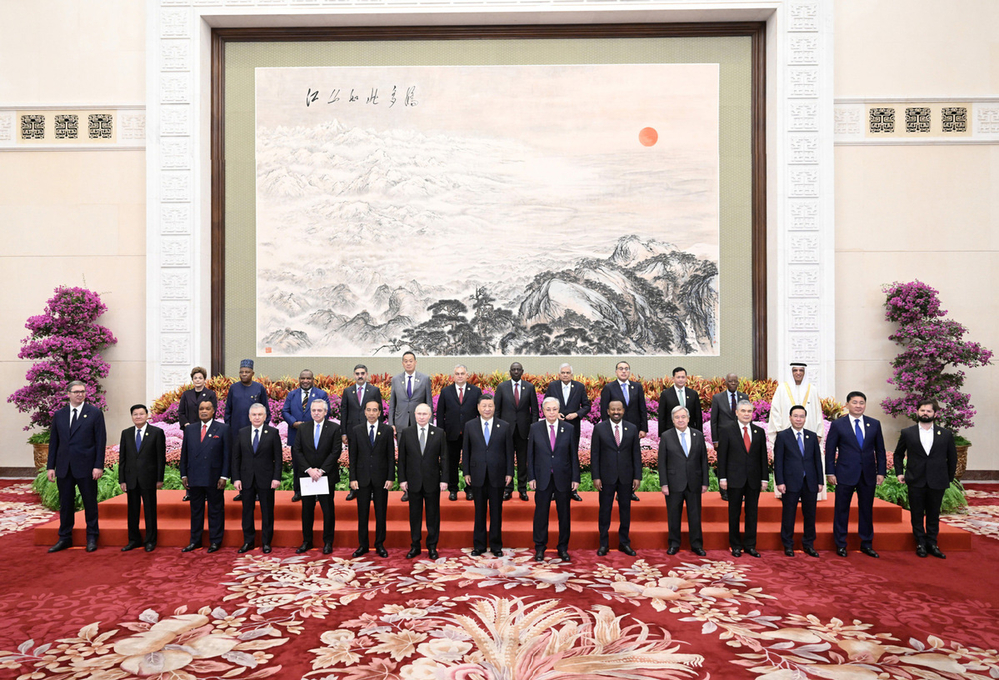
By 2016, Laos had insufficient budgets to develop a three-and-a-half-kilometer long railway connecting Thailand, a weak road network and new infrastructure. Bordered by China to the north, Vietnam to the east, Cambodia to the south, Thailand to the west and Myanmar to the northwest, Laos signed an agreement in 2016 to build the Laos-China railway under the BRI. The railway connecting Vientiane, the capital of Laos, to Kunming, China is located along the Mekong River, which runs along the border with Thailand.
157 bridges and 74 tunnels were built during the construction of a 1,000 km long railway costing 5 billion 900 million US dollars. In the 18 months that the railway has been in operation, 21.1 million tons of cargo and 1.64 million passengers have been transported. The railroad has created opportunities for Chinese trade and investment as well as development and tourism in Laos.
China has spent billions of dollars to build a historic port in Peru. It is expected to transform trade in Latin America and boost regional economic development. The US, which calls the port a 'threat', is supporting the construction of a railroad in Lima, the capital of Peru.
Last November, US Secretary of State Anthony Blinken announced that he would help build a new passenger train that would provide reliable and affordable service for at least two million passengers a day in the city of Lima.
"The United States will support the construction of a new passenger railroad connecting the city of Lima with the eastern part," he said, "Caltrain rail system in California will support more than 100 high-quality train cars and engines, and American companies will provide the necessary equipment, various materials, engineering and Blinken says that this will increase the bilateral trade relations. Greenhouse gas emissions will be reduced by an estimated 20,000 metric tons every year with the railway line in operation. This is equivalent to about 4,000 cars being displaced from the road.
A high-speed train has also been built from Nairobi to Mombasa in Kenya under BRI. Chinese standards, technology and equipment were used in the construction of the railway, which has been operational since May 2017. Nairobi Expressway has also been constructed in Kenya under the project.
Telecommunication technology has also been developed there. Kenya is among the countries with the highest quality internet service. Under the BRI, the Kenyan got this facility in partnership with the Chinese multinational information technology company Huawei. Huawei's Kenya
has also helped in the modernization of telecommunications capabilities. It has helped promote cooperation between Kenya and the rest of the world, as well as investing in e-commerce, Internet Protocol and ICT.
In some countries, the BRI project has come under controversy. Sri Lanka's Hambantota Port, China-Pakistan Economic Corridor (CPEC) are good examples of BRI. Due to the agreement for the construction of the Hambantota International Port, there is a negative perception of BRI in Sri Lanka.
Sri Lankan leaders negotiated a deal with China for personal gain, accepting a 6.3 percent loan and other bad terms. Sri Lanka failed mainly because it embarked on ambitious plans that other partners rejected for investment.
China initially supported infrastructure development in Sri Lanka. Chinese investment was seen as a challenge due to the weakness in debt management. Sri Lanka's trade deficit with China increased due to Chinese investment. In addition to that, due to the lack of transfer of technology and knowledge, there was a situation of having to rely on Chinese materials for project construction. According to the
agreement, China Merchant Port Holdings (CM Port), which has invested 974 million US dollars for the construction of the port, owns 85 percent of the shares. The company has leased for 99 years to develop, manage and operate the port area.
Experts say that Pakistan's economy has collapsed due to the CPEC highway. The project, which was initially estimated to cost $25 billion, will reach $62 billion upon completion. Due to this project, Pakistan has become China's largest creditor. China has more than a third of Pakistan's external debt.
China has also invested 40 billion dollars in more than five dozen projects under BRI in Bangladesh. Out of that, it is said to get 26 billion dollars for the BRI project and 14 billion dollars for the joint venture project.
The main projects that have been moved under BRI are Padma Bridge, Padma Rail Link, Bangabandhu Railway Bridge, Rupsa Railway Bridge, Dhaka Bypass Road, Cox's Bazar Airport, Dhaka-Chittagong Railway, Karnaphuli Tunnel, China-Bangladesh Economic and Industrial Zone, etc. Some of these projects have been criticized for high cost and low returns.
Some projects like Hambantota, CPEC are interpreted as 'debt traps' by the western countries and the media. After 2019, the Chinese have begun to focus on small rather than large projects to resolve such disputes. President Xi has interpreted such projects with low budget and short duration as 'small is beautiful'. C says that exchange of experience, skill development, scholarship and innovation will also be connected to BRI.
BRI project has not started in Nepal yet. During Prime Minister KP Sharma Oli's visit to China from Monday, there are plans to move forward some projects related to infrastructure under the BRI cooperation 'framework' agreement. Nepal is going to ask China for the construction of all the project subsidies.
Foreign Minister Arju Rana Deuba, who returned on Saturday after visiting China, has said that China is positive to advance projects under the BRI grant. Experts say that Nepal can benefit from BRI if it learns from the failures of Sri Lanka, Pakistan and Bangladesh and takes a good account of the terms and conditions.
(with the help of agencies)