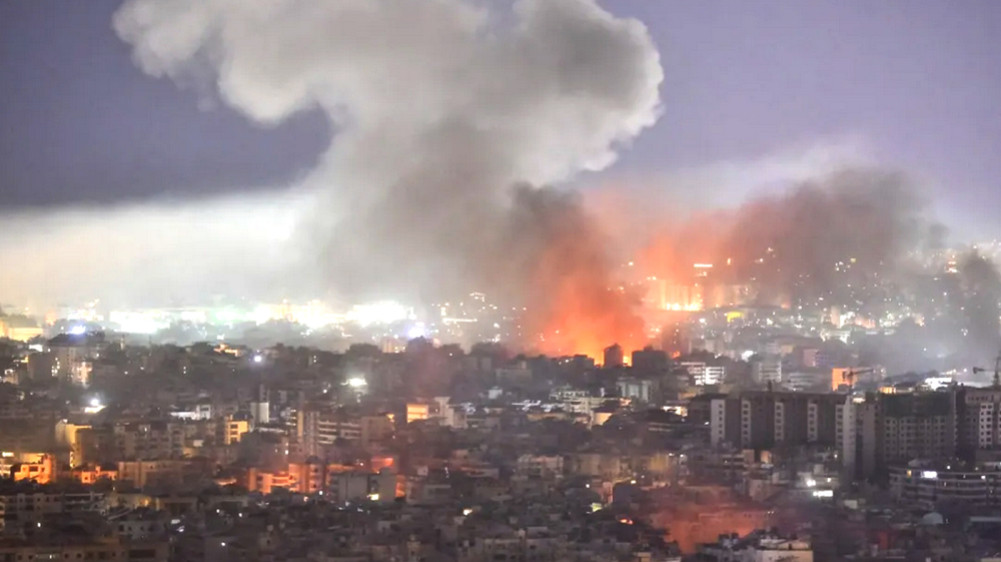
There was no fear when missiles came from Lebanon and Gaza, but the sound of missiles coming from Iran was different, it felt like I was sitting under bombs.-Gita Subedi, Nepalese worker.
We use Google Cloud Translation Services. Google requires we provide the following disclaimer relating to use of this service:
This service may contain translations powered by Google. Google disclaims all warranties related to the translations, expressed or implied, including any warranties of accuracy, reliability, and any implied warranties of merchantability, fitness for a particular purpose, and noninfringement.
Ramesh Joshi of Kailali, who was working in a hotel in Tel, the capital of Israel, suddenly heard a high alert on his mobile phone on Tuesday evening. He urgently looked at his mobile phone, which contained a message warning him to go to the bunker under the house within two minutes. "Early on, there were emergency notifications on mobile phones, but Tuesday's notification was special," he said, "They were told to go underground instead of in a normal bunker."
A bunker should be made mandatory in every house in Israel. A large house has a bunker in one of the rooms. But when they were told to go to the underground bunker, it was predicted that a big crisis was coming. About 300 workers in the complex rushed towards the bunker, shouting. "Within two minutes of reaching the bunker, missiles (missiles) started coming in the sky of Israel," said Joshi, "It was a very scary situation." Joshi and others spent two hours in the bunker from 7:30 PM local time in a terrible situation.
The missile was launched from Tehran, Iran, about 1,600 kilometers from Tel Aviv. Those missiles were not as weak as those fired by Hezbollah from the Israel-Lebanon border, 125 km away, and by Hamas fighters from the Gaza Strip, 85 km away. According to the Iranian media, Tehran used the new missile "Fatah-1" on Tuesday. It is claimed that the high-speed missile will avoid the defense system.
In response to the assassination of Hezbollah chief Hassan Nasrallah and Hamas political chief Ismail Haniyah, Iran fired about 200 missiles at Israel on Tuesday. Hasan was killed last Friday and Ismail on July 31. Iran launched a missile on Tuesday, hours after Israeli forces launched a ground offensive against Hezbollah. The Israeli Defense Forces (IDF) claimed that 99 percent of the missiles fired by Iran were destroyed in the air and some landed in Israel and the West Bank. According to the IDF, one person was killed and several others were injured in the missile attack by Iran.
Geeta Subedi, who has been working as a 'caregiver' in Netanya, Israel for 18 years, remembered Tuesday night as the most terrifying of her life. "What I experienced on Tuesday evening has never happened before," she said. Suddenly there was a loud explosion. Half an hour was very exciting.'
According to Subedi, on Tuesday evening, the sky looked like it was covered with flames. There was not much fear when missiles came from Lebanon and Gaza. The sound of missiles coming from Iran was different. "I felt like I was sitting under a bomb," she said. Subedi said she was scared last year on October 7 as well, but this time she was even more scared. On October 7, when Hamas attacked Israel, about 1,200 people, including 10 Nepalis, died.
Benu Bhattarai, who works in Israel, said she saw the Sulu missile falling like stars falling from the sky on Tuesday. I went out after the siren. Missiles suddenly appeared in the sky. When the missile hit the ground, the house where I was staying was shaken," she said. "There is no bunker in the house. I hid under the table.'
 About 4500 Nepalis are working as 'caregivers' in Israel. Most of them are women. All the students who went to study working in the agricultural sector returned home after last year's Hamas attack. Since then, new workers have not been formally taken to the agricultural sector.
President of Non-Resident Nepali Association Israel Mr. Krishna Bhandari said that even though Nepalis are safe, they have to live in fear. According to him, there is a need to trust Israel's security system to stop or neutralize missiles fired from the outer region. "We are all scared by Tuesday's attack. All Nepalis understand that Israel gives us protection. But if the missiles continue to come again like on Tuesday, we will have to return home. Israel's security system did not work when Hamas attacked unexpectedly last year.
In Israel, missile defense is done through 'Iron Dome', 'David's Sling' and 'Arrow System'. It is claimed that it can destroy 1100 missiles at once. "Seeing this defense system of Israel gave us the courage to stay," Subedi, who is in Netanya, said, "Now how the tension between Iran and Israel progresses, it will decide the future of our jobs."
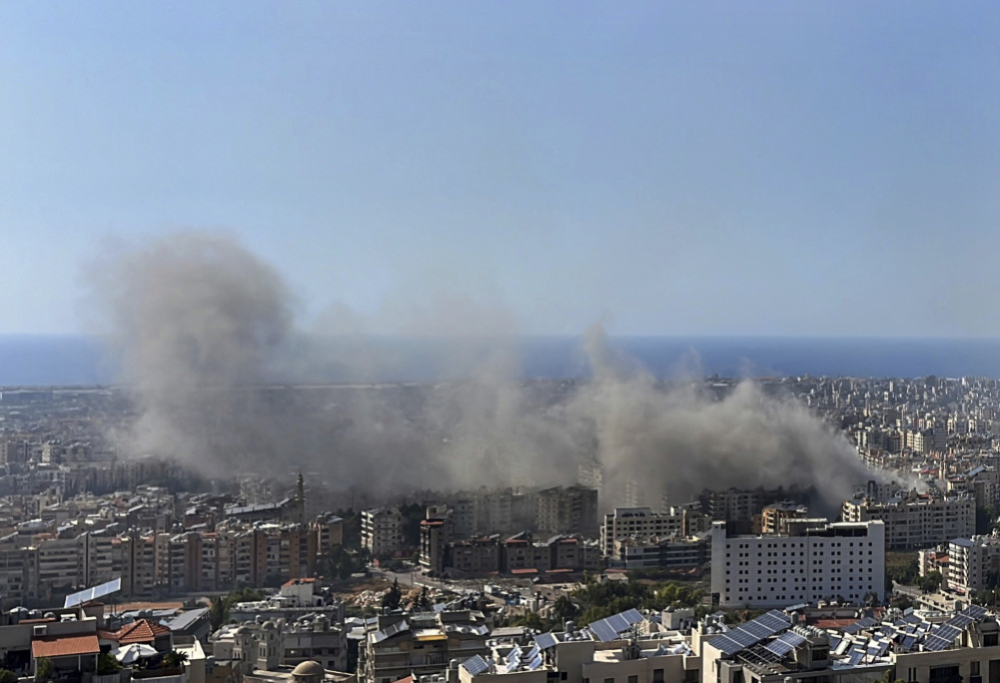
Maya Tamang, who works as a domestic worker in Beirut, Lebanon, which is about two hundred kilometers away from Netanya, is also starting to panic. She is working near Beirut-Rafic Hariri International Airport. The Israeli military is firing missiles at Hezbollah in Lebanon. He has also intensified 'ground operations' in southern Lebanon. The Israeli army has issued notices for local residents to evacuate 51 villages there and move north. A million people from that area have already reached Beirut. Israel fired a missile into downtown Beirut on Wednesday night, killing six people. After 18 years, Israel fired a missile into central Beirut.
It is estimated that there are at least 1000 Nepalese women domestic workers around Beirut. "There was not much fear until yesterday. Now I started to feel very scared," Tamang said to Kantipur, "All night there is a sound of falling missiles. The house is very dry. There is a lot of smoke towards the airport. Tamang said that the risk is increasing and returning home. I hear people from UK-Canada have been expelled. Now we are left with Indians and Nepalis. Will the Nepalese government also take us out?' She said, 'They say that if a plane comes from India, they will also take Nepalis on it.'
Saru Gurung of Syangja, who has been working in Beirut for 16 years, said that it is difficult to pass the time at night. "I was sitting in the room after eating on Wednesday night. Suddenly a missile fell on a house 15 minutes away. Houses shook," she said. "Missiles are falling on some house every night. There is a loud noise. Here, a message is sent to the mobile only a few minutes before the target house is to be evacuated. I am afraid that the message will come when I am sleeping, I cannot sleep.'
Non-paid Nepali Consul General in Lebanon, Mohammad Gozayal, said that there was no incident in the northern region of Lebanon, where there are majority of Nepali workers. "Israeli military operations are intense in the southern region of Lebanon, while the northern region is calm," he said. We have asked Nepalis to contact us if they need any help. So far, the Nepalese have not sought any emergency assistance. Everyone is asking questions about the current security situation and preparedness for potential threats. We are closely monitoring the current situation.'
According to international media, various countries are trying to evacuate their citizens from Lebanon. America, Canada, France, China and other countries have asked their citizens to leave Lebanon. Those countries are arranging government charter flights and commercial flights for their citizens. They are looking at Cyprus and Turkey as transit points for the rescue. The US has deployed dozens of US troops to Cyprus to rescue its citizens. There are approximately 86,000 American citizens in Lebanon. Britain has started rescuing 150 citizens from Beirut on Thursday. He is set to take a charter flight from Cyprus.
Australia has already secured commercial seats to rescue 500 people. China has already rescued 200 citizens. Canada has secured 800 seats as well as agreements with Cyprus, Greece and Turkey for charter flights. Spain, the Netherlands, South Korea and other countries are also deploying military aircraft in Lebanon to bring their citizens home.
The Ministry of Foreign Affairs has stated that the Nepalis working in Lebanon have not asked for rescue and the government is ready to rescue them if they want. Nepalis working in Lebanon are safe so far. They have not said that they want rescue,' said Amrit Bahadur Rai, spokesperson of Foreign Affairs, 'If they want rescue, the government is ready to rescue them.'