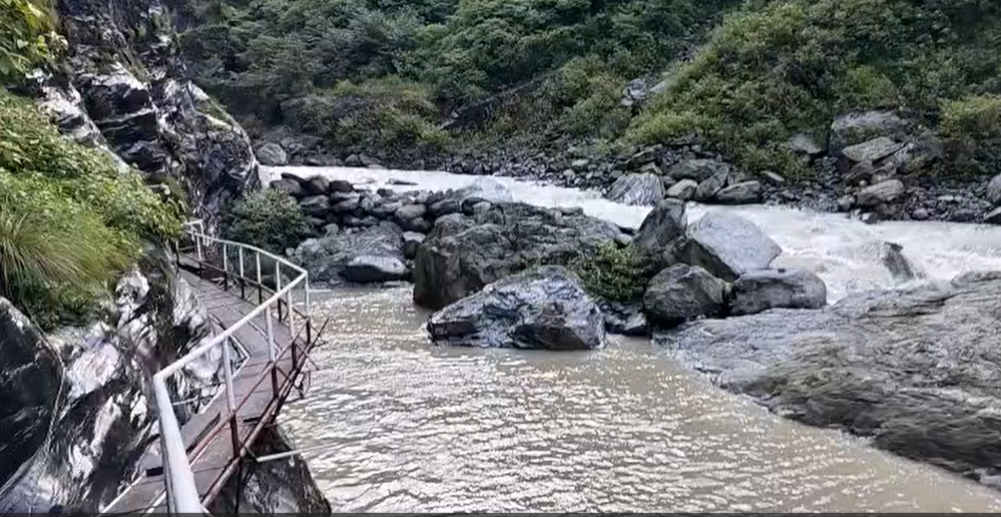
After the Melamchi water supply was halted, KUKL has been struggling to find alternative sources to provide sufficient water to the residents of Kathmandu, Bhaktapur, and Patan.
We use Google Cloud Translation Services. Google requires we provide the following disclaimer relating to use of this service:
This service may contain translations powered by Google. Google disclaims all warranties related to the translations, expressed or implied, including any warranties of accuracy, reliability, and any implied warranties of merchantability, fitness for a particular purpose, and noninfringement.
Due to the closure of Melamchi caused by flooding and the inability to increase the old water sources, it has become difficult to supply drinking water to the residents of the Valley.
Kathmandu Valley Water Supply Limited (KUKL), which has been distributing 170 million liters of water daily from Melamchi, has stated that efforts are underway to manage the situation through alternative sources. KUKL, which is responsible for water distribution, has said that due to low rainfall and the inability to increase water sources, some immediate problems have arisen.
KUKL has stated that the closure of Melamchi and the lack of increase in water sources around the Valley have made distribution difficult. According to KUKL, in previous years when Melamchi was closed, water from small and large sources in the Valley, including the Bagmati, was distributed.
Due to the lack of rainfall, the water sources in Kathmandu, Bhaktapur, and Patan have not been able to increase this time. Technicians have reported that water brought from the Ribarma River near the Melamchi source is also muddy, so it could not be allowed into the tunnel. After the flood affected the main source of Melamchi located in Helambu, Sindhupalchok, the water supply was shut off on the night of the 21st.
Since the flood also affected the Ribarma River near the main source, water could not be diverted into the tunnel, according to Laxmi Prasad Upadhyay, Executive Director of the Melamchi Water Supply Development Committee. He said efforts are being made to send water from the Ribarma River through the tunnel to the processing center at Sundarijal. He stated that when the source increases during the rainy season, up to 50 million liters of water per day can be sent through the tunnel from that river.
KUKL has said that the closure of Melamchi has affected its water distribution schedule. While KUKL used to distribute 280 million liters of water daily, it has now dropped to 50–60 million liters. This has affected distribution. However, staff claim that there will not be a major water problem in the immediate term as far as possible.
KUKL is preparing to bring additional water from the Bagmati source at Shivapuri and send it to the Sundarijal processing center. For this, an additional 5 mm pipe was arranged on Thursday to send more Bagmati water to the processing center.
Ram Kumar Shrestha, head of the Melamchi Water Supply Project Implementation Directorate, said that arrangements have been made to bring more water from the Bagmati. According to him, once the water source increases, water from the Bagmati at Shivapuri will be sent to the processing center. It is estimated that during the monsoon, more than 50 million liters of water per day can be sent to the processing center. He said that teams from KUKL and the Directorate have conducted a field visit to Shivapuri to try to bring in additional sources.
In the past, when Melamchi was closed, the problem was partially solved by distributing water collected from sources around the Valley. But this time, due to the lack of rainfall, the sources could not be increased. According to Prakash Rai, head of the Administration and Finance Department at KUKL, water from the Bagmati is still being sent to the Sundarijal processing center and distributed. However, since the source of the Bagmati has not increased, the water supply has not increased.
According to Rai, in the past, the problem was solved by using water brought from many places around the Valley. He said that when Melamchi is not available, it is certain that the sources will decrease, but due to low rainfall, it has been difficult to make alternative arrangements immediately.
After the Melamchi source was damaged by the flood in Asar 2078 (June/July 2021), the water supply has been shut off every year during the monsoon. Even though seven years have passed since the flood, the source has not been properly managed.
In the second phase of Melamchi, there is a plan to bring an additional 340 million liters of water from the Yangri and Larke rivers in Sindhupalchok, but implementation has been delayed. However, Kathmandu residents have only been able to use Melamchi water for 8 to 9 months each year. Melamchi water was brought to Kathmandu for the first time in Chaitra 2077 (March/April 2021). The problem could not be solved after the source was buried by a flood within two months.