The policy and program states that senior citizens who have completed 75 years of age and disabled city dwellers with complete disabilities will be provided with regular nutritional allowances to ensure nutritious food security.
We use Google Cloud Translation Services. Google requires we provide the following disclaimer relating to use of this service:
This service may contain translations powered by Google. Google disclaims all warranties related to the translations, expressed or implied, including any warranties of accuracy, reliability, and any implied warranties of merchantability, fitness for a particular purpose, and noninfringement.
Kathmandu Metropolitan City has put forward a resolution to develop as a 'City of Humanity'.
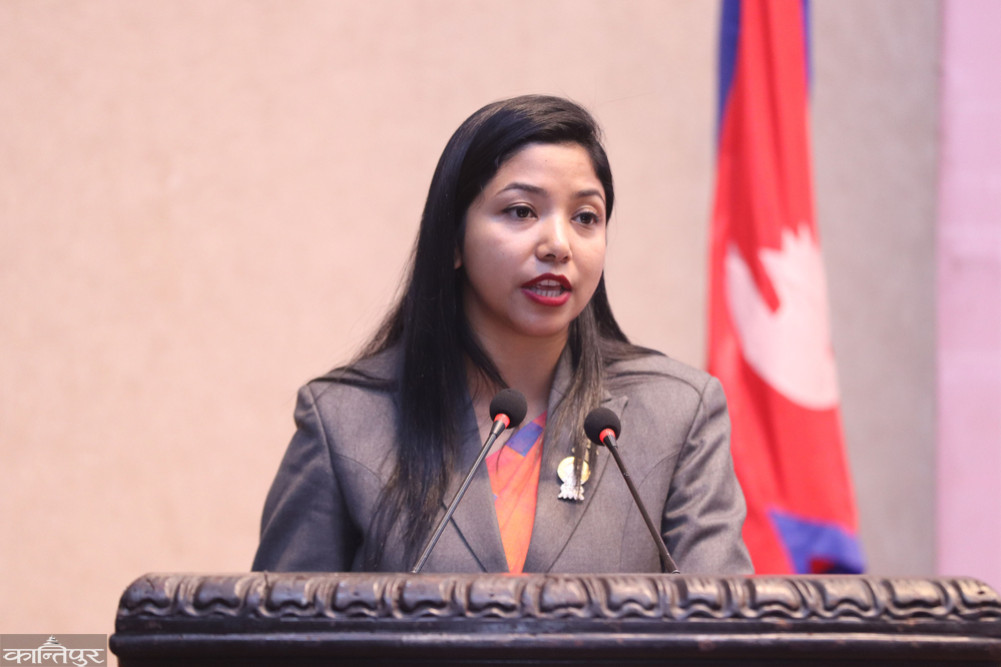
Acting Mayor Sunita Dangol made this resolution public at the 19th session of the Municipal Assembly on Sunday. The policy and program have risen above the concrete road and given unprecedented priority to social justice, citizen sensitivity and environmentally friendly welfare practices.
The metropolis has included many experimental and creative plans in the budget and program for the coming year to implement the guiding message of 'City of Humanity: Kathmandu'. Under this, a commitment has been made to protect the interests of the residents of the metropolis and all creatures that take shelter here.
Under the 'Metropolitan Campaign with Senior and Disabled Citizens', the hassle of having to go to the hospital or stand in line for treatment will now end for the elderly and disabled citizens living within the metropolitan area, she said. Senior citizens who have completed 75 years of age and disabled city dwellers with complete disabilities will be provided with regular nutritional allowances to ensure nutritious food.
A plan has been put forward to make Kathmandu's streets a reflection of humanity. The policy states that Kathmandu will be declared a 'street-dependent human-free city' in joint coordination with partner organizations and non-governmental organizations for the rescue and management of homeless and street-dependent citizens.
Acting Chief Dangol said that the humanity of the metropolis is not limited to humans only, but also includes the coexistence of animals and nature with sincerity. Realizing the urban environment where birds are in crisis, she said that bird-friendly practices will be conducted in all the neighborhoods, schools, communities and parks within the metropolis. For this, the metropolis has announced that thousands of 'water pots' will be installed to provide clean water to birds. The metropolis has made it clear that only humane and scientific measures will be adopted in accordance with the principles of animal welfare without using cruel methods while controlling street dogs and monkeys.
It has been said that a new system will be established to certify the abilities of people with original skills, crafts and modern talents that have been passed down for generations and issue official certificates to them. The metropolis believes that this decision will promote respect for indigenous craftsmen and woodworkers.
In order to draw a new definition of youth and good governance, the metropolis has put forward a special discussion program to address the needs of the new generation (Gen Z and Gen Alpha) as the carriers of nation building and to interview national personalities.
Plans such as 'bike ambulances' to provide health services on narrow inner roads, strict monitoring of 10 percent of the poor in all private and government hospitals, pneumonia vaccination for the elderly and call centers for mental stress management have been included in the policy and program.