The police, which was overwhelmed after the Gen-G uprising, has launched a 'Police Meets the Community' program to improve relations with citizens.
We use Google Cloud Translation Services. Google requires we provide the following disclaimer relating to use of this service:
This service may contain translations powered by Google. Google disclaims all warranties related to the translations, expressed or implied, including any warranties of accuracy, reliability, and any implied warranties of merchantability, fitness for a particular purpose, and noninfringement.
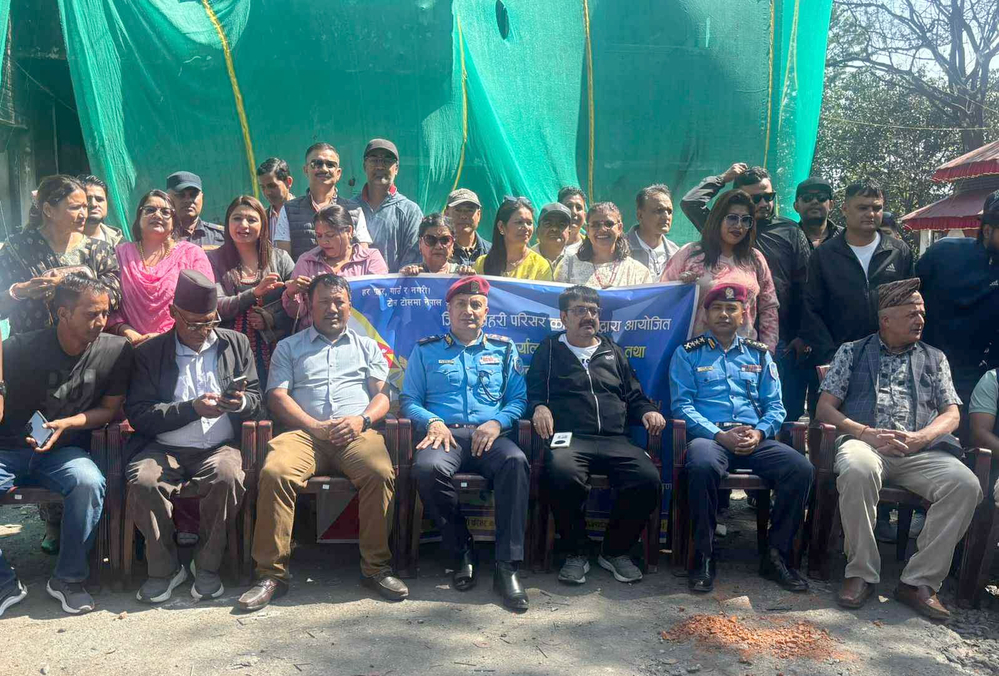
On Saturday, local residents gathered in the ruined building of the police station in New Baneshwor to discuss the issue. Their aim was to restore the police station to its former glory.
The Chief of the Circle, Deputy Superintendent of Police Hari Khatiwada, said that the interest of the locals in the reconstruction of the building has given the police more encouragement, while the committee formed under the chairmanship of Ramesh Shrestha for the reconstruction of the dilapidated building was explaining the future plan.
Similar discussions and gatherings have been organized in all police offices in Kathmandu today for the reconstruction of police offices that were damaged or destroyed during the 'Gen-G' movement.
The Kathmandu Police has started the 'Police Meeting with the Community' program to improve relations with the citizens, which was weakened after the Gen-G uprising. The Kathmandu Police, which was hit by vandalism, arson and destruction after the Gen-G protests on the 23rd and 24th, has started a new program to increase relations with the community.
Kathmandu Police Chief SSP Ramesh Thapa said that the program has been launched for peace, security, crime investigation and control, and community welfare. The program named ‘Meet and Greet with Community’ has been carried out in partnership with the community. According to SSP Thapa, this program is the beginning of maintaining solidarity between the community and the police. ‘The police have received support and assistance from all sectors.’ Thapa said that this program was necessary to give a message of social harmony, ‘the police buildings that have been reconstructed so far have also been built with the help of the locals. This program is also to honor them.’ According to Thapa, when citizens and the police are united, criminal activities can be eliminated. That is why this work has been started to unite the police and the citizens and to encourage them.
Thapa has also requested everyone to join this campaign, saying that it is positive that the locals themselves are taking the initiative to reconstruct the structures of the security agencies after welcoming the police who left their offices during the protest and went to a safe place.
In the 24 Bhadra riots, about 300 police barracks and offices across the country were vandalized and set on fire. Hundreds of weapons were looted. More than 14,000 prisoners escaped from 28 prisons/detention centers. Hundreds of suspects in police custody were also absconding during the investigation.
76 people, including three police officers, lost their lives in the Gen-G protests and the subsequent riots. Against this backdrop, the police have launched a new program to strengthen their relationship with the citizens.

