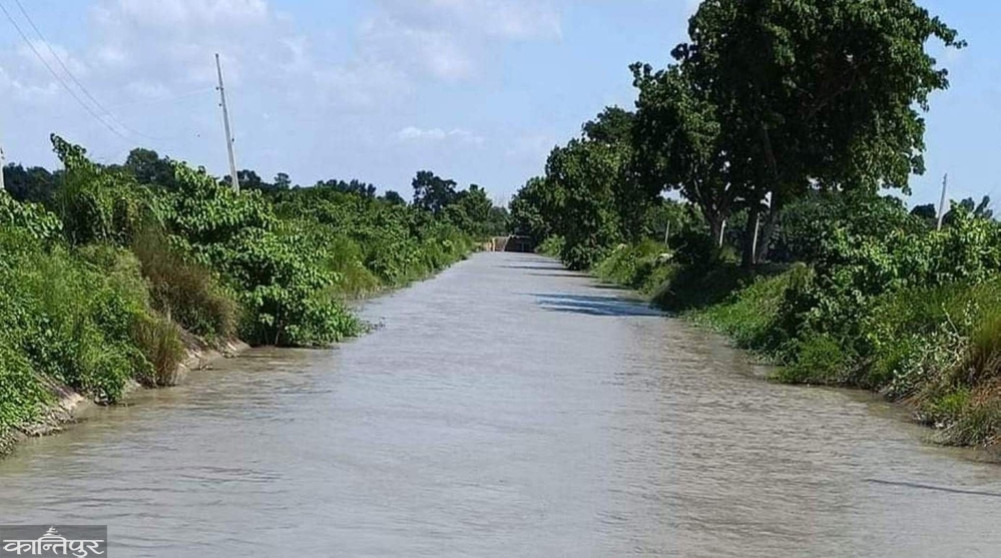
After three days of regular rain, sufficient water was available in the fields in the canal-irrigated area, reducing demand and releasing canal water from the scarp into the Sikta River.
We use Google Cloud Translation Services. Google requires we provide the following disclaimer relating to use of this service:
This service may contain translations powered by Google. Google disclaims all warranties related to the translations, expressed or implied, including any warranties of accuracy, reliability, and any implied warranties of merchantability, fitness for a particular purpose, and noninfringement.
The excess water in the Gandak Canal has been released into the Sikta scape. Engineer Mukesh Thakur, Information Officer of the Narayani Irrigation Management Office, Birgunj, said that after 3 days of regular rains, sufficient water was available in the fields in the canal-irrigated area and the demand decreased, so the canal water was released from the scape into the Sikta River.
This year, the Indian side has been providing 850 cusecs of water to the canal since Asad 10, but currently, when there is no demand, water has been released into the Sikta River and only 500 to 600 cusecs of water have been kept in the canal.
Thakur says that this was done because farmers have also complained that the water in the canal is being damaged due to excess water in some places. Currently, the canal water has reached block number 11. He said that the canal water has reached the western area of Simraungadh in Bara and that water has not been sent before that time.
According to the Gandak agreement with India, the annual paddy supply is between Asad 15 and The Indian side must provide 850 cusecs of water to the canal from Poush 10 for the wheat crop.
The Indian side releases water into the canal from the barrage built on the Nepal-India border at Bhainsalotan in Nawalparasi. After traveling 92 km in India, this canal enters Nepal from Jankitola in Jagarnathpur Rural Municipality of Parsa. The length of the Gandak Canal, divided into 15 blocks in Parsa, Bara and Rautahat, is 81 km towards Nepal.
The Gandak Barrage was built by India itself and is also operated by the Indian side. The Indian government handed over the Gandak Canal to the Nepal government in two phases in 1975 and 76. Although the target was to irrigate 37,400 hectares of land in three districts of Parsa, Bara and Rautahat through the Gandak Canal, the targeted irrigation has not been achieved as water does not reach the Rautahat side.