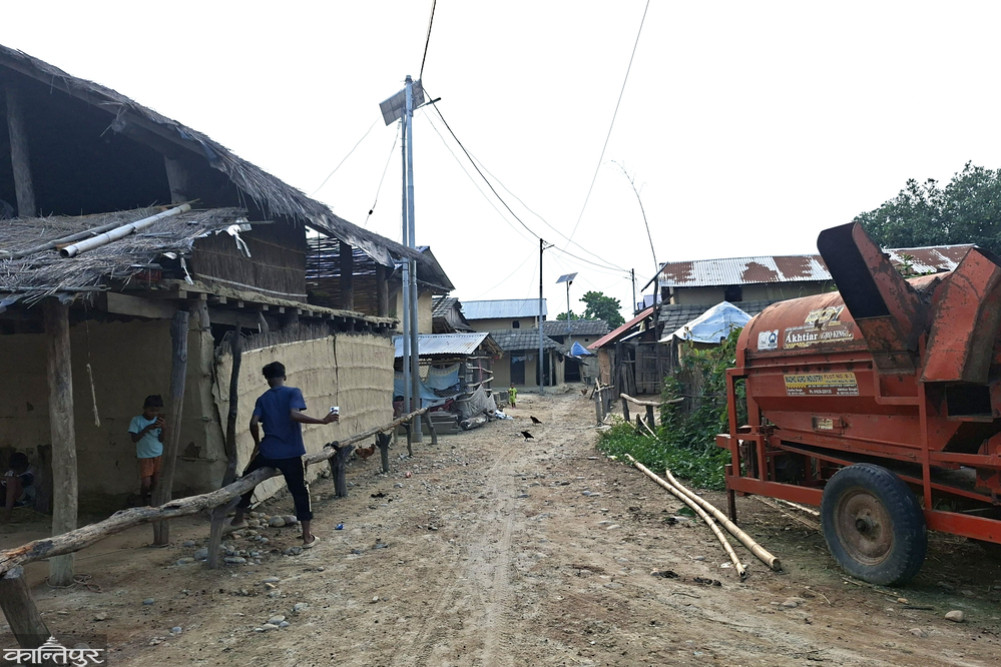
To reach this settlement, located on the border of Chitwan and Parsa National Parks, one has to cross about 7 kilometers of dense forest from the Birgunj-Thori postal road. Dilapidated roads and potential encounters with elephants, tigers, and bears have become a daily routine for the residents here.
We use Google Cloud Translation Services. Google requires we provide the following disclaimer relating to use of this service:
This service may contain translations powered by Google. Google disclaims all warranties related to the translations, expressed or implied, including any warranties of accuracy, reliability, and any implied warranties of merchantability, fitness for a particular purpose, and noninfringement.
Sikaribas lies on the border of Chitwan and Parsa National Parks. The residents of this village in Parsa are forced to live without basic amenities. They are facing the fear of wild animals along with the lack of education, health, roads and communication, and have one demand: relocation to a safer place.
Bhangiyadevi Chaudhary, 65, of Sikaribas in Thori Rural Municipality-3, has one wish - that her grandchildren do not have to live the same miserable life as she did. Having spent decades in this remote settlement located in the middle of a dense forest, she is now hoping that the government will relocate them to a safer and more comfortable place.
‘Our lives have been spent enduring many hardships,’ she said. ‘We want the next generation to at least have a comfortable life.’
Bhangiyadevi’s pain is not just personal, it is the common pain of about 250 locals living in 52 households of Sikaribas. To reach the settlement, which is located on the border of Chitwan National Park and Parsa National Park, one has to cross about 7 kilometers of dense forest from the Birgunj-Thori Hulaki road. Dilapidated roads and potential encounters with elephants, tigers and bears have become a daily routine for the residents here.
The village has a school that provides education only up to grade 5. Children have to cycle or walk about 20 kilometers daily to reach Vijaybasti or Ghyangdanda to study in the upper grades. Due to the lack of basic facilities like education, health, roads and communication, the locals have started to feel that relocation of the settlement is the only option.
Local Bambhola Mahato Tharu said that despite waiting for development in the Sikaribash all his life, the situation remains the same. ‘I had hoped that one day the road would reach the village, electricity would reach the village, and motor vehicles would reach the doorstep,’ he said, ‘but that day never came.’
According to him, leaders tend to visit the village and make promises only when local elections are approaching. ‘The outside world remembers us only during elections,’ he said, ‘after that, no one comes back for five years.’ According to
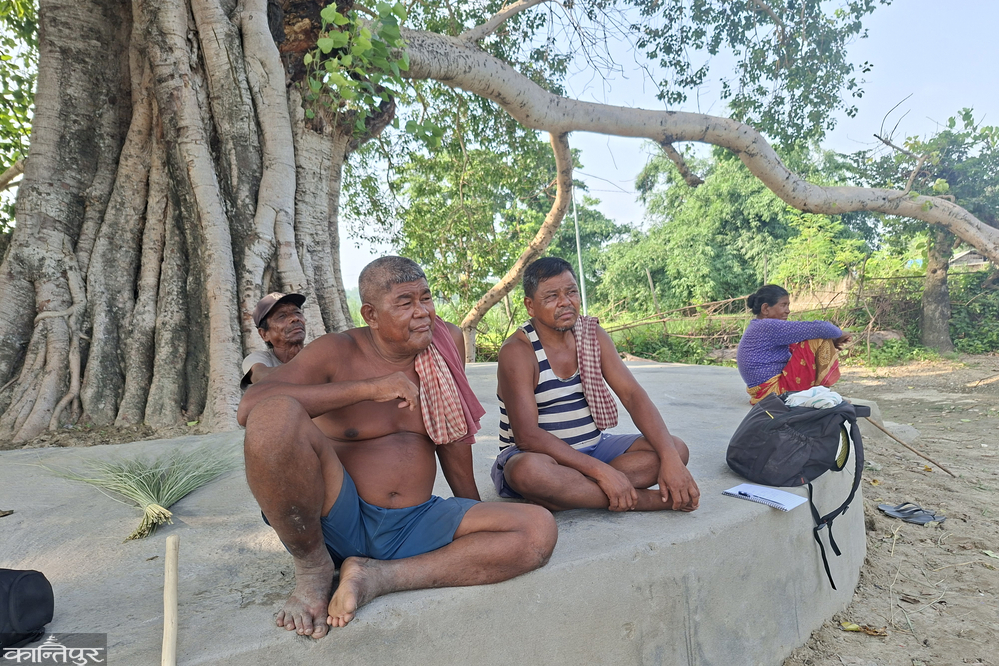
Mahato, Sikaribas is an older settlement than the now-developed market areas like Vijaybasti, Suvarnapur and Thori. He claims that the name ‘Sikaribas’ is mentioned even in legal documents dating back 150 years. But while the settlements established later are connected by roads, schools, hospitals and government services, Sikaribas is still far from development.
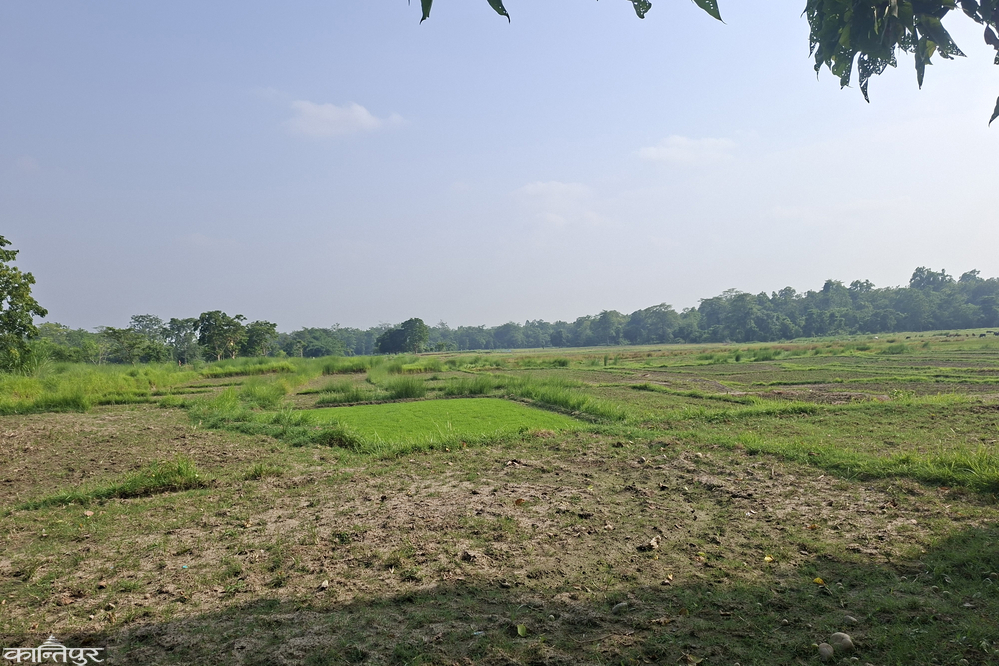
Most of the families in the settlement are landless. According to local Dukha Mahato, about 99 percent of the households are squatters. ‘Even the ghaderi that we have been living in for generations is not in our name,’ he said, ‘We are not allowed to sell the land or take legal ownership.’ According to him, about 100 bighas of cultivable land in the village are in the name of outside landowners. The locals cultivate the land in adhyayam. ‘Wild animals destroy about 40 percent of the crops,’ he said, ‘Half of the remaining production should be given back to the landowner.’
The drinking water situation in Sikaribas is also not easy. Three years ago, the locals built a small dam on the Amwa Jiurwa River and operated some taps. But the problem of muddy water during the rainy season and elephants occasionally destroying pipes remains.
‘We are living a life without facilities,’ Mahato said, ‘It is not easy to carry out development work since we are inside the park. Just as the government relocated the settlements of Rambhauribhatha and Pratappur-Ramauli, the Sikaribas should also be relocated outside the park.’
In the history of the settlement, only one Nepal Policeman and two teachers have reached the government service so far. Most of the youth depend on employment outside the village or abroad. There is not a single concrete house in the village. The school established in 2033 BS is still limited to class 5, and the condition of the health post is also poor.
According to locals, King Mahendra used to stay in this settlement while he was hunting in the forests of the Terai. At that time, he had given some people agricultural land as a gift.