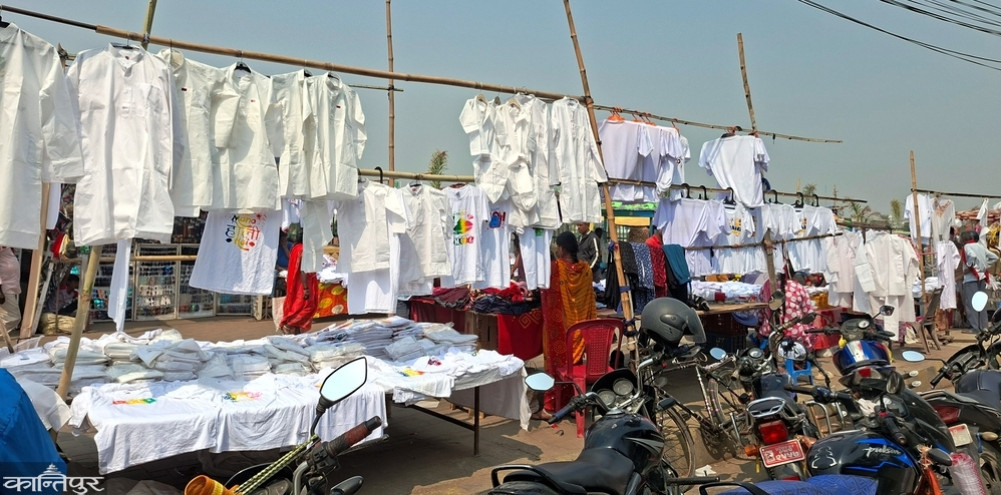
Holi in Parsa, Bara and Rautahat is not only a festival but also represents Bhojpuri culture. Here, it is customary to invite not only family members but also relatives and friends to the house and serve meat dishes, malpua, pakodas, etc.
We use Google Cloud Translation Services. Google requires we provide the following disclaimer relating to use of this service:
This service may contain translations powered by Google. Google disclaims all warranties related to the translations, expressed or implied, including any warranties of accuracy, reliability, and any implied warranties of merchantability, fitness for a particular purpose, and noninfringement.
This year, Holi will be celebrated for 3 days in Madhesh. This has been happening for the last few years. The hill community here celebrated Holi on Monday. Since most people in Terai Madhesh eat vegetarian food on Tuesday, they are preparing to celebrate this festival here on Wednesday instead of Tuesday.
The federal government has declared Holi holiday in Terai Madhesh on Tuesday. This year, since the federal government has declared Wednesday as a holiday for elections, most people have decided to celebrate Holi on Wednesday. Holi gatherings and exchange of good wishes have been going on here for a week.
The Marwari community in Adarshnagar area of Birgunj has celebrated Holi since Tuesday morning after burning Holika or Samvat on Monday night. Jayaprakash Lohiya, a resident of Adarshnagar, says that since Holi is considered a cultural festival rather than a religious one, most people in the Terai usually celebrate Holi for two days. But this year, many people have decided to celebrate Holi for three days, including Wednesday, he said.
According to Lohia, the Holi festival has two aspects, religious and cultural. On the religious side, the stories of famous old people are sung, so this festival is associated with wisdom and knowledge. In addition, there is a tradition of having fun on Holi, meeting relatives and friends, and eating and drinking together. Unlike other festivals, this festival does not have religious rules such as fasting and eating pure food, so this festival is loved by everyone because it provides an opportunity to eat, drink, enjoy, and meet relatives.
The Holi of Parsa, Bara, and Rautahat is not only a festival but also represents Bhojpuri culture. Here, it is customary to invite not only family members but also relatives and friends to their homes and feed them meat dishes, malpua, pakodas, etc.
Due to the geographical proximity to India and the convenience of easy transportation, there are many similarities between the Holi of India and the Terai Madhesh of Nepal. Holi songs in India mostly mention famous religious places and pilgrimage sites, such as Krishna, Braj, Dwarka, etc., while Holi songs in Nepal mostly mention Janakpur, Ramjanaki, Janak, etc.
During the Holi festival, it is customary for people who have not met throughout the year to visit each other's houses and exchange colors and good wishes. This festival also provides an opportunity for friends and relatives to meet once a year. Even those who have had feelings for each other and are angry with each other forget about it and start a new relationship from this day.
Since it is summer in the Terai, it is already comfortable to play Holi with water and colors. After playing Holi with colors and abir, it is customary to feed relatives and friends with spices such as cashews, raisins, coconuts, chhokada, betel nuts, etc. It is an old tradition of the Terai to play Holi by wearing new white clothes for the Holi festival. After applying colors to the elders and elders, the younger ones have a tradition of bowing down at their feet and seeking blessings.
Fish and meat dishes are eaten more during Holi. Not only food and drinkers, but also leaders and prominent people of the society are allowed to spend money publicly during this festival. In this way, no one is offended when spending money during the Holi festival.