The security agencies have classified polling stations into normal, sensitive, and highly sensitive categories, taking into account security challenges such as booth capture, clashes, and political disputes in past elections, the open border between Nepal and India, and the Gen-G movement.
We use Google Cloud Translation Services. Google requires we provide the following disclaimer relating to use of this service:
This service may contain translations powered by Google. Google disclaims all warranties related to the translations, expressed or implied, including any warranties of accuracy, reliability, and any implied warranties of merchantability, fitness for a particular purpose, and noninfringement.
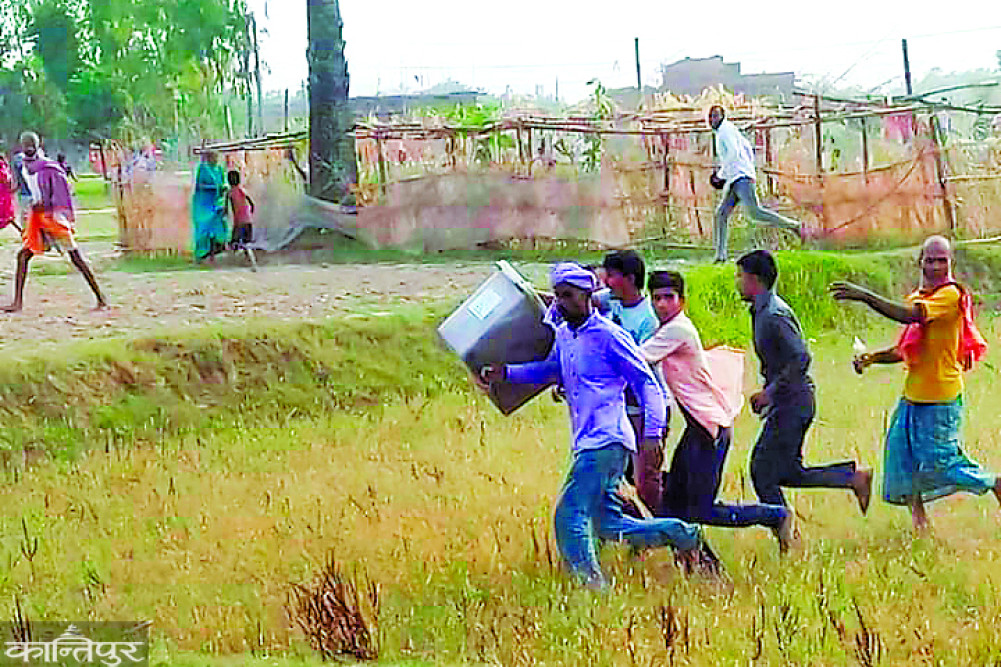
The entire country's attention was focused on the scene of locals looting ballot boxes and running away from the Bhediahi polling station in Yamunamai Rural Municipality-2, Rautahat, during the local elections of Baisakh 2079 BS.
The weak security arrangements and negligence not only disrupted the elections at that time, but also increased the security challenge. Voting was held only the next day amid tight security. This polling station has been placed on the list of highly sensitive in the upcoming House of Representatives elections.
In the 2079 local elections, voting was stopped after a clash between political party workers at Ras Narayan Primary School in Shivnagar, Chakraghatta Rural Municipality, Sarlahi. The police fired in the air to bring the situation under control. In the 2079 House of Representatives elections, a clash broke out between two parties at Shreepur polling station in Aurahi Municipality, Mahottari, over people entering the polling station without authorization and threatening voters. Voting was stopped for a while due to the clash.
In the first Constituent Assembly elections in 2064, there was an attempt to capture a polling station in Sarlahi-6 and gunfire was fired during the clash. There was a tough competition between Amaresh Kumar Singh from the Nepali Congress, Mahantha Thakur from Tamlopa, and Shivpujan Yadav from the Madhesi Dal. Amid the chaos of booth capture, a bomb exploded outside the Gadhaiya polling station, killing Amaresh Kumar Singh's brother Shambhu Singh.
During elections, there have been clashes between parties and attempts to capture booths in Madhesh districts. Analyzing this, this time too, the security agencies have placed many polling stations in Madhesh districts on the list of highly sensitive.
There are 4,471 polling stations and 2,160 polling stations in eight districts of Madhesh, which shares a 367-kilometer border with India. Of these, about 58 percent, or 1,236, are considered highly sensitive. Based on the recommendation of the District Security Committee, the Election Commission has classified 763 as sensitive and 2,471 as general, according to the Madhesh Province Police Office, Janakpur.
The highest number of polling stations in Saptari have been placed on the highly sensitive list. The office has stated that 209 polling stations in Saptari, 154 in Siraha, 194 in Dhanusha, 163 in Mahottari, 158 in Sarlahi, 152 in Rautahat, 145 in Bara and 62 in Parsa are on the highly sensitive list. 1,054 candidates are in the fray in 32 constituencies in 8 districts of Madhesh with a total of 3,517,123 voters. There are between 100,000 and 200,000 voters in each constituency.
The security agencies have classified the polling stations into the list of normal, sensitive and highly sensitive based on the incidents of booth capture, clashes and political disputes in previous elections, the open border between Nepal and India, and security challenges after the Gen-G movement. The security situation created after the Gen-G movement has become the biggest challenge for this election. Most of the weapons looted on 24 Bhadra and the escaped prisoners have not been brought under control. There is a risk that these weapons could be used to capture booths or intimidate the opposition during the election.
This time, there is a tough competition between top leaders, new and big political parties in Madhesh. Congress President Gagan Kumar Thapa is a candidate from Sarlahi-4. Rastriya Swayamsevak Sangh (RSS)'s Amaresh Kumar Singh is in the fray from the same constituency. Clashes have been taking place in this constituency in every election.
Nepali Rastriya Mukti Party President Rajendra Mahato is in Sarlahi-2. CPN leader Mahendra Raya Yadav is a candidate in the same constituency. CPN leader Narayan Kaji Shrestha is a candidate in Sarlahi-3. Janmat Party President Dr. CK Raut is in Saptari-2, Congress leader Bimalendra Nidhi is in Dhanusha-3, CPN leader Girirajmani Pokharel is in Mahottari-1, and JSP's Sharat Singh Bhandari is in Mahottari-2.
CPN co-coordinator Madhav Kumar Nepal is in Rautahat-1, AJP President Prabhu Sah is in Rautahat-3, and Congress leader Farmullah Mansur is in Bara-3. Security officials estimate that the 'ego' between the new/old candidates competing with these candidates could lead to a clash.
Outgoing Congress MP and Rautahat-4 candidate Dev Prasad Timalsina says that there may be an attempt to disrupt the election by using absconding criminals and looted weapons during the Gen-G movement. 'We should not be careless like before, this time the morale of the security personnel has dropped due to the movement,' he said, 'various elements can take advantage of this time.'
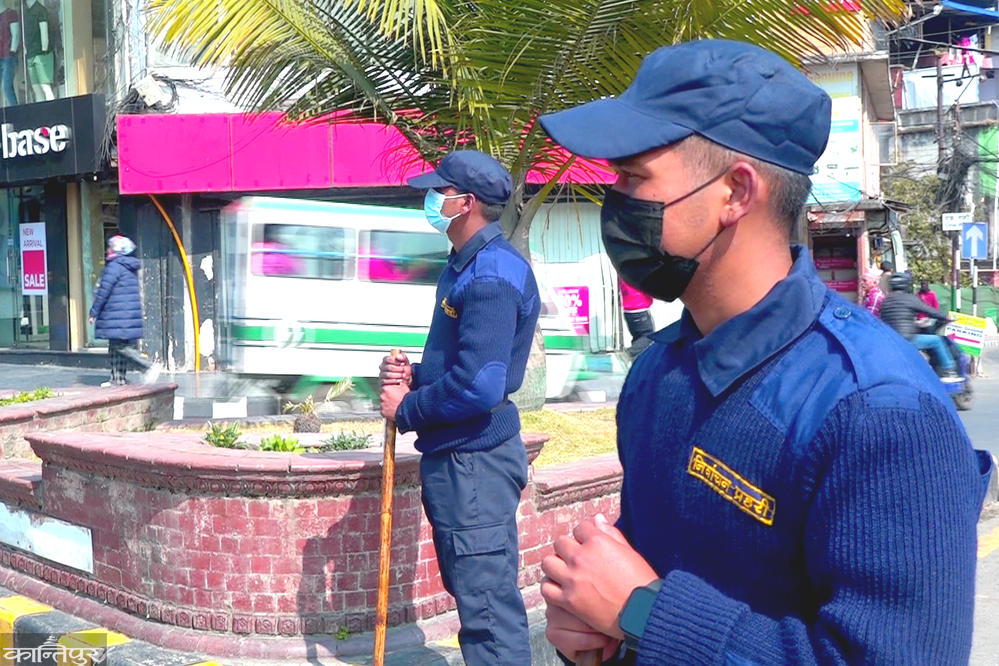
Joint patrols of security agencies are currently being carried out in all constituencies. The presence of security personnel has been increased in highly sensitive areas. All five forces - the army, police, armed police, investigation department and election police - are being mobilized with specific responsibilities and roles in election security.
Taking advantage of the open border, DIG Krishna Dhakal, Chief of the Armed Police Madhesh Province Office, Bardibas, said that strict checks have been started at the border to prevent the smuggling of weapons and criminals. ‘There will be no compromise on security arrangements during the elections,’ he said, ‘We are tightening patrols and checks in the border areas.’
Rautahat Police Chief SP Sitaram Rijal said that the security challenges have increased due to escaped prisoners and looted weapons. Keeping in mind the past incidents, Madhesh Province Police Office Janakpur spokesperson SSP Kamal Thapa informed that strict security arrangements will be made. ‘We have given high priority to the eight districts of the province,’ he said, ‘We will make security arrangements at and around the polling stations after looking at the security threat situation.’ Rautahat Chief District Officer Dinesh Sagar Bhusal said that the Nepal-India border will be completely closed 48 hours before the election.
Former professor Yogendra Ray Yadav says that there is a security challenge in the upcoming elections. ‘This time, the situation is different from the previous elections,’ he said, ‘Therefore, there is a responsibility to conduct the elections without any rigging and amidst peace and security.’