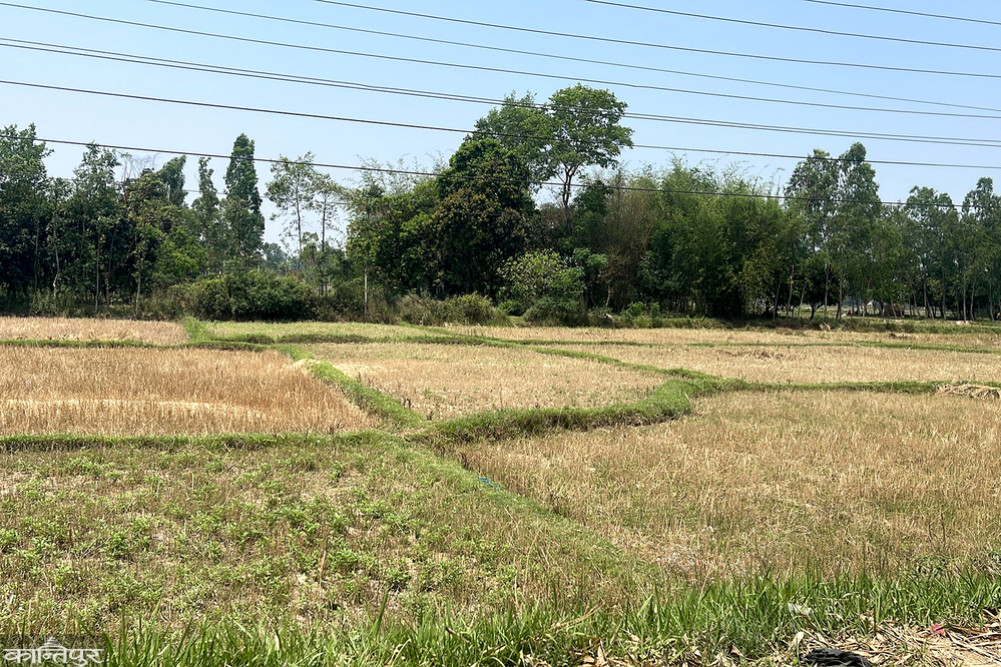
Nepal's oldest Chandra Canal, Koshi West Canal and 33 small and large irrigation projects are in operation here. However, due to the failure to maintain the Chandra Canal and Koshi West Canal, these systems have not been able to deliver water even to the command area.
We use Google Cloud Translation Services. Google requires we provide the following disclaimer relating to use of this service:
This service may contain translations powered by Google. Google disclaims all warranties related to the translations, expressed or implied, including any warranties of accuracy, reliability, and any implied warranties of merchantability, fitness for a particular purpose, and noninfringement.
In Saptari, which is considered a storehouse of grain, 57.69 percent of the 1,28,100 hectares, or 73,907 hectares, of the land is suitable for agriculture, excluding the area occupied by the Koshi Tappu Wildlife Reserve.
Of this, 72,482.45 hectares of land are cultivated here. The main occupation here is agriculture. Of the 104,660 farming families here, 60.42 percent of the population above the age of 10 is involved in agricultural work.
According to government statistics, about 263,000 metric tons of rice, 99,022 metric tons of milk, and 12,888 metric tons of meat are produced here annually. Rajbiraj, Hanumannagar, Kanchanpur, Kalyanpur, Bode Barsain, Pato, and Fattepur are emerging markets. A total of 9,533 businesses are operating here in the areas of wholesale and retail trade and motor vehicle and motorcycle repair. Of these, 16,518 people have found employment, while 2,642 people are involved in 1,321 hotels and restaurants.
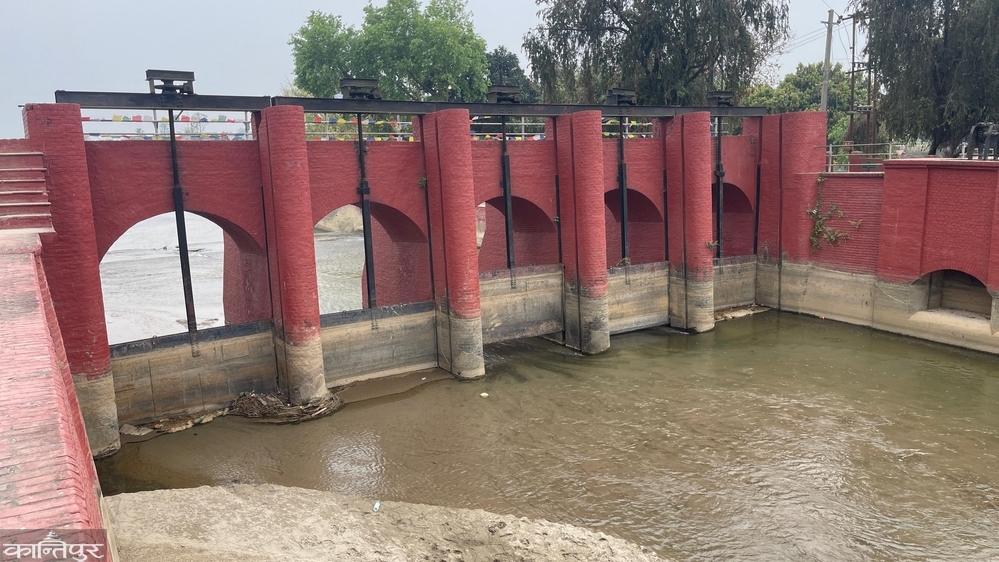 The country's first irrigation system Chandra Canal in Fattepur, Saptari Municipality-1. Photo: Bidyananda Ram/Kantipur
Recently, Madhesh Agricultural University has come into operation here. The Rs 770 crore project to modernize the Gajendra Narayan Singh Hospital in Rajbiraj has reached the final stage of completion. The infrastructure of the nursing college and engineering college has been prepared at the government level.
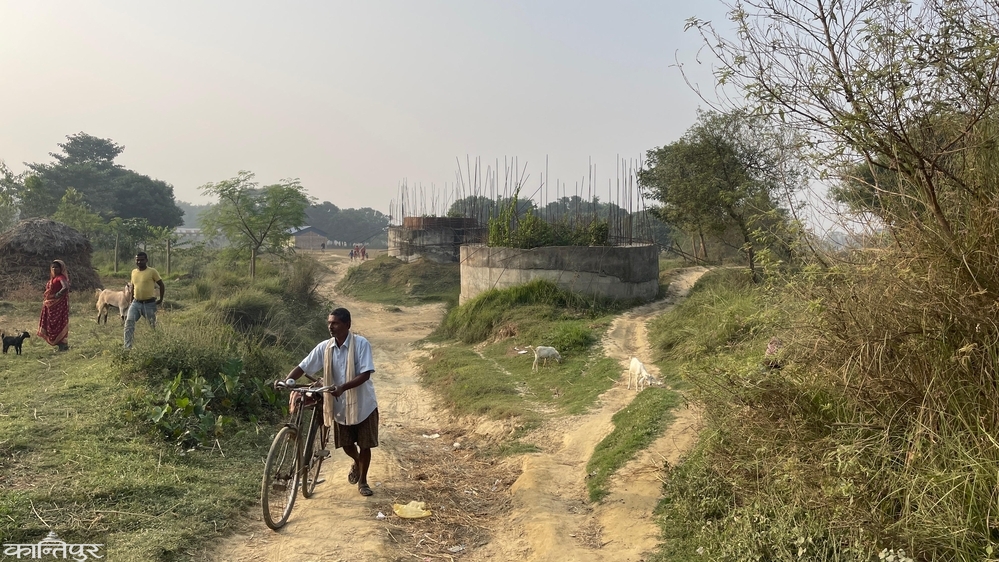 The Mutani Khola bridge connecting Banainiya-Kuran in Rajgadh Rural Municipality-6 of Saptari has not been completed even after a decade of construction. Photo: Bidyananda Ram/Kantipur
The Saptakoshi River flows in the east of the district and the Balan River in the west. Here, a road network along with the postal highway connects the village to the market. Due to the growing urban area and road expansion, transportation, extensive use of modern household appliances, repair services, construction and real estate due to the development of new settlements can be seen as an increasing form of economic sectors/sub-sectors.
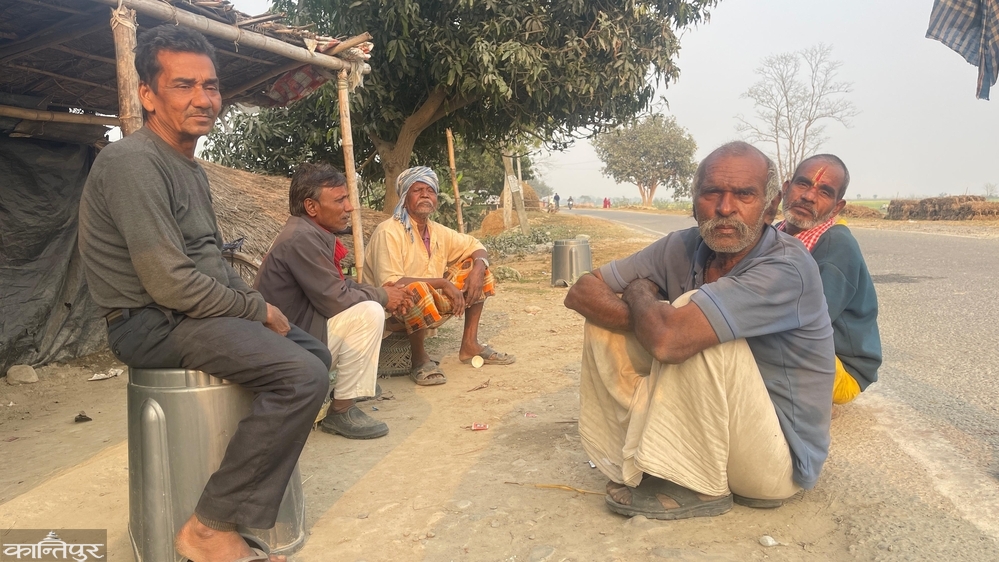 A Koshi-affected local of Hanumannagar Kankalini Municipality-14 Dalwa, Saptari, who has not received a residence permit for years. Photo: Bidyananda Ram/Kantipur
48.6 percent of the population aged 10 and above, or 343,859, is economically active. According to government data, 23,795 people are employed in this district. 33,510 people from 28,783 households have gone abroad and returned later. The population of people born in other countries and living in this district is 3.46 percent.
There are problems with the price of agricultural products, problems with seed germination, fertilizer and irrigation. 70 percent of the cultivable land here is forced to cultivate rice based on rainfall. Nepal's old Chandra Canal, Koshi West Canal and 33 small and large irrigation projects are in operation here. However, due to the failure to maintain Chandra Canal and Koshi West Canal, these systems have not been able to deliver water even to the command area.
According to the National Census 2078, 51.8 percent of the total population in Saptari is married, aged 10 years or above. 1,603 children under the age of 10 are married. 1.7 percent are widowers and 3.6 percent are widowed. Out of 10,232 children born within 12 months before the census, the highest number, 4,698, were born to mothers aged 20 to 24.
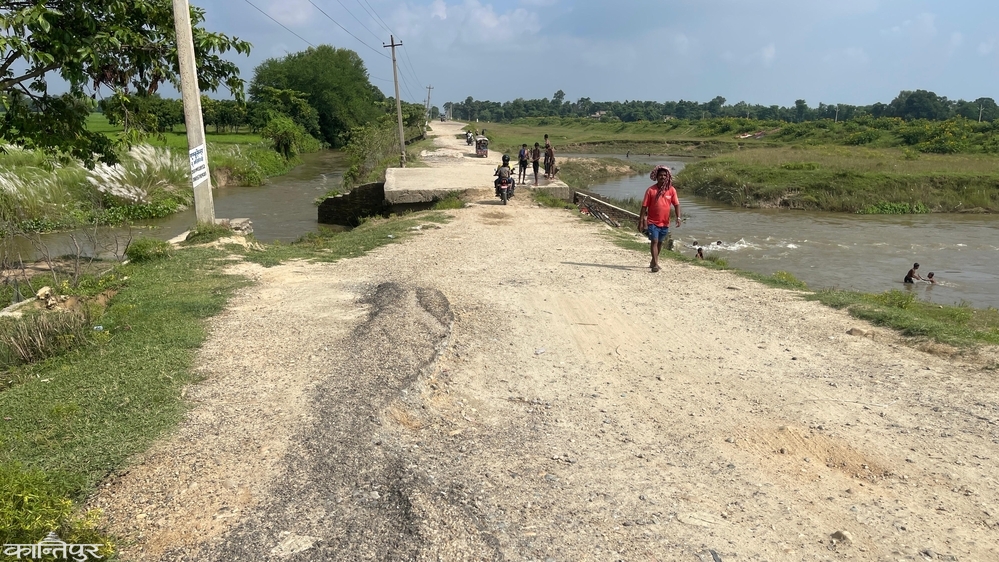 The road leading to Rajbiraj Customs in Tilathi Koiladi Rural Municipality-1 of Saptari, which has been dilapidated for years, is in a dilapidated condition. Photo: Bidyananda Ram/Kantipur
The number of households currently abroad with at least one person absent is 28,783. This number is 19.67 percent of the total 146,816 households. The highest share of those who have gone abroad, 54.81 percent, has gone to Middle Eastern countries. Of the people who have gone abroad, 77.45 percent have gone abroad for wages and 3.7 percent for studies.
According to the 2078 census, there are 29,214 houses. Of these, 57 percent are residential, 20.46 percent are sheds/stores, and 16.22 are unspecified. 28 percent of the families here live in houses with cement-bonded brick/stone foundations. 43 percent of families live in houses with wooden poles. 45 percent of families live in houses with external walls made of bamboo sticks and 41 percent of families live in houses with external walls made of cement-bonded bricks and stones.
9,525 households live in houses with thatched/straw roofs. Of these, 61 percent of households live in houses with thatched roofs and 27 percent live in houses with RCC sloping roofs. Of these, 63 percent of households live in houses with earthen floors and 32 percent of households live in houses with cement sloping floors. In terms of household facilities, 73 percent are using ordinary mobile phones and others are using smart mobile phones. The census results show that 12 percent of households here have internet facilities, 10 percent have refrigerators and 27 percent have motorcycles.
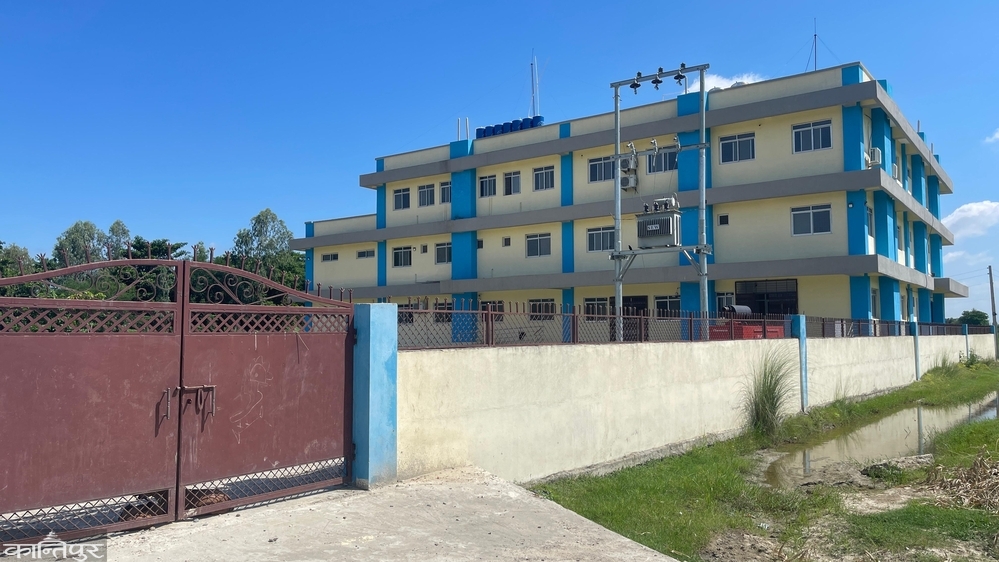 A 15-bed hospital in Saptari's Tilathi Koiladi Rural Municipality-3, Sakarpur, which is not operational even after almost two years of construction. Photo: Bidyananda Ram/Kantipur
The literacy rate here was 55 percent in the 2068 census. It has increased to 67.69 percent in 2078. The highest literacy rate is 76.56 in Rajbiraj Municipality and the lowest is 59.85 percent in Mahadeva Rural Municipality. Out of 705 schools here, 578 are community schools, 107 are institutional schools and 20 are religious schools.
Out of 146,816 households, 6,735 or 4.59 percent have access to drinking water taps inside or outside the household, while 93.43 percent of households still depend on hand pumps and taps for drinking water. Only 212 families use bottled and jarred water for drinking. Government data shows that 1.14 percent still use well water for drinking. 12.8 percent of families still do not have any type of toilet. 87.2 percent use some type of toilet, while the rest are forced to defecate secretly in bushes and fields.
According to the records of Gajendra Narayan Singh Hospital, Rajbiraj, 18,243 people received treatment at this hospital through health insurance in the fiscal year 2079/080. In that year, 1,956 extremely poor people and 753 senior citizens received services from the hospital's social service branch.
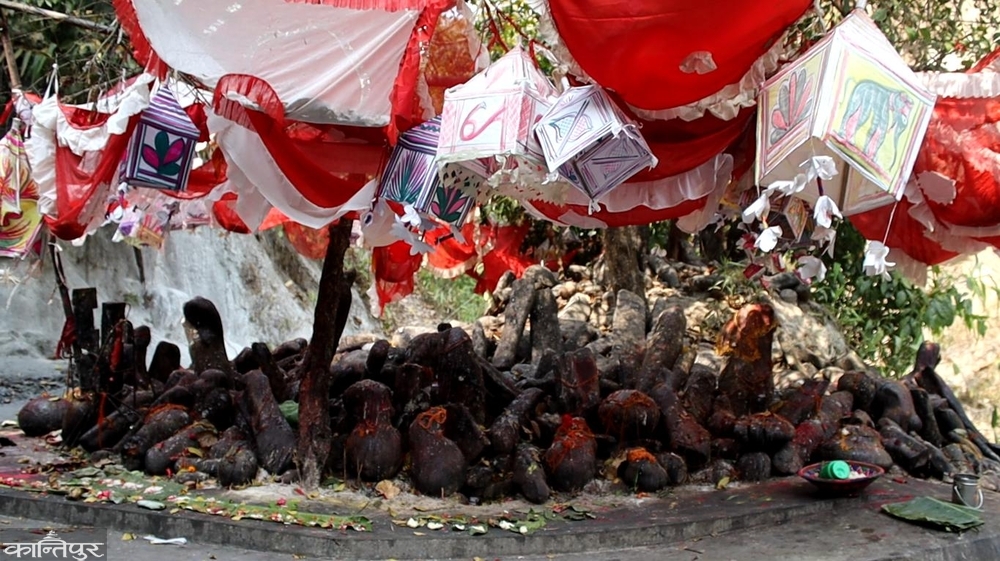 Loknayak Krishnaram Marautisthal, which is associated with folk culture, is located in Agnisair Krishnaswaran Rural Municipality of Saptari, which has great potential to attract domestic and foreign tourists. Photo: Bidyananda Ram/Kantipur
According to the details received from the three distribution centers of Nepal Electricity Authority, Rajbiraj, Kanchanpur and Bode Barsain, a total of 133,256 electricity lines have been distributed in Saptari as of Asad 2080. Of which, 85.29 percent are household lines and 12.47 percent are irrigation lines.
The aspect of good governance here seems to be very weak. According to the latest Auditor General's 62nd audit report, 440 million rupees have been added in one year at the local level alone. The report shows that due to the increasing trend of spending state funds by violating rules and procedures at the local level, 439.1 million rupees have been added in the fiscal year 080/081 alone.
The highest amount of money has been added in Balan Bihul Rural Municipality that year. There, a total of Rs 944.81 million was audited, of which Rs 52.397 million was added. In Rajbiraj Municipality, which is in second place, a total of Rs 2.34 billion was audited, of which Rs 47.67 million was added. So far, the amount of unaccounted money in the local levels here has exceeded Rs 5.98 billion.
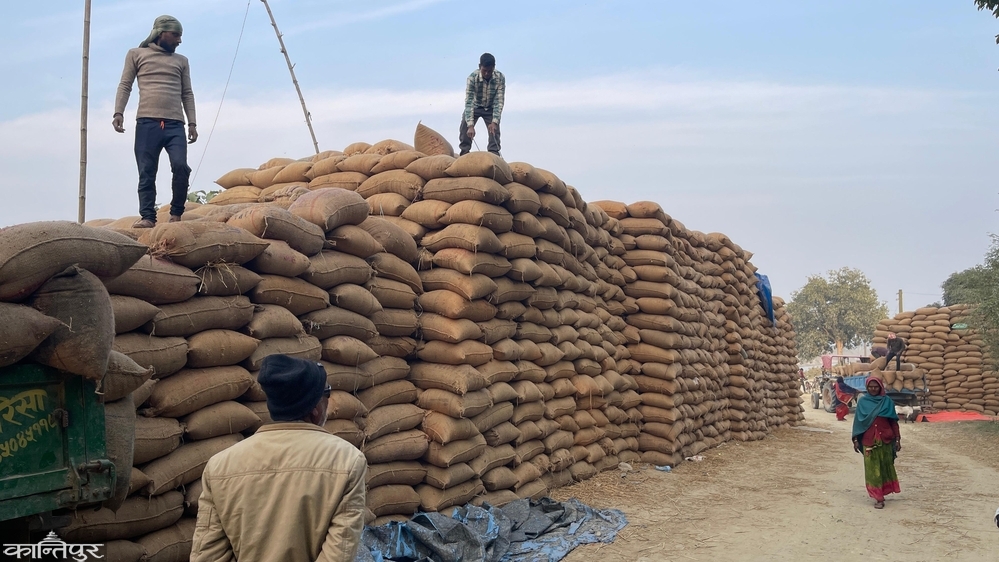 Paddy purchased from farmers and piled up in Rajbiraj Municipality-13, Saptari. Photo: Bidyananda Ram/Kantipur
There are religious and historical sites here, including Chinnamasta Bhagwati Temple, Kankalini Temple, Rajdevi Temple, Hanuman Temple, Vishnu Temple, Shani Temple, Ankuri Mahadev Temple, Shambhunath Temple, Manraja Gadhi, Dinarambhadristhal, Maruti. However, some of them have not been systematically built roads leading to temples and historical sites, while no one has paid attention to their conservation and beautification.
Saptari, which has an area of 1,363 square kilometers, has 9 municipalities and 9 rural municipalities. The geographical elevation here is 61 to 305 meters above sea level. The temperature here ranges from 7 to 40 degrees. The average rainfall here ranges from 1,336 to 1,835 millimeters. It is 43 kilometers long from east to west and 23 kilometers wide from north to south. The district is 63 percent Terai and 37 percent Chure.
Saptari, which has 4 constituencies, has a total population of 76,255 in 146,816 households. Of which 351,368 are male and 354,887 are female. Out of the total population, there are 446,422 voters. Of which 213,283 are female, 233,96 are male and 23 are others.