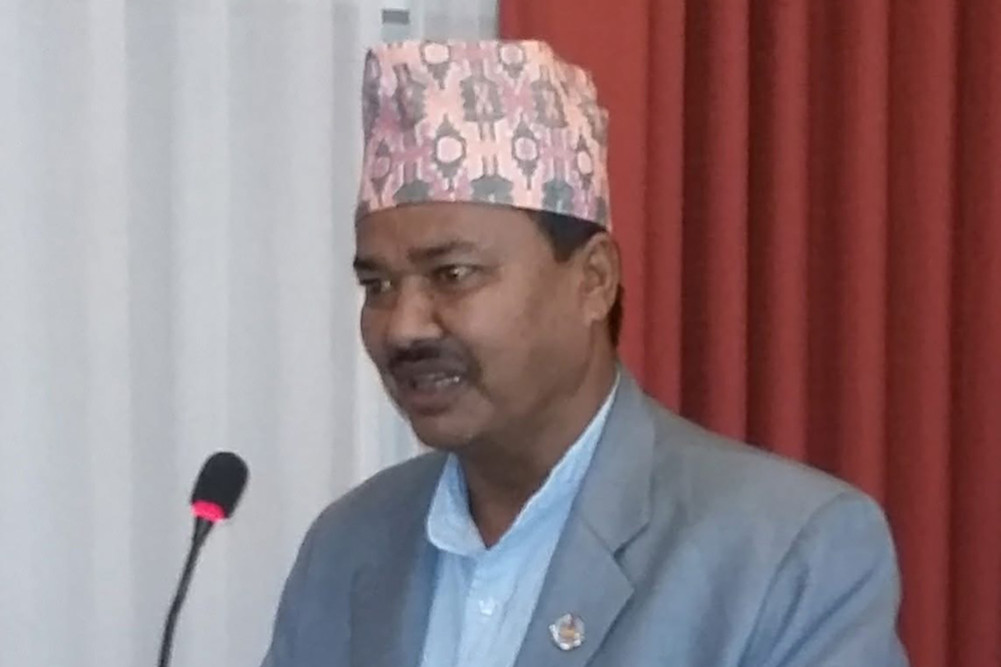
Chaudhary also said that the state has still not given freed Kamaiyas full rights over property and has forced them to live on land with natural hazards.
We use Google Cloud Translation Services. Google requires we provide the following disclaimer relating to use of this service:
This service may contain translations powered by Google. Google disclaims all warranties related to the translations, expressed or implied, including any warranties of accuracy, reliability, and any implied warranties of merchantability, fitness for a particular purpose, and noninfringement.
Former Chief Minister of Lumbini Province and leader of the Kamaiya Liberation Movement, Dilli Bahadur Chaudhary, has expressed serious concern that the Kamaiyas may return to the old cycle of slavery.
In a message of congratulations issued on Saturday on the occasion of the Freed Kamaiya Day, he expressed serious concern that the Kamaiyas, who were declared free 26 years ago, have not yet been fully rehabilitated and properly managed, saying that they may return to their old condition. Chaudhary also said that the state has still not given the freed Kamaiyas full rights over property and has forced them to live on land with natural hazards.
On 2nd Shrawan 2057, the Government of Nepal declared the Kamaiya Liberation, declaring the practice of employing helpless and uneducated workers directly or indirectly in the name of Kamaiya as completely illegal. In memory of that day, Kamaiya Liberation Day is celebrated every year on 2nd Shrawan in districts with a Tharu majority, including Lumbini Province.
After the government's announcement, more than 200,000 people from about 36,000 Kamaiya families in Dang, Banke, Bardiya, Kailali and Kanchanpur in the Western Tarai were freed from slavery. However, even after 26 years, Chaudhary expressed his sadness that the freed Kamaiya families have not been fully rehabilitated and managed. 'Even after 26 years of liberation, the freed Kamaiyas are not getting the rights they deserve from the state. They have been given a piece of land big enough to hide their bodies, but their rights over it have not yet been established,' he said. 'In addition, the freed Kamaiyas are still kept on land with natural hazards.'
He said that the state should be serious about providing proper management and sustainable employment to the freed Kamaiyas in various places in the country, including Geta in Kailali, the birthplace of the Kamaiya liberation movement. 'The freed Kamaiyas should not be forced to return to the same cycle of slavery due to the fate of the state,' Chaudhary said.
He has urged the government to make the lives of freed Kamaiyas easier and has also demanded that Kamaiyas be properly managed with sustainable employment.