The bill will help in the preservation and transmission of the traditional festivals, costumes, language, and cultural heritage of the Tharu community.
We use Google Cloud Translation Services. Google requires we provide the following disclaimer relating to use of this service:
This service may contain translations powered by Google. Google disclaims all warranties related to the translations, expressed or implied, including any warranties of accuracy, reliability, and any implied warranties of merchantability, fitness for a particular purpose, and noninfringement.
The Lumbini Provincial Government has prepared a bill for the protection and promotion of the ancient customs, traditions and culture of the Tharu community. The government has approved the submission of the ‘Bill for the Protection and Promotion of the Traditional Customs of the Tharu Community, 2083’, submitted to the Council of Ministers by the Ministry of Social Development, to the Provincial Assembly.
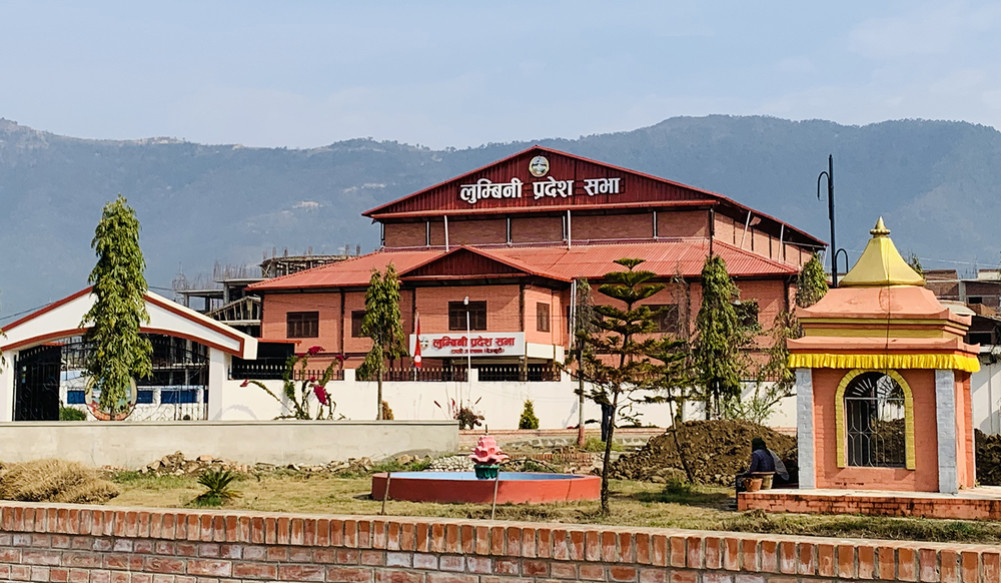
After the decision of the Council of Ministers, the bill has been registered at the Provincial Assembly Secretariat. The bill is being prepared to be submitted to the Provincial Assembly. Lumbini Province has a majority Tharu community and this bill has been prepared with the aim of legally systematizing the collective customary structures, organizations and cultural good practices that have been prevalent in this community since ancient times, said former Chief Minister of Lumbini Province Dilli Bahadur Chaudhary.
‘The proposed bill will legally recognize the ‘village mauja’ as the lowest level structure of the Tharu community and ‘praganna or tappu’ structures formed by two or more villages for irrigation and collective work,’ he said. ‘In addition, it will legally define the posts of Mahatwa, Barghar and Bhalmansa who lead the community and clarify their work, duties and responsibilities.’
Chaudhary is also a leading leader of the Tharu community in Lumbini Province. He said that the bill aims to provide special support in the documentation, preservation and transmission of the intellectual and cultural heritage related to the traditional festivals, food, costumes, language, and agricultural and irrigation skills of the Tharu community.
The bill also mentions important issues such as establishing a separate fund in each village mauja and praganna and encouraging a system to resolve common disputes within the community through reconciliation. Provincial Minister for Social Development Janamjaya Timilsina said that once the bill is implemented as an act, the good practices of the Tharu community will receive legal protection and the community's sense of belonging to the state will increase.
'When the proposed bill is implemented as an act, the good customary systems of the Tharu community will receive recognition, such systems will be protected, and the sense of belonging to the state and feelings of the community will develop and help in practical implementation,' he said. 'It will also help in documenting, preserving and passing on the culture and traditions of the Tharu community.'
He said that since the Tharu community is the majority in this province, there is a lack of legislative laws for the identification, documentation, preservation, promotion and transmission of good practices in the collective customary tribal structure, organization and behavior, customs, culture, heritage, Matwan, Barghar and Bhalmansa, which have been prevalent in the Tharu community since ancient times, and therefore it has been prepared as a bill and submitted to the Provincial Assembly. The Provincial Assembly has stated that the bill will be discussed in the next meeting.