The Butwal Sub-Metropolitan Municipality has been celebrating Baisakh 7th of every year as a victory festival to commemorate the day of victory in the battle at Jitgadhi Fort in Rupandehi during the Nepal-Anglo War.
We use Google Cloud Translation Services. Google requires we provide the following disclaimer relating to use of this service:
This service may contain translations powered by Google. Google disclaims all warranties related to the translations, expressed or implied, including any warranties of accuracy, reliability, and any implied warranties of merchantability, fitness for a particular purpose, and noninfringement.
The Nepali Army has started a 6-day trek in Palpa from Wednesday along the Gorkha-Jitgadhi integration route. The army started the trek from Hanuman Bhanjyang of Gorkha Durbar on Chaitra 10.
The trekking team was welcomed by the Chief and Assistant Lieutenant General Bimal Raj Sharma of the Nepali Army's 22nd Battalion, Chief of Mahindra Dal Battalion Shanta Kumar Thapa, Mayor of Rampur Municipality Raman Bahadur Thapa, Chief District Officer of Palpa Binu Bajracharya Kunwar and others at Keladi, the border of Palpa and Syangja.
The flags of five companies from the establishment of the Nepali Army and Vijaydeep have been handed over to The Famous Mahindra Dal Battalion in Palpa. The torch, national flag, the first 5 companies of the Nepali Army - Srinath, Sabuj, Purano Gorakh, Barda Bahadur and Kalibox - and the flags of the Gurubox battalion that participated in the Jitgadhi battle have been carried.
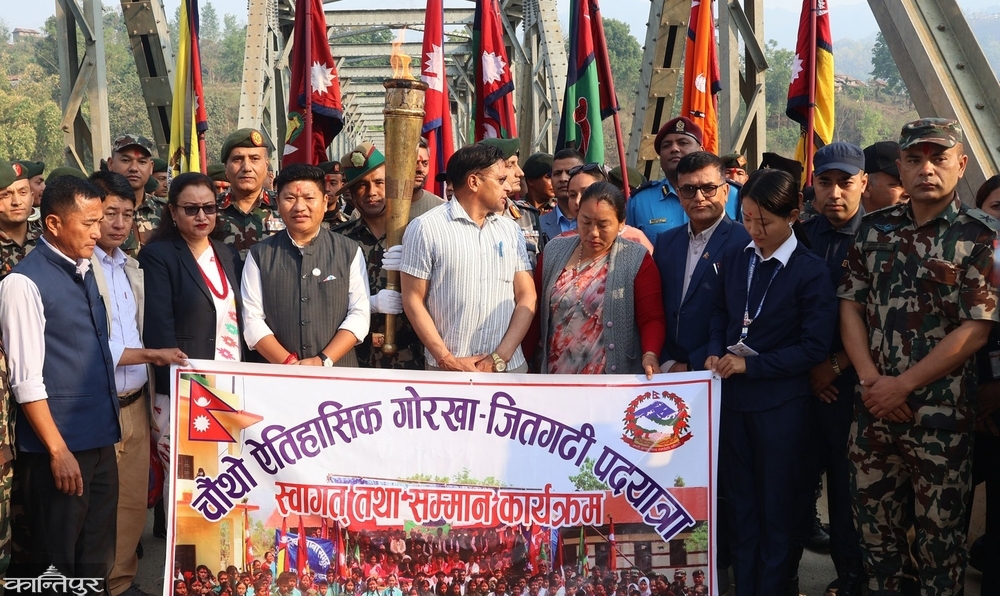
The Nepali Army will trek 161 kilometers through the forts and forts of Palpa. The trek, which started from Keladi Ghat in Rampur Municipality, will trek to Bakumgadi in Purbakhola, Mathagadhi in Hattilung, Pravas in Tansen Municipality (Tansen) and Jitgadhi in Tinau Rural Municipality (Nuwakot, Palpa). This is the fourth time the trek has been undertaken to identify the trekking route used by Prithvi Narayan Shah during the unification of the state.
The unification trek will start from Keladi Ghat in Rampur Municipality and end in Nuwakot (Tinau, Palpa) on Baisakh 7. There are 53 people in the team. Ganapati Thapa said that local residents, public representatives, school students, and representatives of the Tol Bikas Sangha will welcome and bid farewell at various places.
Starting from Keladi in Rampur, the program is to reach Bakumgadhi via Laxminarayan's historical Pauwa, Devisthan, Sitakunda, Beldanda, Siluwa, Jabgadi, Birkot on Wednesday.
From Bakumgadhi, it will reach Mathagadhi via Tahu, Humin, Devinagar, Muntung, Kerauli, Jhadeva, Jagat, Gothadi. Similarly, from Mathagadhi, it will stay in migration via Harnetar (Jhadeva), Marmara, Sikarkot (Kaseni), Damar, Eklebar Sarai, Damkada (Tansen). On the fourth day, the migration will start from Bartung Tansen, Ranujireshwari Bhagwati Temple and again from Kajipauwa, via Dumre, Masyam, Sisne, Marek Jhumsa, Dobhan and reach Nuwakot Gadhi, according to the Nepali Army's The Famous Mahindra Dal Battalion. On the last day, it will conclude by traveling from Nuwakot to Jitgadhi.
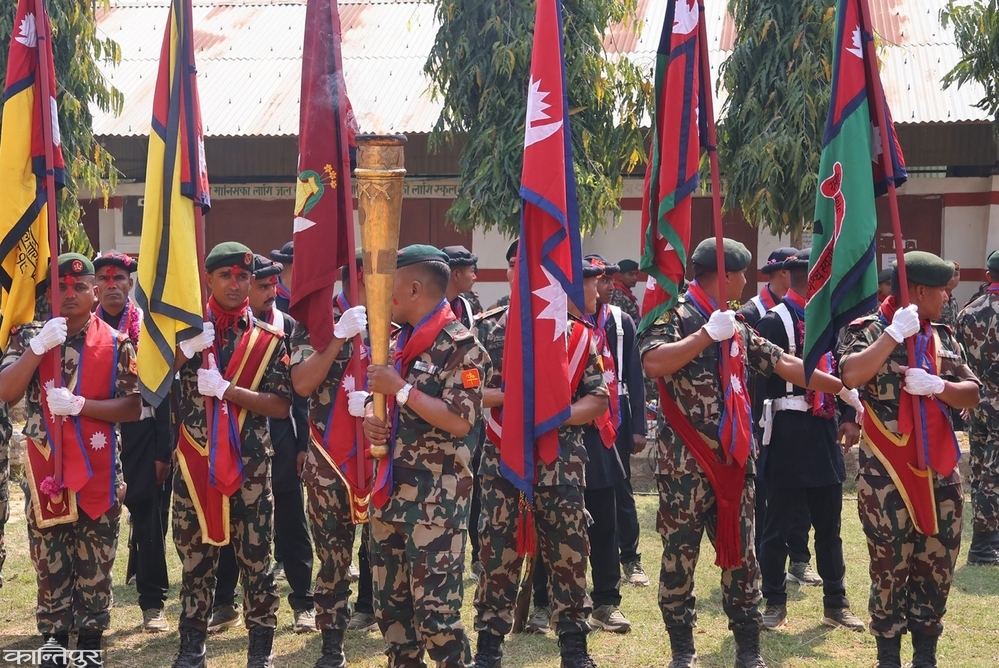
Rampur Municipality Mayor Raman Bahadur Thapa said that the trek will strengthen the relationship between the Nepali Army and the local people. The municipality and rural municipality participated in the trek with welcome, hospitality, respect, cultural tableau display and walk. It is believed that the local level will show interest in preserving the historical forts and forts.
Butwal Sub-metropolitan Municipality has been celebrating Baisakh 7 every year as a victory festival to commemorate the day of victory in the battle at Jitgadhi Fort in Rupandehi during the Nepal-British War. It is believed that the trek will help in identifying the forts, forts, palaces and the routes used during the unification, and help in their preservation, promotion and development. Jitgadhi Fort has a history of returning the British army after losing to Nepal on Baisakh 7, 1872.

