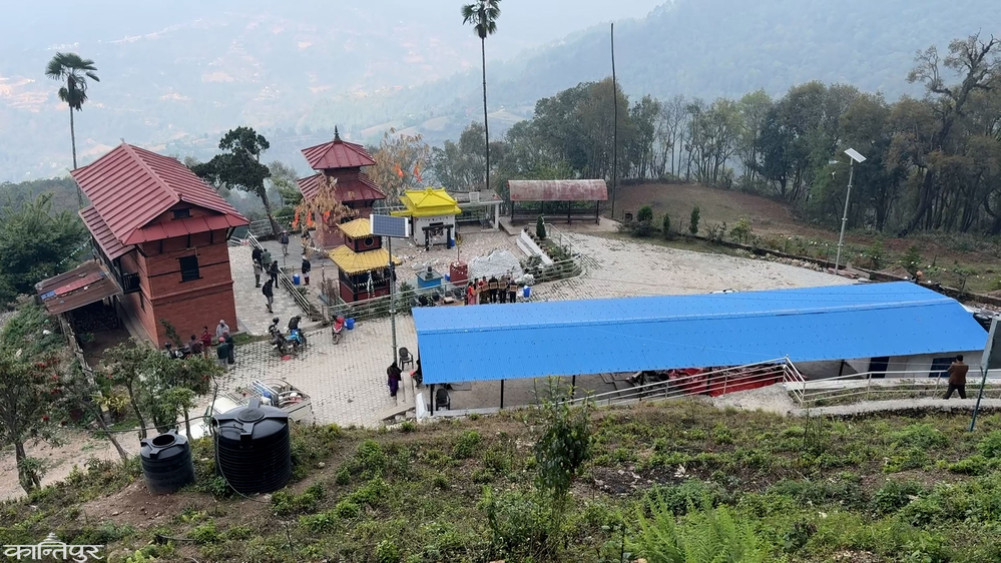
Religious and tourism development is underway in the Jaleshwor area of Ribdikot with a budget of Rs 60 million, including plans to build a Shiva temple, historical statues, a botanical garden, a children's park, and the construction of 108 water taps.
We use Google Cloud Translation Services. Google requires we provide the following disclaimer relating to use of this service:
This service may contain translations powered by Google. Google disclaims all warranties related to the translations, expressed or implied, including any warranties of accuracy, reliability, and any implied warranties of merchantability, fitness for a particular purpose, and noninfringement.
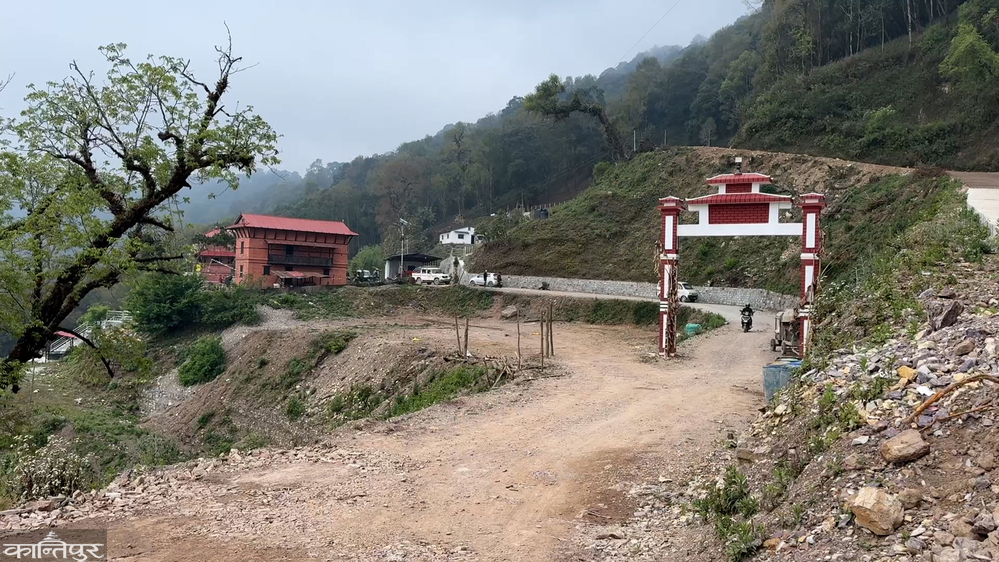
The work of building physical infrastructure has been intensified to make the 'Ribdikot Jaleshwor' area, the capital of the Palpa state in the 15th century, a religious and tourist destination. Ribdikot, the confluence of Kusumkhola, Thimure of 6 and Palangmainadi of 7, is being developed into a religious and tourist destination. For this, the federal, provincial and local levels have allocated budgets and taken forward activities to attract tourists, including road access, construction of physical infrastructure.
According to rural municipality chairman Narayan Bahadur Karki, a budget of 60 million has been invested so far. 'Ribdikot was lagging behind even though it was an important place,' he said, 'now we have taken the initiative to make this area a religious and tourist destination.' He said that the rural municipality has taken the initiative to make the Ribdikot Jaleshwor area a religious tourist destination.
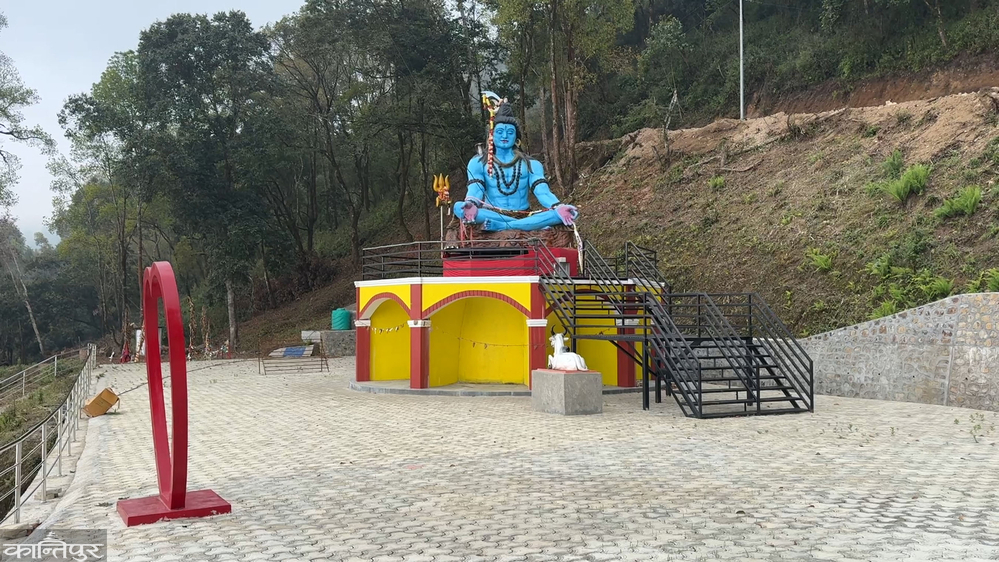
He said that the work of developing the Jaleshwor Siddha Temple area as a botanical garden, religious destination and tourist area has been taken forward. There is also an 11th-century statue here. Chairman Karki said that the Jaleshwor area, where the Vajrayogini statue is located, can be made a religious tourist area. ‘The oldest Dhuni out of 52 is located here,’ he said, ‘There is also a legend that the practice of bringing water from the Kaligandaki River and offering it dates back to ancient times.’
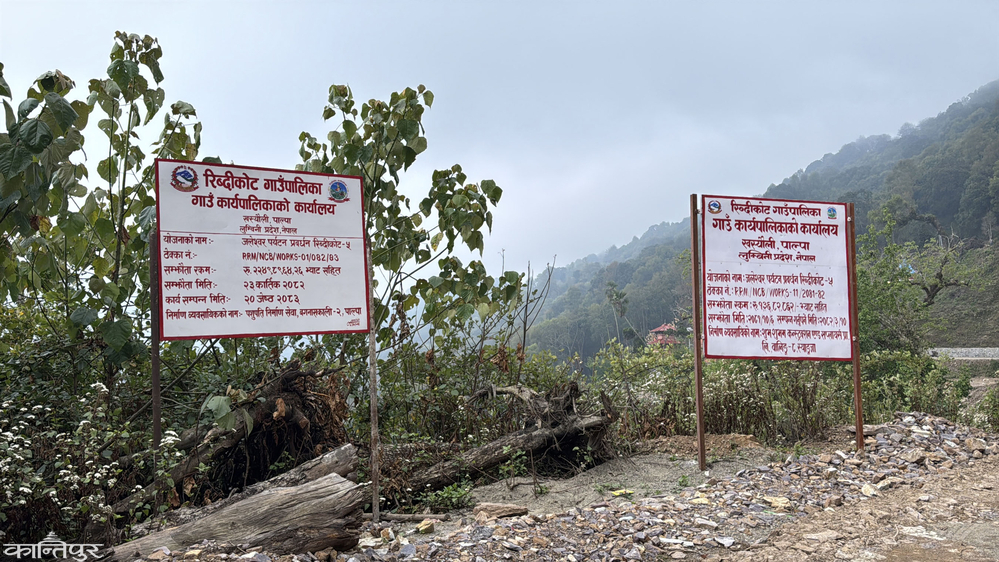
Promotional programs were held after the local level elections in 2074. After 2079, he said that work has progressed with an emphasis on physical infrastructure. Plans such as the reconstruction of a large statue of Shiva, temple, children's park, construction of stairs, construction of 108 water taps, installation of a Shivalinga, construction of a powa have been progressed. So far, after 2079, he said that work has progressed by inviting tenders worth 61.3 million.
Ribdikot is located 20 kilometers west of Jaleshwor, the district headquarters, Tansen. The Jaleshwor area is known for its religious and historical significance. In the 15th century, Palpa was a four-kingdom state. Palpa was considered the most powerful of the four-kingdom states. This state was formed after the dissolution of the Khas kingdom. This state was founded by the ruler of Ribdikot, Rudra Sen, in 1550 B.S.
A weather radar has been installed on Ribdikot hill. The government has installed a radar in Ribdikot for weather measurement. To identify the Jaleshwor area, the former Kusumkhola VDC had started the work by putting a tin roof on the building.
There was an unbroken Dhuni here and the priest used to live. The building has been built for that. After the local level elections, work was done to identify Jaleshwor by cleaning, fencing, planting various plants, setting up a nursery to advance it as a botanical garden, and making the temple more organized, said the outgoing chairman of the municipality, Narayan Bahadur GC. Last year, various types of plants have been planted in the area around the temple. More than 300 plants including avocado, timur, bar, peepal, tejpat, lakuri have been planted here.
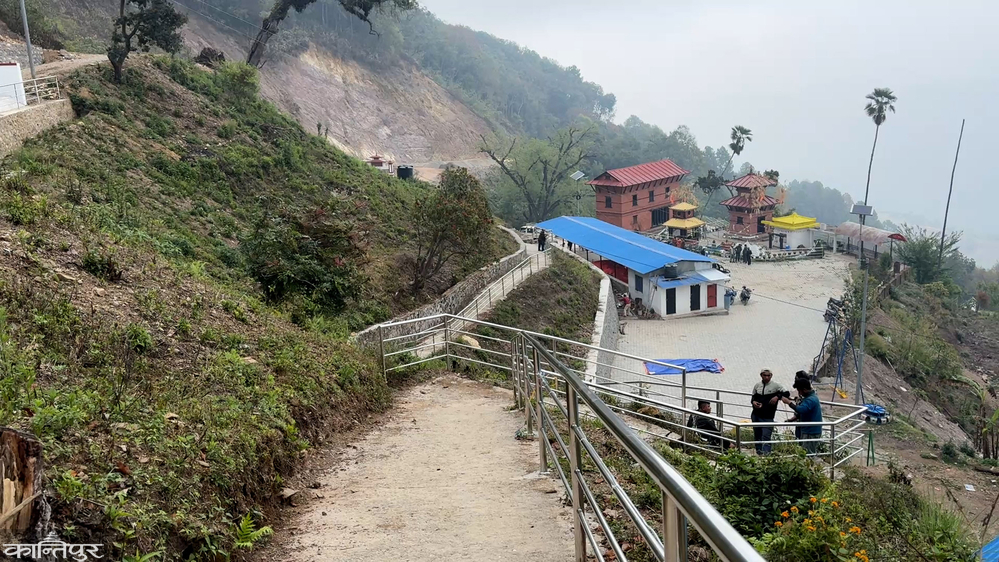
Last time, the rural municipality planted 108 peepal trees in the famous Jaleshwor Siddha Temple area under the Jaleshwor Temple Management Committee of Ribdikot. In the past, the rural municipality budget had been used to build roads in the Jaleshwor area, manage water supply, clean the area around the temple, and plant various types of plants.
The Jaleshwor Development Committee Chairman Benimadhav Acharya said that the temple, Shivalinga, and other statues were installed from the state government budget. The state had provided Rs 500,000 for the high-tech tunnel and the rural municipality contributed Rs 100,000 to it.
The Jaleshwor area has a history of being the capital of the Sena dynasty kings who, unable to withstand the Mughal invasion from India, came to Ribdikot via Butwal. The Jaleshwor area, a place of natural, religious, and cultural importance, has 65 ropanis of land for development. Kusumkhola Ward Chairman Man Bahadur Aslami Magar said that they have started planting various types of plants here.
Aslami said that there is a need for changes in the historical as well as the environment, forests and biodiversity of this place. It is necessary to develop it as a religious and tourist destination. There are plenty of water sources in the Ribdikot area. From here, water is drunk in places like Bhairavsthan, Kusumkhola, Palungmainadi, Khyaha, Bhairavsthan, Khasyuli and others.
Recently, the Jaleshwordham Shivapuran Mahayagya was organized for the development of this area. The Mahayagya, which was conducted from Magh 22 to Falgun 3, generated an income of Rs 14 million. The amount was collected from donations given by various individuals and organizations during the Mahayagya period, said Chief Kunwar, coordinator of the financial sub-committee. Rs 8.5 million has been spent on conducting the Mahayagya. Additional expenses include the construction of Shivalinga, Gaumukhe Dhara and other works.
‘We have supported the municipality’s plan to make Jaleshwor Dham a Vaikuntha Dham,’ said Kunwar, ‘After the successful completion of the Mahayagya, the firm desire to work further is ready to be fulfilled.’ Sammar Bishwakarma, vice-chairman of the main organizing committee, said that the plan is to build a dharamshala in Jaleshwor Dham, build cottages for accommodation, conduct Ayurveda and Gurukul education, and arrange regular pujas.
Secretary Diwakar Aryal said that the coordinators and assistants of the sub-committee who helped in the successful completion of the Mahayagya were honored.