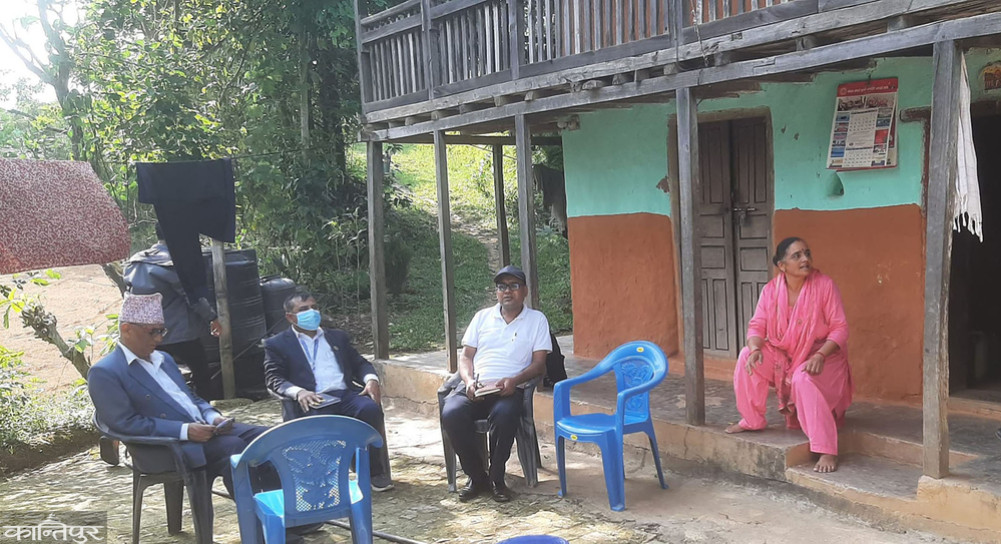
In 2022, a patient from Pokharathok, Baganaskali-2, Palpa died, and in 2025, the disease was confirmed in four people from Palpa.
We use Google Cloud Translation Services. Google requires we provide the following disclaimer relating to use of this service:
This service may contain translations powered by Google. Google disclaims all warranties related to the translations, expressed or implied, including any warranties of accuracy, reliability, and any implied warranties of merchantability, fitness for a particular purpose, and noninfringement.
In 2022, a 56-year-old man from Pokharathok Lalpati, Baganaskali Rural Municipality-2, Palpa died of Japanese encephalitis. When he was confirmed, the disease had appeared in Palpa after 10 years.
He died during treatment at Lumbini Medical College and again in Kathmandu three months after the infection was confirmed. According to the family, despite spending about 4.5 million, the patient did not survive. According to the Health Office, Palpa, Japanese encephalitis is initially difficult to diagnose. Even after diagnosis, a large amount of money is spent on treatment. Even those who recover are at risk of developing physical problems.
‘Even though this disease was diagnosed earlier, the patient could not be diagnosed,’ said Bishwanath Neupane, Program Officer of the Health Office. ‘One person was diagnosed with the disease in 2022 and four in 2025.’ According to him, Japanese encephalitis was confirmed in four people in 2025. After informing the health office from various hospitals in the district, discussions and interactions have been held with the family as well as the hospital on the disease.
In 2025, this disease was confirmed in Juthapauwa of Rainadevi Chhahara in Palpa, Dobhan of Tinau, Pokharathok of Baganaskali Rural Municipality and Rampur Municipality, said the acting head of the health office, Tuk Prasad Pokharel. The disease was confirmed in an 8-year-old boy in Juthapauwa. Japanese encephalitis is transmitted through the bite of female mosquitoes of the Culex species. Rice fields and places where water stagnates near the house are more at risk. Because this is a suitable environment for it.
This disease is not transmitted from person to person. He said that if there is a chicken coop or pig coop near the house, there is a risk of contracting the disease. People infected with this disease experience high fever, headache, nausea, shivering, and confusion.
Despite the disease being seen, on-site inspections were conducted at all four locations last year. He said that information was collected about people showing symptoms. Madhusudhan Bhattarai, Lab Technician Officer at the Health Office, said that mosquitoes become infected after biting pigs, ducks, and wild birds infected with the virus. The disease is transmitted when the same mosquito bites humans.
Vaccination against it began in Nepal in 2073 BS. This vaccine is given when a child is about to turn one year old. A man had died of Japanese encephalitis in 2068 BS in Rainadevi Chhahara Rural Municipality-7, Baldhengagarhi. According to the Health Office, one or two cases were seen a year before 2070.
This disease is a viral infection that affects the brain. According to doctors, about a third of those infected with this disease die. Up to half of those who survive are at risk of severe disability for the rest of their lives. Since June 2025, 35 people have died in 117 local levels in 45 districts of Nepal, according to the Ministry of Health. Last year alone, more than 175 people were infected. In 2024, 23 people died and more than 80 infections were confirmed.
Nepal has been vaccinated against Japanese encephalitis through a regular vaccination program for the past two decades. All children under the age of 15 have been vaccinated. But the actual number of infected people may be higher due to difficulties in diagnosis. Because testing is usually only done on patients who are hospitalized in serious conditions. The disease can cause permanent damage to the brain and nervous system. Since there is no specific medicine for it, treatment will focus on symptom management, said Neupane, program officer at the health office.