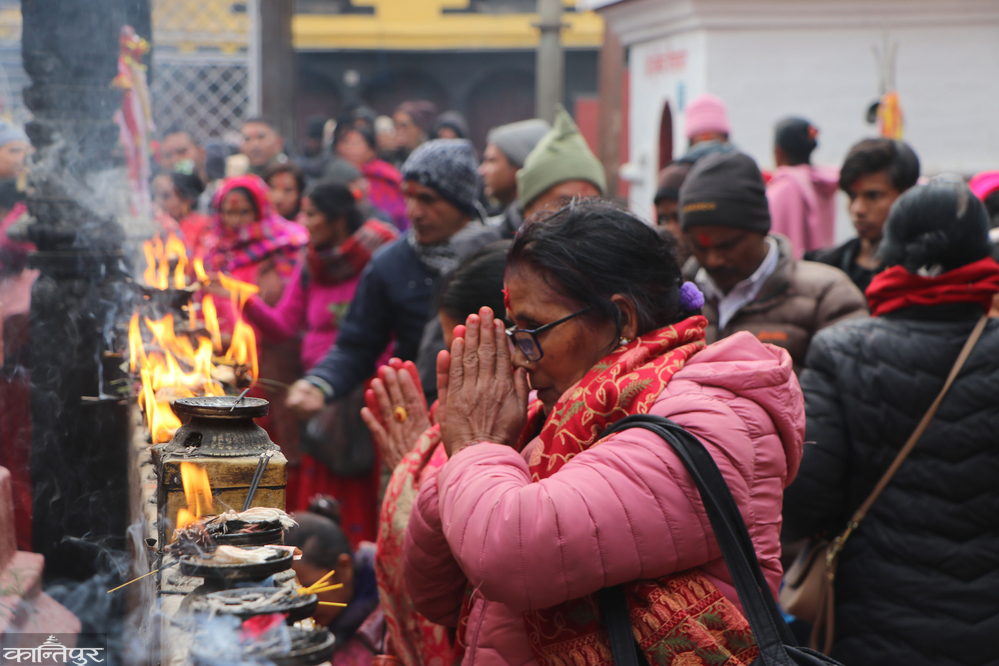
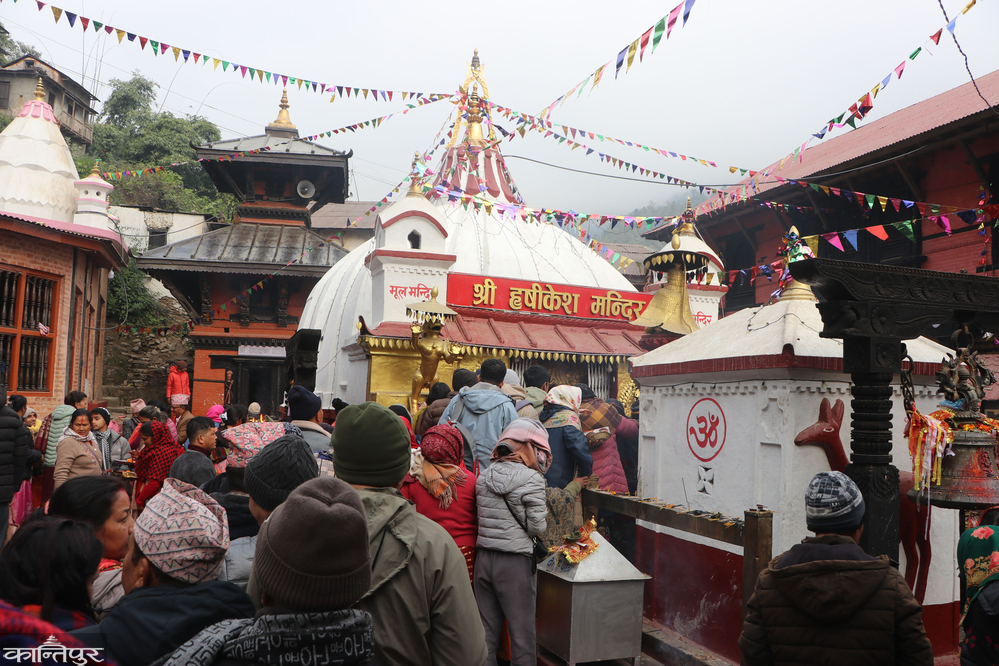
Devotees from various districts including Palpa, Gulmi, Syangja have come to celebrate the Ruru Mela by bathing in the Kaligandaki River and visiting the Rishikeshava Temple.
We use Google Cloud Translation Services. Google requires we provide the following disclaimer relating to use of this service:
This service may contain translations powered by Google. Google disclaims all warranties related to the translations, expressed or implied, including any warranties of accuracy, reliability, and any implied warranties of merchantability, fitness for a particular purpose, and noninfringement.
A crowd of people has gathered in the Ridi Ruru area, the confluence of Palpa, Gulmi and Syangja, since morning to take a bath on Maghe Sankranti. A crowd of people has gathered in the Kaligandaki located in Ridi, Ruru area on Sankranti. A five-day Sankranti fair has also begun here.
People from different parts of the country, including Palpa, Gulmi, Syangja, Arghakhanchi, Rupandehi, Kapilvastu and others, come to Ridi to take a bath during Sankranti. Indian devotees also come to Ridi. Ridi Ruru area holds a five-day fair, said Parshuram Bhattarai, chairman of the Rishikeshava Temple Management Committee. They bathe in the Kaligandaki for three days and visit the Rishikeshava Temple. They come for two more days to do the market and hold the fair.
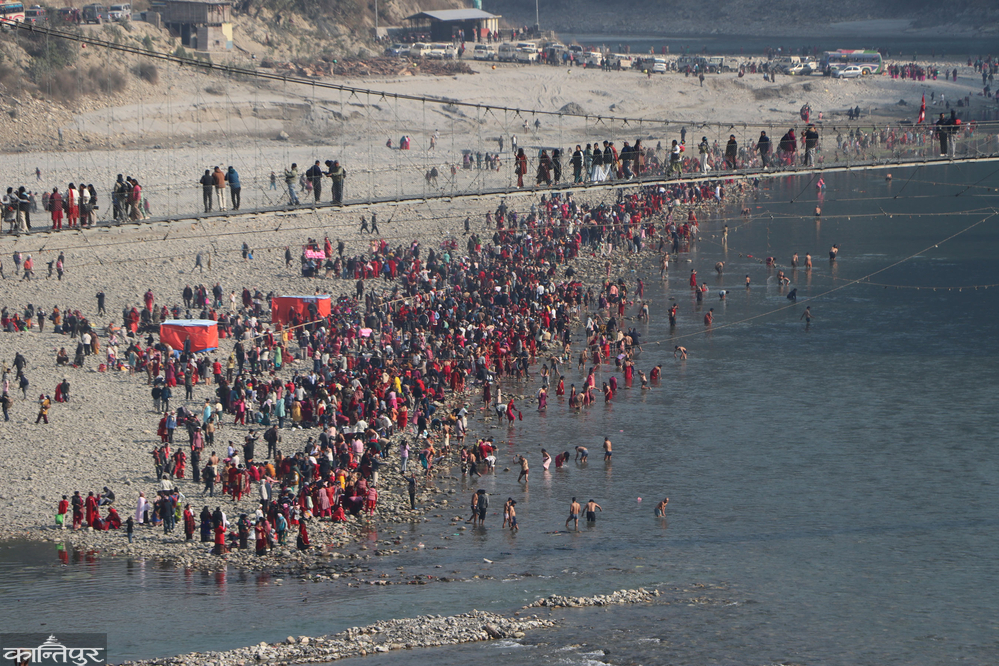
There is a popular belief in Ruru area that bathing in Maghe Sankranti will bring merit. It is customary to bathe in the Kaligandaki River and visit the Rishikeshava Temple located in Argali, Tansen Municipality-14. Devotees come here from Nepal as well as India. Ruru area is one of the four Dhams of Nepal.
‘It is a tradition for devotees to come and go,’ said Bhattarai, ‘Not only from Nepal, but also from various parts of India, devotees have come to the Ruru region.’ The Ruru region had been bustling since a few days before Sankranti.
A three-headed bridge has been built on the Kaligandaki River flowing from Muktinath to Syangja. The three-headed bridge leading to Palpa, Gulmi and Syangja is also crowded. The river is small here because the water is trapped in the Kaligandaki Hydropower Project Mirmi. According to Shobhakhar Bhattarai, ward chairman of Argali, Tansen Municipality-14, the three-headed bridge has made it very convenient for devotees who come to bathe in Sankranti and visit Rishikeshava.
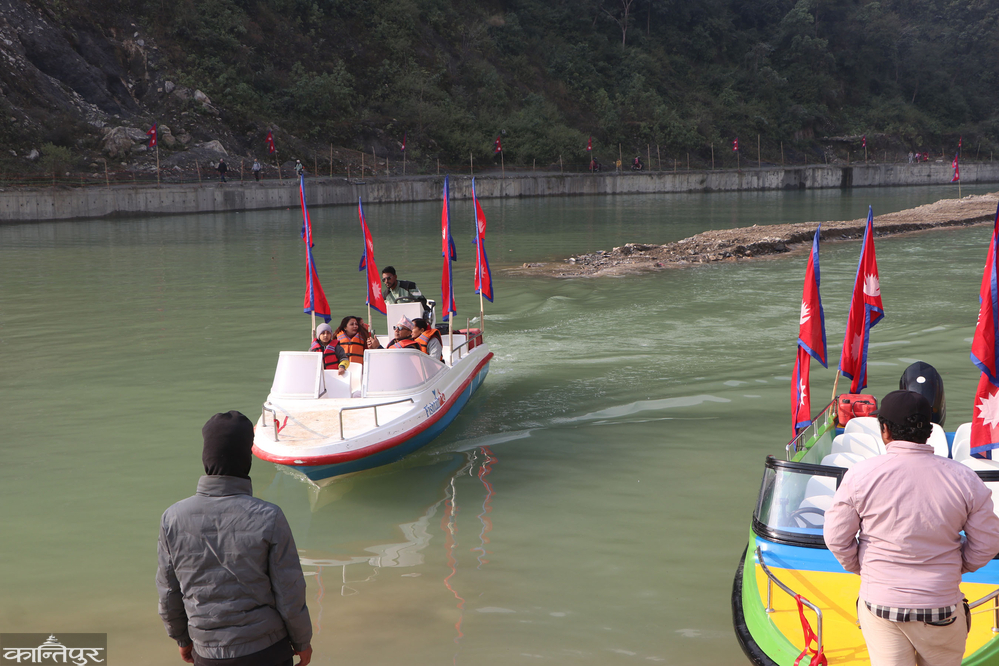
Due to religious faith, people take a Makar bath, chant, worship, sacrifice, donation and perform Pitra Shraddha in the Ruru region, said Shankar Giri, operator of the Ruru area Gaushala. Due to the religious and cultural importance of the Ruru area, people come from different places to attend the fair. The famous Rishikeshava temple located towards Palpa is visited by devotees from Syangja and Gulmi to attend the fair. This year, young people have built a lake by blocking the Ridi river to attract tourists.
The 16th-century king Manimukunda Sen found the idol of Lord Rishikeshava while bathing in the Kaligandaki. It is believed that the same idol was installed there. The Rishikeshava temple and this area are also known as the birthplace of Ruru Kanya. The idol of Rishikeshava was obtained and established from Manimukunda Sen. Bhattarai, the chairman of the temple management committee, said that the famous Rishikeshava temple can become an attraction for religious tourists.
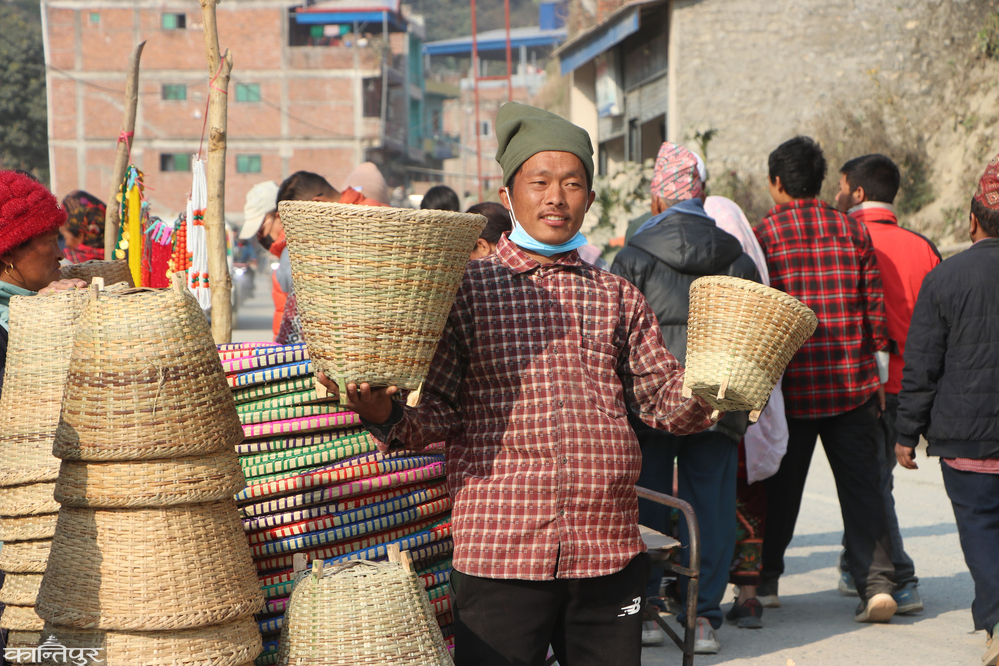
On the occasion of the Ruru fair, commercial stalls have also been set up in Palpa, Gulmi and Syangja areas. There are more than 200 stalls in Gulmi and Palpa. There are hotels, household items, supos, baskets, radis, pakhis, and fancy items in the stalls in the Ruru area. At the fair, farmers including Thorga of Gulmi have set up stalls selling sugarcane nests, khudos, knives and local products. People from Palpa, Baglung, Rukum, Rolpa, Humla, Jumla, Mustang and other places have come to Ridi to sell household items to trade on the occasion of Sankranti. They said that supos and baskets will be sold at the fair.
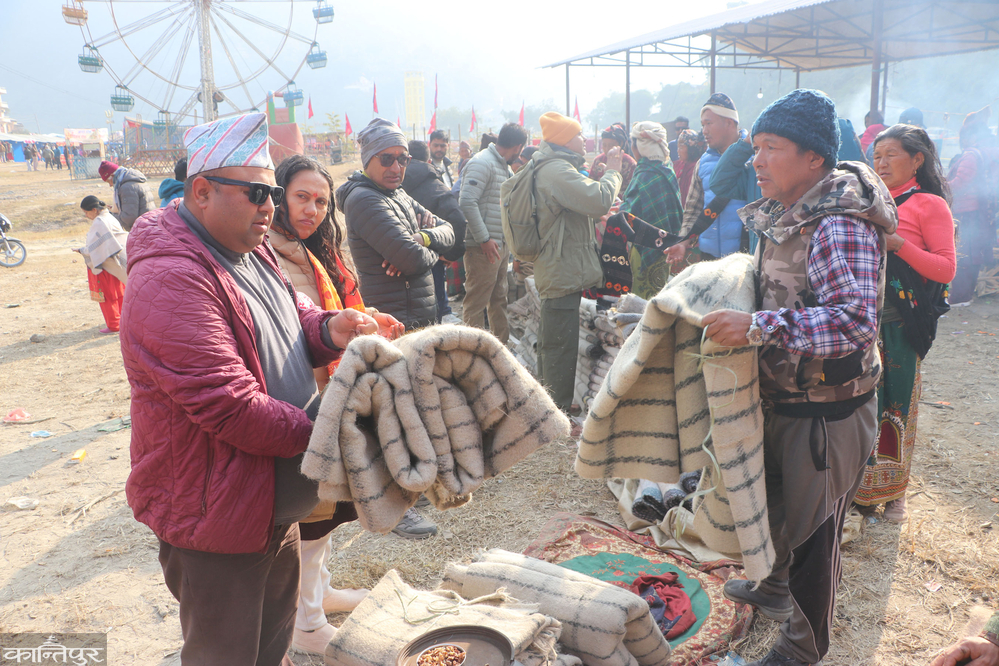
Apart from this, traders from Rolpa, Rukum, Salyan, Pyuthan, Parbat, Baglung, Myagdi, Mustang and other districts have brought woolen items found in the area to escape the cold. They have brought woolen goods, radi pakhis, blankets from Mustang. They have brought radi-pakhis from various villages in eastern Rukum.

