We use Google Cloud Translation Services. Google requires we provide the following disclaimer relating to use of this service:
This service may contain translations powered by Google. Google disclaims all warranties related to the translations, expressed or implied, including any warranties of accuracy, reliability, and any implied warranties of merchantability, fitness for a particular purpose, and noninfringement.
The Mayadevi temple in Lumbini, the birthplace of Buddha, which is being eroded by the water coming from the ground, has been renovated and made Chirichyatt. Electric lights, drainage, cleaning and painting have been done inside the Mayadevi temple.
After Lumbini Development Fund was always lacking in budget, it became dilapidated and dilapidated.
The Mayadevi temple that made Nepal known all over the world now looks attractive and attractive. The walls inside and outside the Mayadevi temple are painted. Similarly, enamel paint has been applied to the wooden walkways, railings, doors, windows and the upper metal trust. The temple has been made moisture resistant with environment and heritage friendly paint. It looks good with shiny and 'washable paint'.
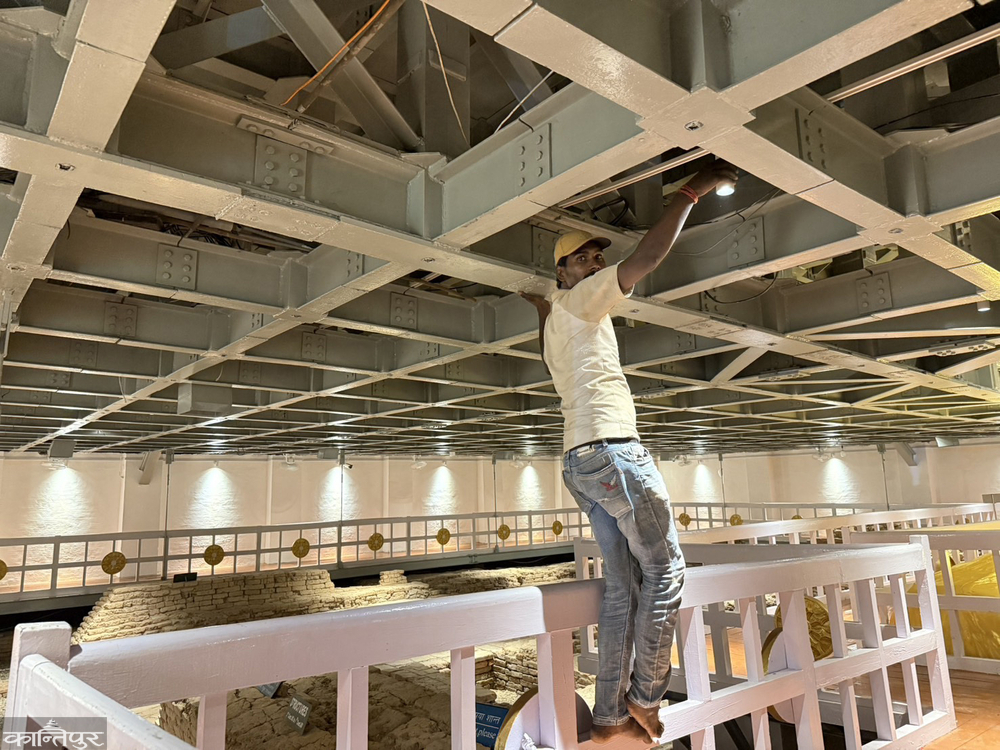 The Royal Thai Monastery in Lumbini has renovated the Mayadevi temple at a cost of 67 lakh 41 thousand. To restore the Mayadevi Temple in a heritage-friendly manner without touching the archaeological ruins, the Royal Thai Monastery called civil engineer Sanuka Nilanjay Tillakaratne from Sri Lanka and worked in coordination with the Lumbini Development Fund. The work was completed in June after taking about 5 months.
The head monk of the Royal Thai Monastery, Phra Rajbodhi Videsh Vajirasuddhi, said that the temple was renovated with faith and reverence towards the Buddha. 'We Thais consider ourselves lucky to touch the soil of Lumbini,' he said. We wanted to renovate the entire temple, but it was not possible due to various reasons. If we need help again, we are eager to do it,' he said.
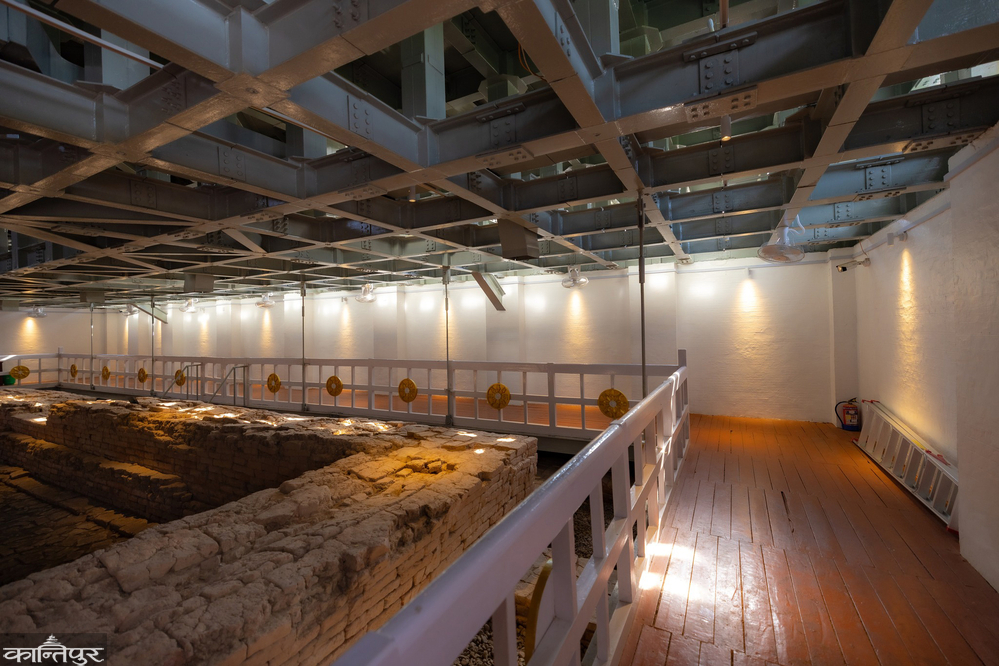 Due to the rain, the underground water level around the Mayadevi temple was increasing, and the archaeological ruins and walls were getting eroded. Now the problem has been solved by creating a systematic 'drainage system'. 5 underground wells were built around the temple so that when the water level does not reach the archaeological ruins of Mayadevi temple.
When the well is filled, the water is thrown out by running the pumpset, now an automatic submersible motor has been installed. As soon as the water reaches a certain level, 5 motors start running and throw water. Two pipes of 6 and 4 inches have been 'drained' in the well. Himal Upreti, chief archeological officer of Lumbini Development Fund, said that the water from the roof had also started falling down from 5 places and draining out from the pipe of the well. He said that as the water from all 5 places gathered in one place in front of the temple and started going out in an orderly manner, many problems caused by water were solved.
Due to lack of air inside the temple, the problem of dampness, increasing humidity, and the smell of feet and socks of devotees and tourists have also been removed. Inside the temple, 16 'adjust fans' of 12 inches have been installed and the air inside has been taken out. Similarly, 22 ceiling fans that rotate 360 degrees have been installed inside the temple. Vasant Bidari, Senior Archaeologist, said that if there is good air circulation inside, there will be no damage to the archaeological heritage and it will be easy for tourists to meditate and see. "It would be better if the fund did such an important work from its own resources," he said. The Lumbini Development Fund, on the other hand, had been showing reluctance for a long time, showing lack of budget to restore the temple.
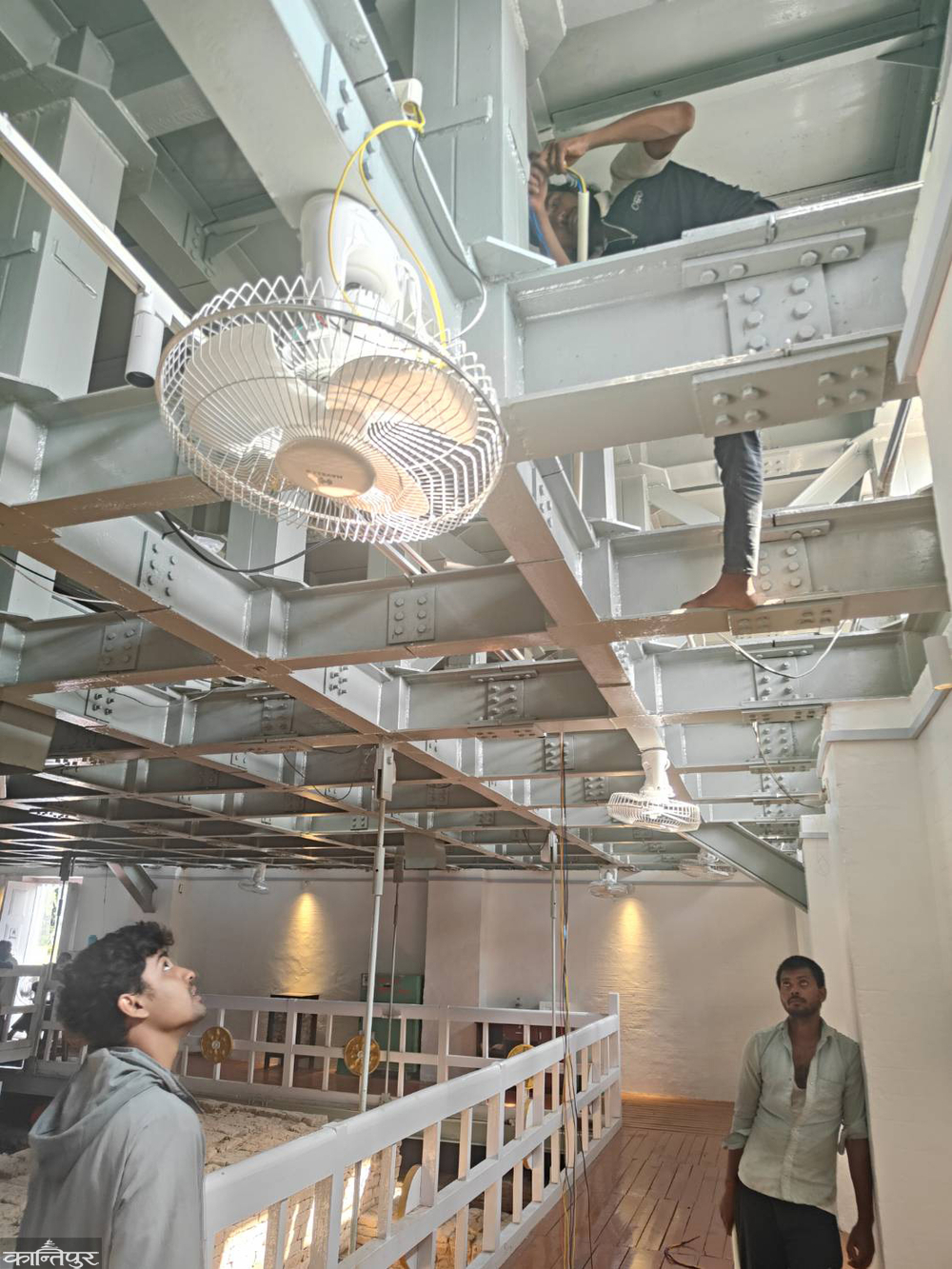 Similarly, heritage-friendly lights have been installed inside the temple. Since the lamp also plays an important role, expensive 'ultra-violet' lamps have been installed which do not damage the antiquities. 60 lamps of 10 watts and 30 lamps of 8 watts have been installed. Electricity has been arranged inside the temple. Complete new electrical wiring has been done. 63 ampere panel board, 5 'control panels' of water pulling motor, 32 ampere 'automatic changeover', 'switch board' and 'MCV box' have been installed. Similarly, the wood and glass of 16 windows have been changed. The door of the temple has also been built.
The heritage-friendly improvements made to the temple contributed significantly to the 47th session of the UNESCO World Heritage Committee, which was recently held in France, to prevent Lumbini, the birthplace of Buddha, from being listed as a possible danger, said Sanuraj Shakya, member-secretary of the fund. The Nepali authorities have breathed a big sigh of relief when the donors have acted according to the advice given by UNESCO experts to protect the temple's archaeological heritage. Lumbini is the most visited destination in the country. About two lakh foreigners, more Indians and more than 1.6 lakh Nepalis come here every year. Mayadevi temple was inaugurated in 2002 by the then chairman of the fund, Gyanendra Shah.

