We use Google Cloud Translation Services. Google requires we provide the following disclaimer relating to use of this service:
This service may contain translations powered by Google. Google disclaims all warranties related to the translations, expressed or implied, including any warranties of accuracy, reliability, and any implied warranties of merchantability, fitness for a particular purpose, and noninfringement.
Purna Bahadur Chundali is amazed at the rejuvenating tourism of Narpani, the hill where vultures live, the forest where cattle graze, the buffalo pond and the forest area with thorns. Born in the year 2013 in Paiyanpata, a small village located at the foot of two high mountains, Narpani has turned into a tourist destination during his lifetime. When he turned 13 years old, the headquarter of Arghakhanchi district was established in 2026 at Narpani.
Zilla Panchayat, CDO Office, Malpot, Forest, Thana (Police), Health Post, Jail Management offices were established. At the age of 16, he got a job as a PN (office assistant) in the CDO office. As new houses were being added to the small village, it was becoming urbanized . The headquarters did not last for many years due to political turmoil. Leaders of places such as Wangla, Argha, Bangi, Kimdanda, etc. in the North region, with the power of 032 He said that the headquarters was moved from Narpani to Sandhikhark. At that time, the office board and belongings were forcibly picked up by the villagers of Uttarkhanchi and carried on their heads. In front of the big power, the locals of the small village Narapani did not care.
'After the headquarters moved, it became deserted again, open lunch, food and tea shops were closed,' said Chundali, 'Narpani village, which was being built as a city, collapsed.' Now he has returned from Sandhikhark after getting a leave from his office assistant and is running a grocery store in Paiyanpata tol of Narpani, his birthplace. At that time, to avoid the extreme cold, the local people used to take their cattle to the Terai from January to the first week of February. It took three days to reach Terai (Kapilvastu) on foot from Narpani. The forest with the bushes has now turned into a river before his eyes and has become a tourist destination.
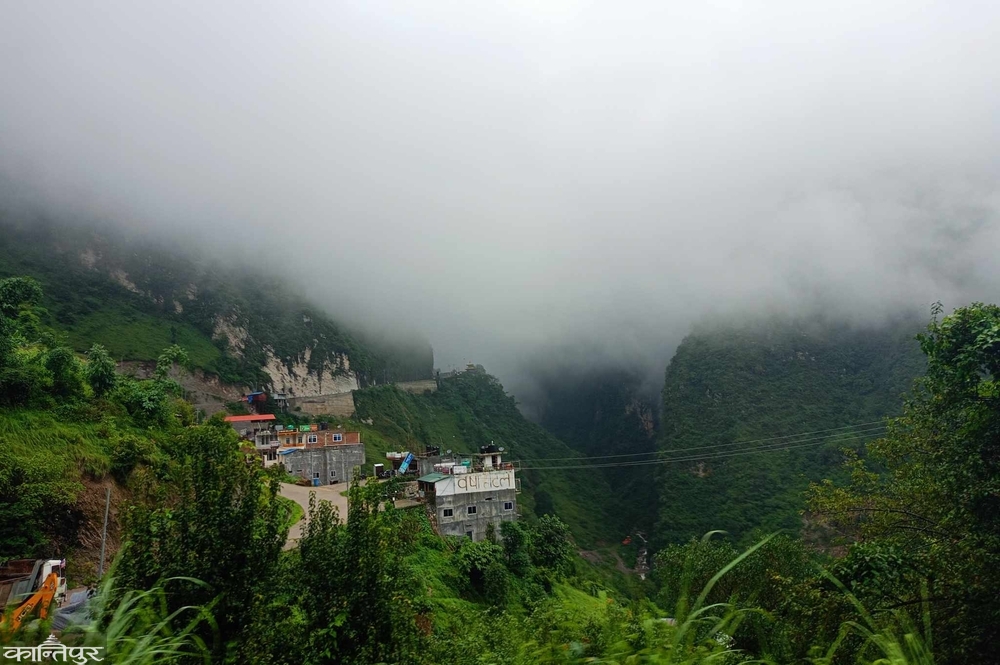 Under the east-west highway, from Gorusinge in Kapilvastu through the old headquarters Narpani to Sandhikhark, the locals dug the road with spades, shovels, and shovels, dividing the space for years. He said that Sandhikhark-Gorusinge road, which started digging with spades from 2014, was completed in 2014 and tractors entered the district for the first time in 2014. ``Pakhera, wells and hills used to graze cattle at that time have now become tourist destinations,'' said Chundali. Resorts are now being built in unsold fields and Kharyan, the price of land is also expensive. He said that the buffalo grazing area has now become a place where tourists dance and take photos. He said that after the situation, the goods of the grocery store operated at home are exported to resorts and hotels.
Pritam Thapa was a school student in Khanchikot village when he came to headquarter in Narapani. Thapa, who has worked as a people's representative from panchayat to republic, says that the Supa Deurali temple and the Sandhikhark-Gorusinge road are the main reasons for Narapani forest and Dandakanda to become tourist destinations. Supa Deurali-Narapani is about two kilometers away. According to him, since many years ago Supa Deurali was worshiped at the bank of Supa river near Narapani. Dhakre used to worship at Khopi while walking. In the year 040, Baburam Rayamazhi of Balkot built a temple on the side of the road. Thapa was elected as the chairman of the temple management committee. Thapa was elected Ward President in 039, Vice President in 044, Acting Village President in 048 and Ward President in 074.
Since Sandhikhark-Gorusinge is on the side of the road, the passengers stopped the car and offered flowers to the temple and started walking. Born in Bangi in 065 and living in Kathmandu, Baba Naranarayan built a modern temple in the ancient style, and the glory of Supa and the attraction of the shrine became . Narapani became the place to receive the offerings offered in the temple. "When the temperature is 40/45 degrees in Terai, the temperature in Narpani is 27/28 degrees," said Thapa, "always cool climate, green mountains have a beautiful environment". Where people from Tarai and India are eager to come to Narpani to heat Shital.''
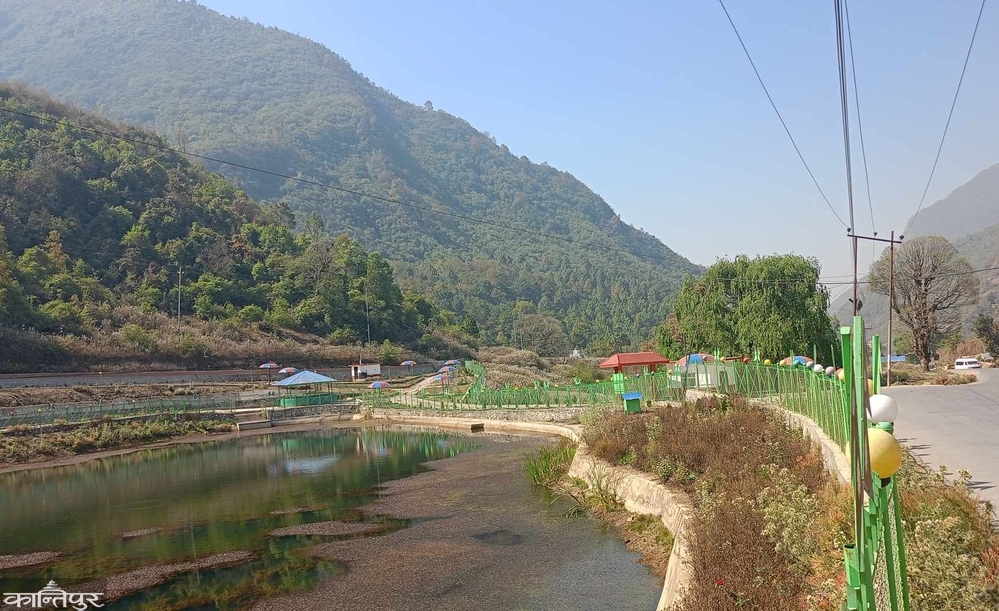 He emphasized that the government should create a master plan in Narapani to make self-employment meaningful for the youth through tourism and manage it. The economic condition of the villages of Narpani, Khanchikot, Jagat, Ghumti is changing. "Vegetables including yam, sakkharkhand, skus have been sold," former ward president Thapa said, "Cissno, Kafal, Aru Bakhda, fruits and vegetables are sold every twelve months." It has become a source of income for the people of the village. After earning two/four lakh rupees a year, the fields are not barren. Grains and vegetables are produced. He said that migration is very less here than elsewhere. "The future of Narapani, a summer destination, is bright," he said, "from Supa Deurali temple to Narapani-Khanchikot, an adventure tourism structure should be built." He said that tourists from India's Nainital, Dehradun, UP, Bihar are increasing every year.
"After becoming the headquarters of Sandhikhark from Narpani, it remained deserted for 40 years," Thapa said, "There has been a lot of tourists in Narpani for the past five/six years." The price of Pakho land, which was never sold, has also increased and now it is in two/three hands It costs lakhs of rupees. The picnic spot in Narapani is also increasing towards Khanchikot. It is being developed as a hill station. There is a road facility. There are 8/10 trains daily on the Swargadwari-Supadeurali route of Pyuthan. Here, the confluence of Gulmi, Palpa and Syangja passes through Reedy and Palpa Ranimahal water flows daily. Stone quarrying began in Narpani Hills around the year 065. After a few years, the water source dried up. After the locals protested, the stone quarrying is now stopped.
After four decades of the motorway that was built by people digging, the Sandhikhark-Gorusinge road section is being widened and a double road is being constructed. There is still a lack of hotels with good facilities for tourists to stay.
Sandhikhark municipality has constructed 40 homestays and put them into operation in Pokhedanda, two km away from Narpani, to accommodate tourists in a family atmosphere. "Homestays have been established for visiting tourists to stay in a cheap and family environment," said Shridhar Mahatra Chhetri, the ward president of Sandhikhark Municipality-6, "Many tourists have started coming in from the last five years." The villagers like the food and the taste and stay at the homestay. All the families in the house have found work. He says that by producing chickens, goats, cattle for milk, fresh vegetables and grains, the villagers will become self-employed. There are about 200 small and big hotels, restaurants and tea shops in Narpani area. Tourism business is growing.
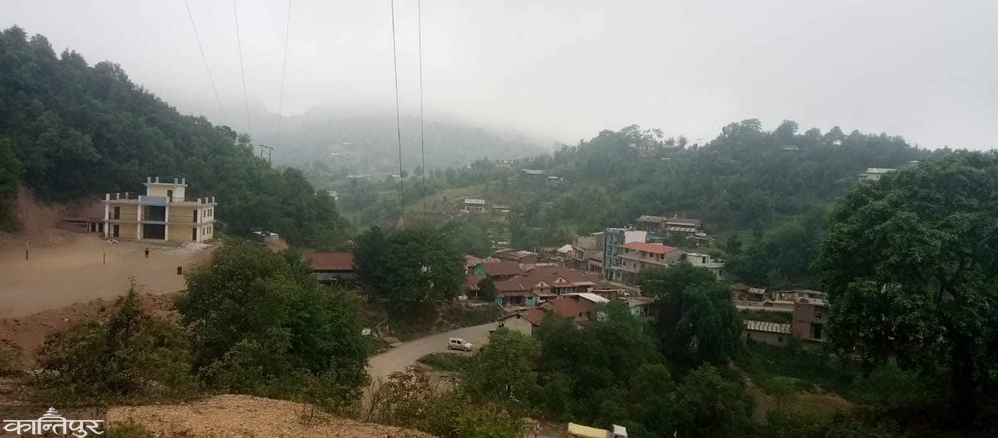 Pritam KC of Narapani has been rearing goats to produce local chicken, khasiboka and cultivating seasonal vegetables in the garden. All the produced items are sold in the market. He said that some of the tourists who came to visit are looking for the local products in the houses. "Now the state should build infrastructure to forget the tourists," he said, "The concept of homestay should be introduced by the local government".
Sandhikhark Municipality Chief Krishna Prasad Shrestha said that since Narapani area is a destination to escape the heat of Terai and India, they have built a Dharamshala and requested budget from the federal and state governments to arrange accommodation and food for the guests. "Pedestrian route and road should be built to reach Nartanachal mountain, Khanchilek," he said, "The pilgrims who came to Supa Deurali and the tourists who came to Narpani can stay here and go around to other tourist spots in the district. Homestays have been built in 40 houses in Pokhedanda, now we will build them in everyone's house in this area. Narpani is also a herbal area along with tourism. Under the leadership of religious person Narayan Khanal, one and a half hundred local cows have been protected and reared in Narpani Dada. Some tourists reach the cow farm and return after seeing the cows.

