We use Google Cloud Translation Services. Google requires we provide the following disclaimer relating to use of this service:
This service may contain translations powered by Google. Google disclaims all warranties related to the translations, expressed or implied, including any warranties of accuracy, reliability, and any implied warranties of merchantability, fitness for a particular purpose, and noninfringement.
Katustauke Muralichara is now very busy near Danava River in Rupandehi on Bhairahawa-Taulihwa road section. It is preparing to build a nest by making a hole in the upper part of the river.
On the other hand, in the eastern northern region of the Tilaurakot Partnership Forest of Kapilvastu, there is a similar movement of enchanting paradise. Swargachari has enchanted the forest environment . Chajopazo is preparing to arrange a safe place for nesting.
Both of these are summer visitor birds . First of all, during the second and third week of January, Katustauke Muralichara, a senior ornithologist, came to Chitwan from Southeast Asia. Hemsagar Baral said. Reached Chitwan via Dharan. Then they choose a place that suits them . A month after the arrival of the Katustauke Murlichara, the beautiful Swargachari came from North East India in the second or third week of February . After that, other birds started coming slowly, he said. 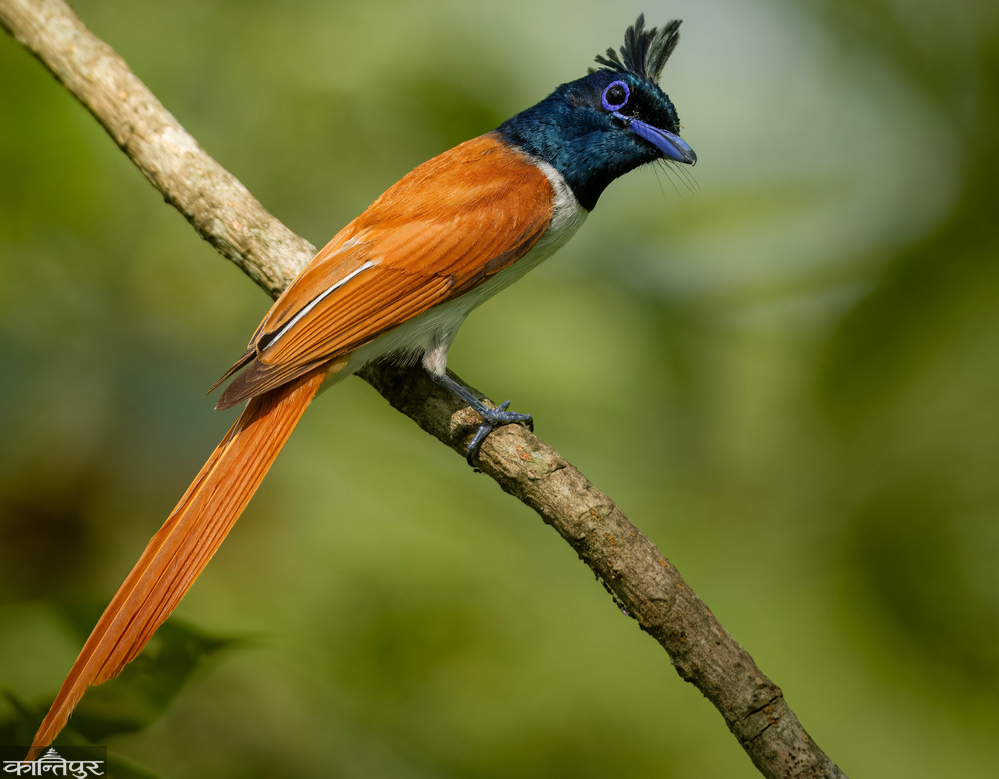 Visitor Swargachari bird seen in Tilaurakot Partnership Forest of Kapilvastu.
Like them, other summer visitor birds have traveled thousands of miles to Nepal. Almost all of them came to Nepal to raise their children. Birds are adapting to the environment here . Ornithologist Hathan Chaudhary said that they are looking for a place to nest and raise chicks safely.
'Here they are looking for a place where they can easily get weeds and weeds,' he said, 'if they think it will be good for their diet, they will make a plate for nesting.' Nilpuchre Muralichra has also come to the community forest at Kawasoti in Nawalpur, covering a distance of 1,680 miles.
The birds that started coming from February have come so far. About 60 species of birds come here . Among them, 57/58 species have been introduced by senior ornithologist Dr. Baral said. Birds are attracted here as there is a good environment and weather for birding.
Koili variety Jure Koili is yet to come . It comes the slowest . Ornithologist DB Chowdhury said that Jure Koili coming from the sub-Saharan region of South Africa with a distance of about 6,000 miles has not yet arrived. He said that when the pre-monsoon is about to start, it will arrive in Nepal with the wave of air rising in the Arabian Sea by the end of May.
Africa's sub-Saharan region comes through Ethiopia, Somalia, Yemen through the Arabian Sea, and the monsoon comes with the wind that comes with Kalaud . Monsoon comes first to Kerala . Then the monsoon enters from eastern Nepal through the Bay of Bengal.
Ganja has come to Sunchari, Suntale Chanchar and Rajchari in Chitwan National Park and Lumbini Forest. Similarly, birds such as Chitrak Pitta, Gazle Pitta, Kafal Pakyo and Lalchuchche Theuwa are searching for a place to make their nest. The summer guest bird comes and first of all chooses a place to raise its young by looking at the nesting site, environment and food.
birds nest here in forest trees, riverbanks and fields. With the spring season, birds arrive here from India, Sri Lanka, Thailand, Cambodia, Laos, Myanmar, Malaysia and Indonesia in South-East Asia. They started coming to Nepal a month ago, spending 4/5 days to a week/ten days. After raising a child, they return to where they came from. Many birds have entered Nepal from the Bay of Bengal through the border of Myanmar and Bangladesh.
About 60 species of birds come here. Among them, except Setokanthe Gauthali, all other children come to draw . Setokanthe Gauthli from Australia has also arrived.
In the forest, new habitats and many birds have started chirbir . It takes about 3 weeks for a bird to build a nest. The birds that came to Nepal from the north in the winter return there and the birds come from the south in the summer. Out of the 19 species of cuckoos found in Nepal, 13 species of cuckoos have been chirping at the nests of other summer visitors. Follows the nest .
After the nest is well made, the male is teased and chased to the far side . At that time, the female of Koili species comes to lay eggs in the nest . After that, other birds raise the chicks along with their chicks . 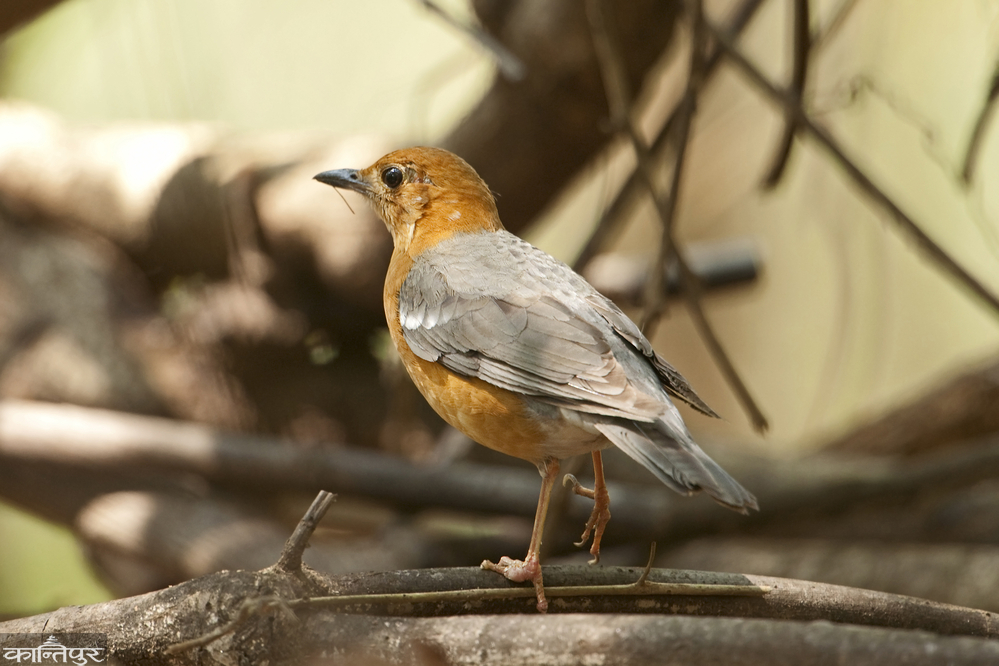 Visitor Suntale Chachar seen in Tilaurakot Partnership Forest of Kapilvastu.
"Many birds can lay their nests by the second or third week of Baisakh," ornithologist Dr. Tulsi Subedi said, 'The kids are raised by the third week of July.' The younger ones take less time and the older ones take more time to raise the children.
Abroad now, day and night are equal, but in Nepal, the day is longer than the night, so birds will be attracted here because they will have plenty of time to feed. He said that he would be attracted here because he would find a safe place to raise a child and earn a living. Chitwan, Bardia, Shuklaphanta, Parsa, Shivpuri and Banke National Park have come to collect the chicks. Similarly, birds have reached the Koshi Tappu, Manohara and Annapurna Conservation Areas to kill the babies.
There is no competition for food in Nepal. It is easier and simpler to raise children and find food here than where they come from. Most of them are in the lowlands, some in the mid-mountains and low species of birds have reached the high mountain ranges to nest. They return there to Asoj and Kartik. There is a record of 898 species of birds found in Nepal.

