We use Google Cloud Translation Services. Google requires we provide the following disclaimer relating to use of this service:
This service may contain translations powered by Google. Google disclaims all warranties related to the translations, expressed or implied, including any warranties of accuracy, reliability, and any implied warranties of merchantability, fitness for a particular purpose, and noninfringement.
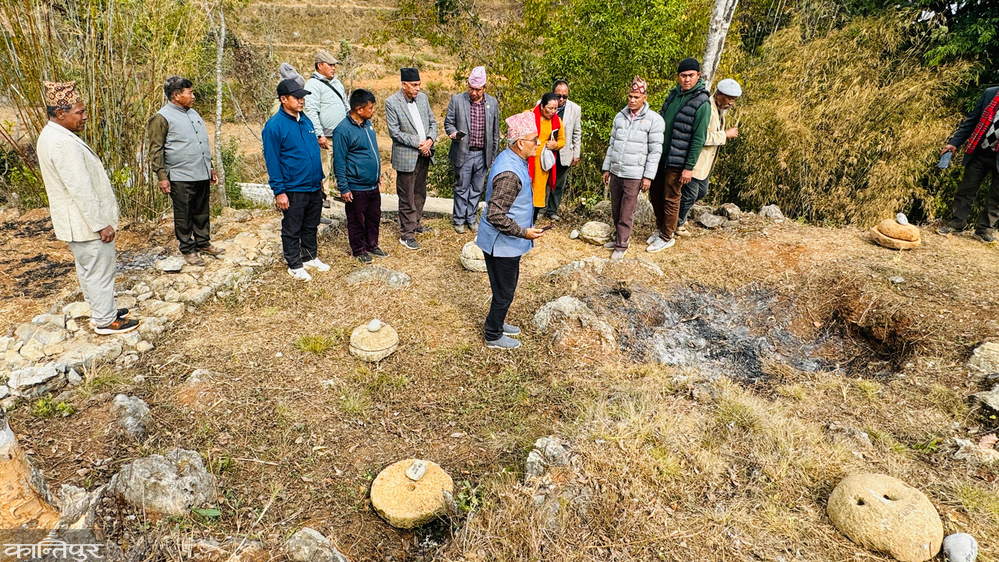
Dhunge Janto Museum has been established at Satyavati-3 in Gulmi to preserve traditional household tools. According to the concept and plan of Assistant Professor Bhuvan Thapa of Kathmandu University, the locals of Satyavati-3 have established the Janto Museum at the Big Lumpek Gagridhunga.
Thapa said that the collection and replacement of displaced stones with the use of machinery tools will help in the preservation of culture and promotion of tourism. "The aim is to preserve cultural heritage and promote tourist attractions through the collection and replacement of displaced stones," he said, "if technology does not protect our traditional tools and important physical materials, there is a danger of losing our tradition and culture." "The truth of nature, the beauty of art and the integrity of the community, we have envisioned it for the combination of these three things," he said, "we have started with a museum here, later a library, memorial, park, statue, footpath etc. will be built here." Museum site Gagridhunga is a place where water is collected in stone gagris and used as drinking water by the local people. The local people say that the water collected in the hollow stones like Gagri that were there 2035 years ago was used as drinking water by the local people. Now the village has been supplied with drinking water due to water supply.
Abhiyanta Thapa says that the Dhungejanto Museum established under the open sky in that area will preserve the history of people's thirst quenched by Gagridhunga. "We have also planned to make a huge Gagri statue inside the museum area and fill it with stones from the Kaligandaki river," he said. He said that he would cooperate by taking Yataka to the other side.
"I think that this museum has been built thinking for generations to come, not now," he said. He said that the municipality will support the campaign of the locals as tourism must be promoted to save it. According to Nirmaya Taramu, the vice president of the rural municipality, the Dhungejanto museum in the open square can be a model for the country by envisioning it for ages.
It's a common thing to hold a goose when you see it . But it will keep our tribal tradition alive until later", she said. Locals say that there are about 100 insects in the museum and they will be collected from the surrounding villages and kept in thousands.