We use Google Cloud Translation Services. Google requires we provide the following disclaimer relating to use of this service:
This service may contain translations powered by Google. Google disclaims all warranties related to the translations, expressed or implied, including any warranties of accuracy, reliability, and any implied warranties of merchantability, fitness for a particular purpose, and noninfringement.
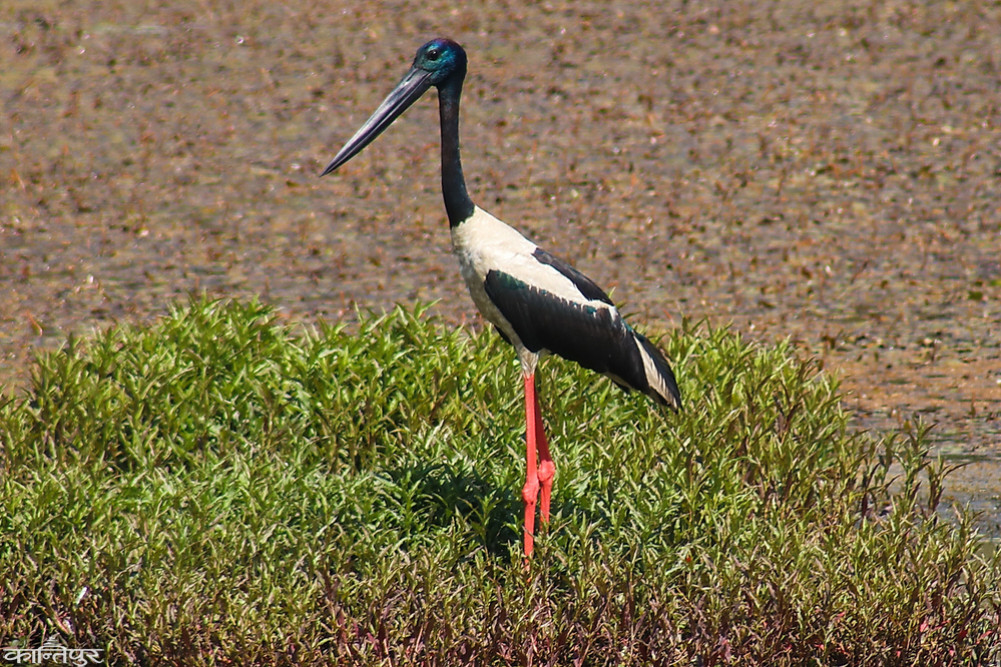
Raithane utkroshi falfaele bird which is seen in abundance in Narayani, Koshi, Rapti river and Jagdishpur lake is now seen only in Koshi. Now their number is less than 10 in Nepal. The white-necked dhipsi bird, which used to be seen in Shuklaphanta, Chitwan and Lumbini as a winter visitor, is now seen only in Shuklaphanta.
There were 30 records in Shuklaphanta in 1998, but now only 3/4 of them are visible. It is estimated that this bird is around 10 in the country.
It has been found that the number of birds disappearing every year is increasing . The number of endangered birds is increasing in Nepal. Conservationists say that habitat destruction is increasing the number of endangered birds in the Terai. As the grasslands and wetlands are destroyed, the birds are facing more problems. In 2017, 132 species of birds found only in the Terai were listed as endangered. They are slowly disappearing . Among them, 39 species of birds are found in the hills and mountains.
Due to the lack of wetlands and grasslands, the birds are in danger because they cannot feed. Poaching, increasing pesticide use and population growth are adding to their problems due to noisy environments. A 2017 study jointly conducted by the Zoological Society of London, the National Nature Conservancy, the Department of National Parks and Wildlife and Himalayan Nature found that the bird is increasingly endangered in the Terai. "Until 2014, the status of endangered birds in the Terai was 105," senior ornithologist Dr. Hemsagar Baral said, "It increased to 132 in 2017." Since then, there has been no study.
According to the report published by the National Parks and Wildlife Department and the Bird Conservation Association in 2011, it was mentioned that 149 species of birds were listed as endangered across Nepal. According to the updated report in 2017, the number of endangered birds in Nepal has reached 169. In the same year, in the study of the Bird Conservation Association, 172 species of birds are said to be in danger.
In late 2025, the nationally threatened bird will again be studied . Ornithologists say that the number of endangered birds will definitely increase in the study to be conducted by the Ornithological Association after eight years. Ornithologist Hathan Choudhary said that the white-knives, virgins and ukroshi falfas are in danger. He said that many birds are in a critical situation due to the destruction of food and habitat as small and large ponds, ponds are filled with water lilies, grasslands and wetlands are destroyed.
Ornithologist Choudhary said that 84 percent of 142 species of birds are endangered due to habitat destruction. The rest is under threat due to pesticide use and poaching. After Tarai, the birds found in the mountains and Himalayan areas started disappearing, he said.
Earlier in 2017, the adorable Krishna Kantha Garuda, Shwetankhibhaun and Suiropuchhre were in crisis . Small Kanthe Torigada, Big Kanthe Torigada and Lagu Bagedi were in crisis . The black-headed duck, the black-headed duck and the capinjal partridge were also in danger.
According to Ornithologists' Association, there are a total of 897 species of birds in Nepal. Among them, 650 species of Rathana birds always live in Nepal. Almost all of these are of the baby crawling variety . Similarly, there are 150 species of winter and 65 species of summer visitors and 32 species of warblers and migratory birds. 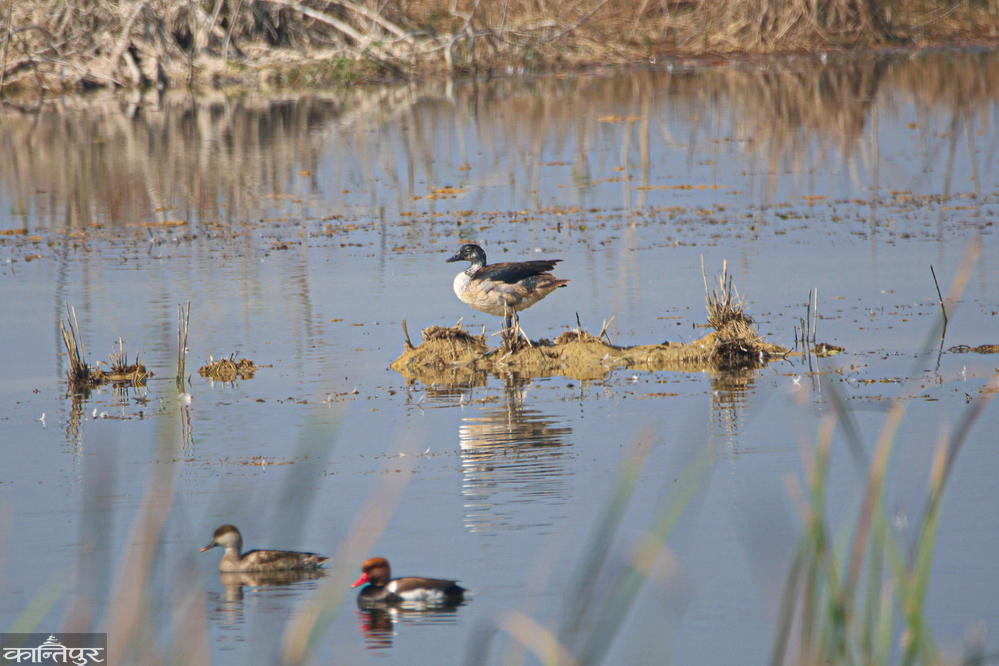
Dr. ornithologist whose existence is in crisis due to human insecurity and excessive use of pesticides. Hem Bahadur Katuwal said. The main reason is the cutting of trees in the courtyard, forest destruction,' he said, 'the existence of birds is also in danger due to poachers.' 'There is increasing noise pollution,' he said, 'the problem is also deepening due to decreasing arable land.' He said that the species of birds that swim in the lake and eat fish have started to disappear due to such weeds, which has affected the ecological system. Birds are friends of farmers.
The crop-damaging insect eats Phayangra . Helps to increase production . Bird conservation policies and plans should be made in time,' he said, 'otherwise Nepal, which is known in the world for bird tourism, will become difficult.' Bird tourism contributes 10 percent to Nepal's tourism. Insecticides, rats, and snakes are all killed by the use of pesticides in the fields, so the birds lack food.
Ornithologist Ankil Vilas Joshi said that it is now necessary for the local government to start initiatives to reduce the pesticides being used in the fields. Ornithologist Joshi suggests that by arranging subsidies to increase the use of organic fertilizers, the deteriorating health of birds and humans can be saved. In 1996, 133 species of birds found in Nepal were endangered. In 2004, the number increased and 143 species of birds became endangered.
In 2010, the number of endangered bird species has increased to 149, according to the Bird Conservation Association. During the study, it has been seen that many birds found in the fields have started to die due to the increasing use of pesticides in the crops. Due to the effects of pesticides on reproduction and eggs, the bird is gradually disappearing.