We use Google Cloud Translation Services. Google requires we provide the following disclaimer relating to use of this service:
This service may contain translations powered by Google. Google disclaims all warranties related to the translations, expressed or implied, including any warranties of accuracy, reliability, and any implied warranties of merchantability, fitness for a particular purpose, and noninfringement.
Conservationists, ornithologists, zoologists and government officials from Nepal and India have pledged to work together to protect the fascinating and fascinating bird, the stork.
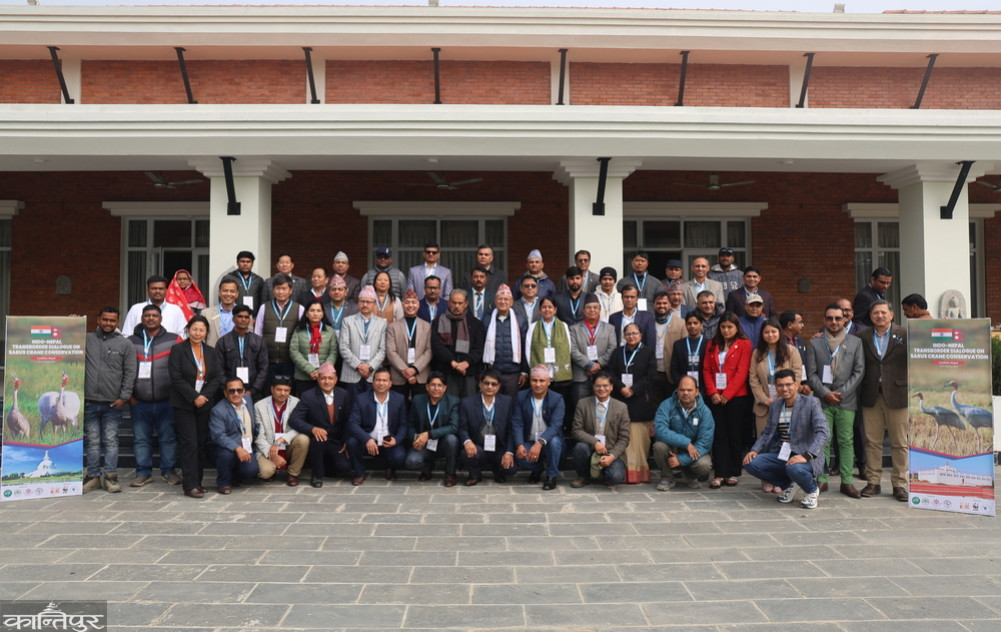
The participants of the Indo-Nepal Transbirder Dialogue have agreed to proceed together for the three-day stork conservation organized by Tribhuvan University, Central Department of Zoology and National Parks and Wildlife Department in Lumbini with the support of WWF Nepal and International Crane Foundation, USA.
It is said that they will conduct an awareness campaign in the border area for the conservation of the world's rarest bird stork and work by sharing good practices and learning of stork conservation . Similarly, it is said that they will work together to reduce the risks of storks in the border area and rescue storks in accidents and problems and exchange information about such incidents in the border area. In the
program, International Crane Foundation Southeast Asia Program Director Dr. Tript Tran, Haribhadra Acharya, Ecologist of National Parks and Wildlife Department, Rajendra N Suwal, Head of Partnership Program of WWF Nepal and Director of Stork Special Conservation Program in Gujarat, India. Jeetendra Naur presented the working paper. 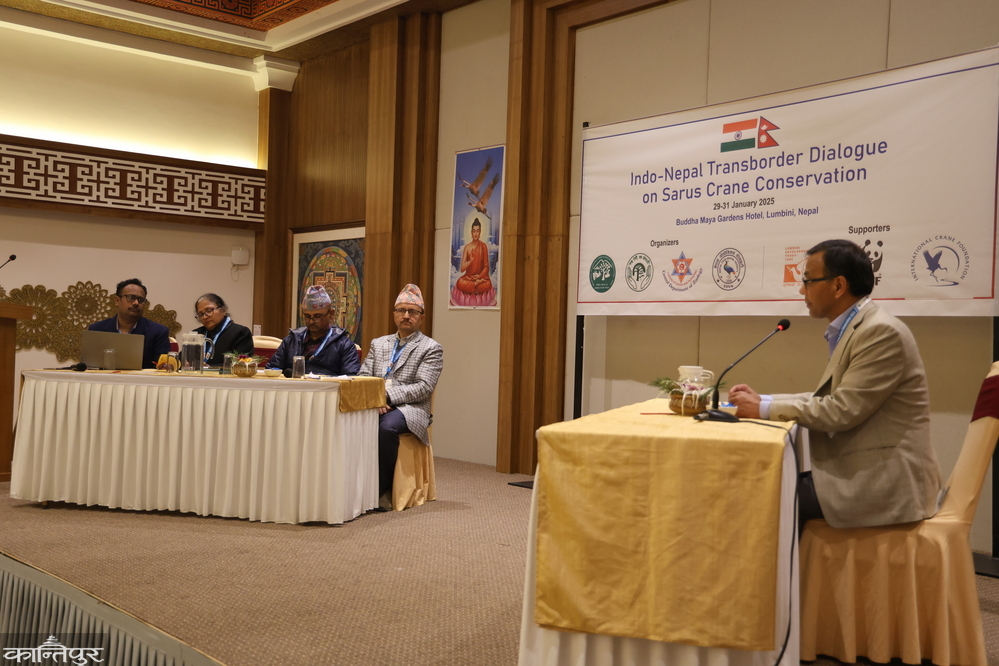
Similarly, four groups on the study, research and monitoring methods and procedures of storks in the two countries, conservation practices, how stork conservation work can be done in the terai arch landscape of both countries and how the stork conservation program can be effectively conducted in non-protected areas with human population. A group discussion was done by dividing them. In the same program, how the two countries can conserve storks, Asia Program Vice President of International Crane Foundation Dr. Mahendra Shrestha had a panel discussion. In the
panel discussion, Deputy Director General of National Parks and Wildlife Department Ved Kumar Dhakal and senior ornithologist Dr. Hemsagar Baral and Professor of the University of Lucknow on behalf of India. Amrita Kanaujia and WWF India Senior Landscape Coordinator Dr. Mudit Gupta was the participant.
So far, the two countries have been discussing and conservation programs on tigers, elephants and rhinos, and for the first time, the border area has been started to become bird-friendly by discussing the issue of birds, said Hari Sharma, associate professor of the Central Department of Zoology, Tribhuvan University. In the
program, DFOs, wardens, conservationists, researchers and volunteers from the districts where storks are found in Nepal from Kanchanpur to Chitwan participated. Likewise, 90 people from Nepal and 10 people from India including government officials, zoologists, ecologists, professors, conservationists and farmers from Uttar Pradesh and Gujarat participated.
The stork is the tallest bird that can fly. It is very charming and beautiful. It is one of the 9 bird species protected by the Wildlife Protection Act, 2029. There are about 700 storks in Nepal. It is estimated that there are 15,000 to 20,000 in India. Most of them are in Uttar Pradesh . The stork has been made a city panchhi by the Lumbini Cultural Municipality in Rupandehi, Nepal, while it is a state panchhi in Uttar Pradesh, India.