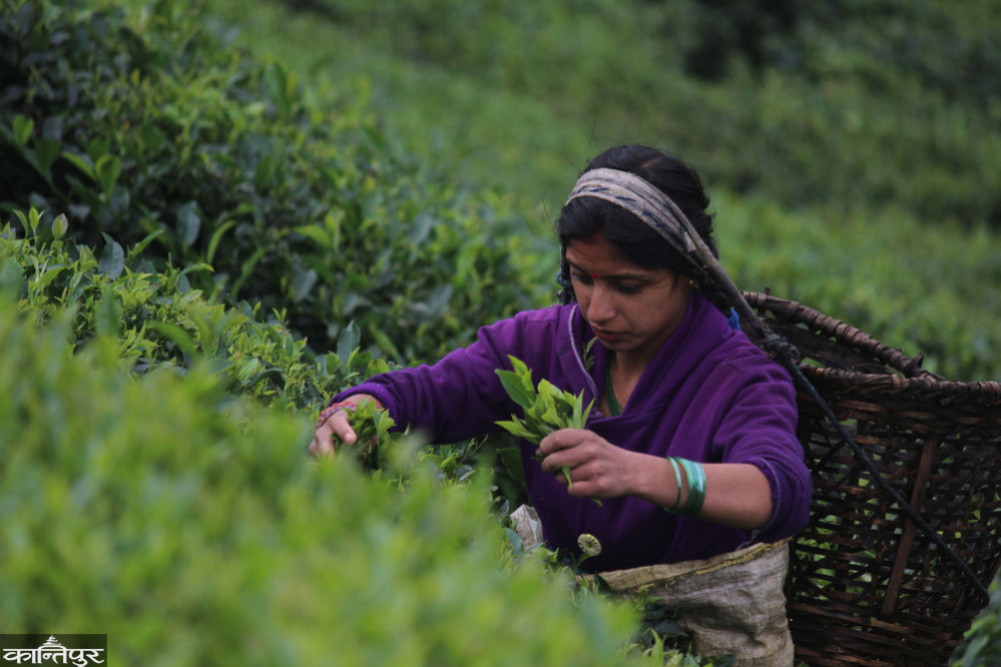
Two trucks of Ilam Tea and Summer Valley tea exported to India from Kakadbhitta border on Tuesday, agreement to test random samples on only 20 percent of the consignment
We use Google Cloud Translation Services. Google requires we provide the following disclaimer relating to use of this service:
This service may contain translations powered by Google. Google disclaims all warranties related to the translations, expressed or implied, including any warranties of accuracy, reliability, and any implied warranties of merchantability, fitness for a particular purpose, and noninfringement.
Nepali tea exports, which have been stalled for about two months, have resumed from Tuesday. Two trucks of Ilam Tea and Summer Valley tea were exported to India from the Kakadbhitta border crossing on Tuesday, according to the Mechi Customs Office, Kakadbhitta.
If regular clearance starts from the Indian customs according to this process, the problem in tea exports can be considered solved - Aditya Parajuli, President, Tea Producers Association ‘As the trucks carrying tea started going towards India, the industrialists are excited,’ said Suryodaya Orthodox Tea Product Association President Dilli Shrestha, ‘The Indian customs have passed Nepali tea without any hindrance.’ Senior Vice President of the Nepal Tea Producers Association Shiva Kumar Gupta said that the trucks carrying tea from the Kakadbhitta border crossing have been sent to Panitanki, India, and the obstacles in tea exports are gradually being removed. ‘Right now, only Orthodox tea from Ilam has been exported, and after some time, CTC from Jhapa will also go,’ he said.
According to him, tea samples have been sent to the wiremen. "They are eager to buy our tea," he said. Nepali tea is mainly sold in the markets of Siliguri and Kolkata in India. According to Aditya Parajuli, president of the Nepal Tea Producers Association, earlier India had arranged to test samples of all consignments. Now, it has been agreed to test random samples of only 20 percent of consignments.
According to President Parajuli, if regular clearance starts from Indian customs according to this process, the problem in tea exports can be considered solved. Earlier, after a three-week obstacle, the tea export process, which was relaxed on 6 Jestha, had been tightened again from the third week of Jestha. After the Tea Board of India reached the importer's warehouse and started collecting tea samples and testing them in the laboratory, traders said that they were forced to stop exports.
Meanwhile, the Food Safety and Standards Authority of India (FSSAI) has implemented a risk-based testing system for tea (HSN code 0902) imports through a letter issued on 23 June, implementing a system of 'random interception', i.e. selecting samples and testing them in 20 percent of consignments. According to industrialists, about 300,000 kg of ready-made tea is currently stored in Indian warehouses, while more than 1 million kg of tea is stored in Nepal.
Industrialists in Ilam had closed their industries since 1 Asad and those in Jhapa since 4 Asad in protest against the problem. When about 99 tea industries in eastern Nepal, including Jhapa and Ilam, were closed, work in dozens of small and large tea gardens was also affected. After the Office of the Prime Minister and Council of Ministers assured to take diplomatic and administrative initiatives to seriously address the problems in the tea sector, the industrialists agreed to resume operations.