The mill has fixed the support price of Chaite paddy at Rs 28.97 per kg. The federal government had recently fixed the minimum support price of Chaite paddy with 25 percent moisture at Rs 28.58 per kg.
We use Google Cloud Translation Services. Google requires we provide the following disclaimer relating to use of this service:
This service may contain translations powered by Google. Google disclaims all warranties related to the translations, expressed or implied, including any warranties of accuracy, reliability, and any implied warranties of merchantability, fitness for a particular purpose, and noninfringement.
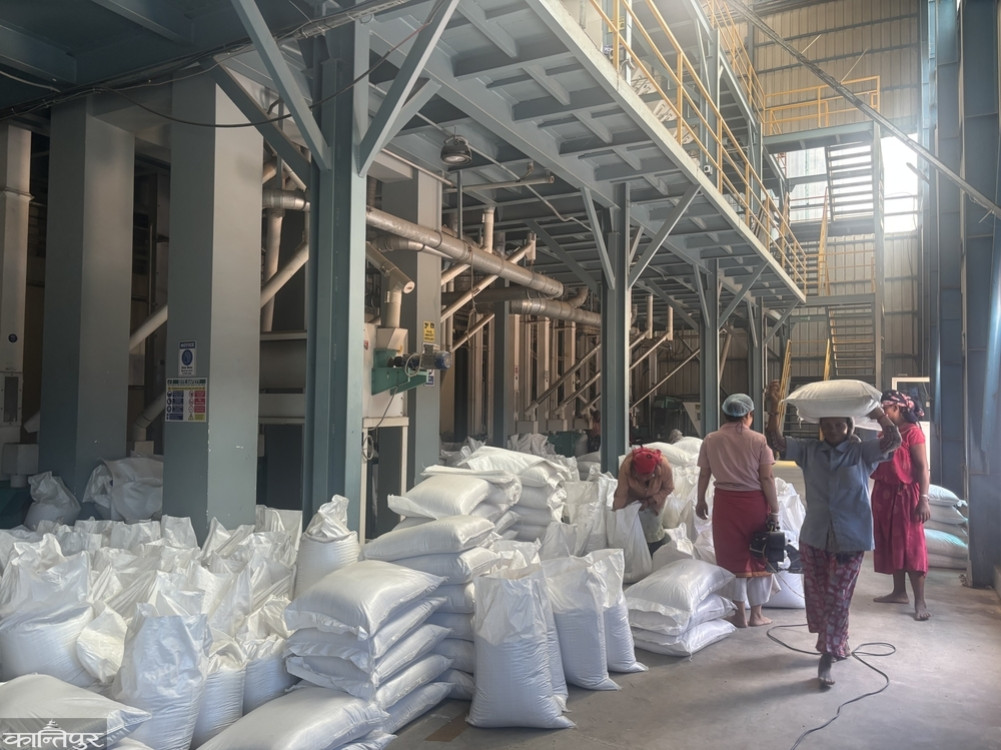
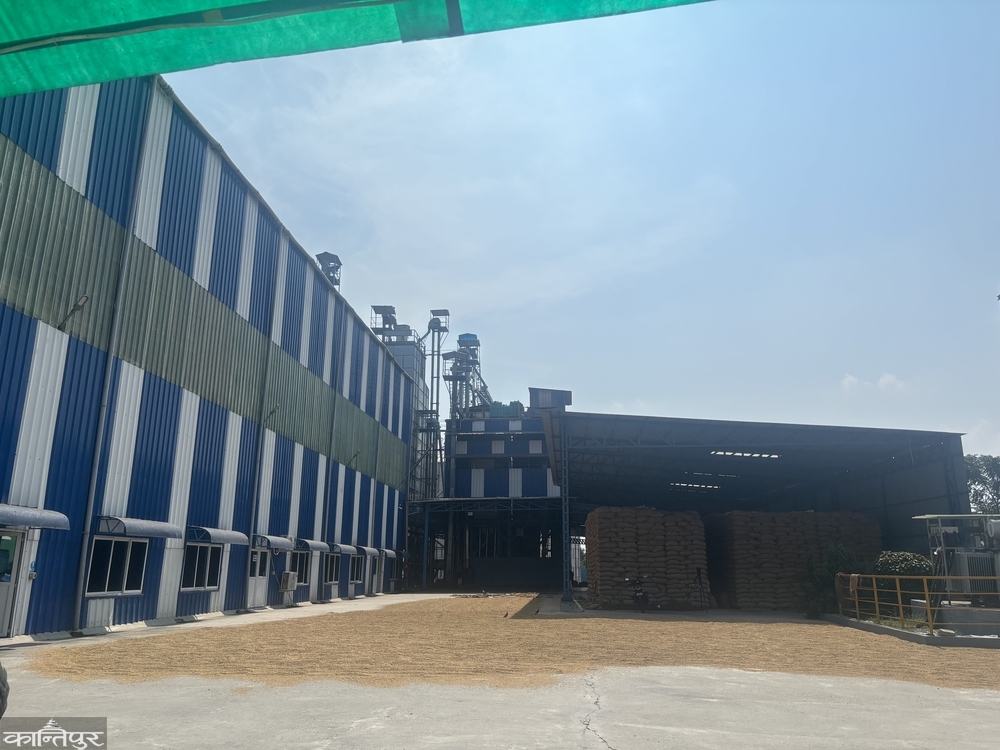
On one hand, there is a rush to import Chaite paddy, on the other hand, to sow rain-fed paddy. Farmers in Morang are not too worried about the price of their produce this time. The reason is that Arju Rice Mill in Belbari-9, Dangihat, Morang has fixed the purchase price of Chaite paddy higher than the government's minimum support price.
The mill has fixed the support price of Chaite paddy at Rs 28.97 per kg. The federal government had recently fixed the minimum support price of Chaite paddy with 25 percent moisture at Rs 28.58 per kg. The mill has announced that it will give a price 39 paisa higher than the government rate.
Earlier, on Poush 22, the mill had fixed the price of Haldinath-6 variety Chaite paddy at Rs 25 to 27 per kg based on moisture. The industry had made the support price public before sowing the paddy seeds, while the government fixed the minimum support price only a few weeks ago. Farmers are also excited after getting a price higher than the government price.
Yubaraj Neupane, a farmer from Rangeli, Morang, expressed happiness saying that he got a price higher than the government rate. 'The price set by the government is for coarse rice, we are selling fine rice,' he said, 'We have got at least one rupee more than the government's price, this is a big deal for us.'
Ramesh Karki, a farmer from Rangeli-1, said that the price of rice has improved compared to the past. 'Earlier, we could not get more than 2,000 rupees, now we are getting more than 2,500 rupees,' he said.
Pushkar Sharma, a farmer from Belbari-6, said that the private sector has fixed the price in a way that will provide relief to farmers. Karna Bahadur Thapa, a farmer from Rangeli-1, also recalled the situation where rice had to be sold for 25 rupees per kilogram in the past and said that the increase in price has given some relief to farmers.
However, farmers say that the announcement of support price alone is not enough . They say that there is still a need to ensure that the price set by the government is implemented in the market, the effectiveness of the government procurement system and improvements in market management . They complain that even if the private sector sets farmer-friendly prices, farmers will not be guaranteed a fair price for their produce unless the state develops an effective market mechanism .
Vivekananda Jha, general manager of Arju Rice Mill, said that the prices have been fixed keeping the interests of the farmers in mind . 'We are implementing the minimum support price,' he said, 'After the government set the price of Chaite paddy at Rs 28.58, we have fixed it at Rs 28.97. We have given the price of Suvasi variety paddy up to Rs 35 per kg .'
According to Jha, the industry, which has an annual processing capacity of 25,000 tonnes of paddy, has directly employed 80 people . Currently, about 2,500 farmers affiliated with the industry are cultivating paddy on an area of 2,500 bighas. The industry requires 15,000 tons of annual paddy and 10,000 tons of Chaite paddy annually.
The industry has also been supporting farmers in improved seeds, modern agricultural tools and mechanization. Machinery used from sowing to harvesting is being provided at subsidized rates through farmers' groups.
According to the industry's communications officer, Dipendra Karna, the industry has adopted a policy of purchasing only paddy produced from Nepali farmers.
'We do not purchase paddy from anywhere other than Nepali farmers,' he said, 'All details of the affiliated farmers are kept safe in computer software. This allows you to see all the details of which farmer sold how much paddy and how much seed he bought. This has made the transaction transparent.'
According to Karna, although the government has fixed the support price only for paddy with 25 percent moisture, most of the paddy currently coming to the market has only 18 to 22 percent moisture. Based on that, the industry has been providing more reasonable prices to farmers.