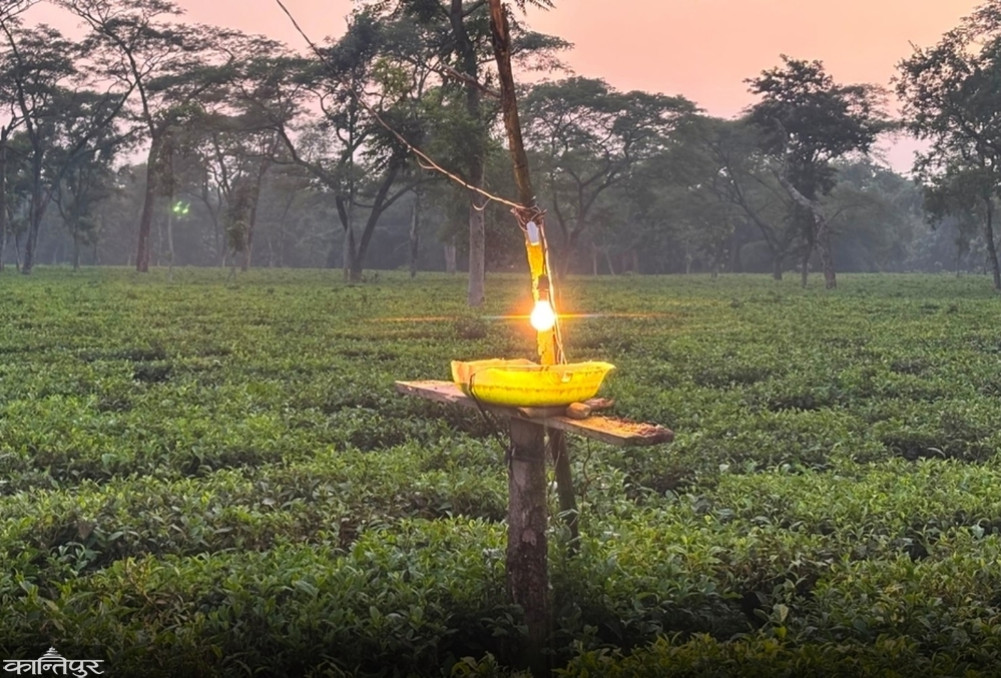
Suryodaya Municipality has demanded that the government immediately end the obstacles created by the Indian Tea Board and create an environment for Nepali tea exports.
We use Google Cloud Translation Services. Google requires we provide the following disclaimer relating to use of this service:
This service may contain translations powered by Google. Google disclaims all warranties related to the translations, expressed or implied, including any warranties of accuracy, reliability, and any implied warranties of merchantability, fitness for a particular purpose, and noninfringement.
Suryodaya Municipality of Ilam has urged the Ministry of Foreign Affairs to take high-level diplomatic initiatives with the Indian government to immediately remove the obstacles seen in Nepali tea exports.
Acting Mayor of the municipality, Durga Kumar Baral, has written a letter to the Ministry of Foreign Affairs, stating that Nepali tea exports have been affected again due to the process implemented by the Indian Tea Board.
The letter states that serious attention has been drawn to the obstacles created by the Indian side in the export of tea, which is Nepal's main cash crop and an important source of foreign exchange earnings.
According to the municipality, tea exports were completely affected for 21 days after the Indian Tea Board implemented a new 'Standard Operating Procedure' (SOP) last Baisakh and arranged for mandatory laboratory testing. After that, exports resumed from last Jestha 6 after an agreement was reached to do only 'random sampling' instead of each truck.
However, the municipality has stated that the Indian Tea Board has now started collecting samples from each bag of Nepali tea at the importer's warehouse in Kolkata and testing them. The letter states that even after more than a week of sample collection, the laboratory report has not been received and that sales and distribution have been suspended until the report is received.
The municipality has stated that due to this process, about 50,000 kg of Nepali tea has been left in Indian warehouses and the risk of quality deterioration has increased.
The letter warns that such unreasonable and non-tariff barriers will collapse Nepal's tea industry, affect the employment of thousands of farmers and workers, and have a negative impact on the national economy.
Suryodaya Municipality has demanded that the Government of Nepal immediately take high-level diplomatic initiatives with the Government of India to ensure an environment for Nepali tea exports in accordance with the previous agreements and understandings.