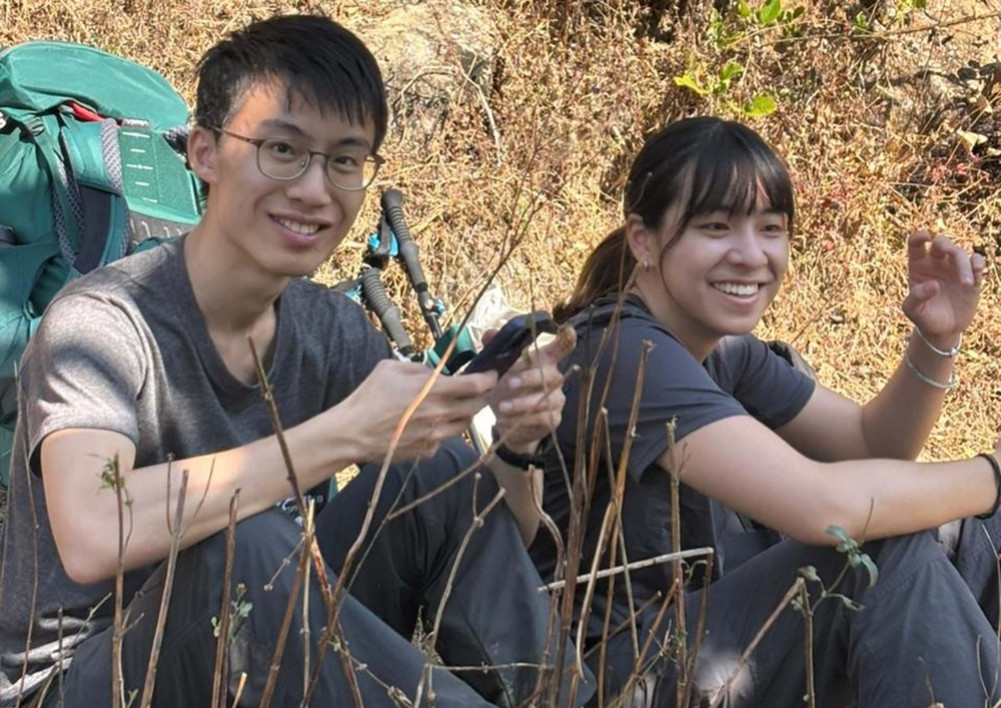
Hong Kong students say: Locals' warm hospitality touched their hearts
We use Google Cloud Translation Services. Google requires we provide the following disclaimer relating to use of this service:
This service may contain translations powered by Google. Google disclaims all warranties related to the translations, expressed or implied, including any warranties of accuracy, reliability, and any implied warranties of merchantability, fitness for a particular purpose, and noninfringement.
Many studies and research are being conducted on the world's most endangered species, the lizard. Meanwhile, two students from Hong Kong have arrived in Khotang to conduct research on the lizard.
Yung Lok Yi (Louis), a third-year undergraduate in Biology at the Chinese University of Hong Kong, and Ng Yu Hong (Andy), a fourth-year undergraduate in Biology at the Hong Kong University of Science and Technology, arrived in Khotang on December 24.
Upon their arrival, they joined a team from the Nature Conservation and Study Center to participate in activities related to black jackal conservation and environmental education.
Andy said that they spent about a week working with community forest user groups to conduct camera trapping surveys, change memory cards, study animal footprints, and record wildlife activities.
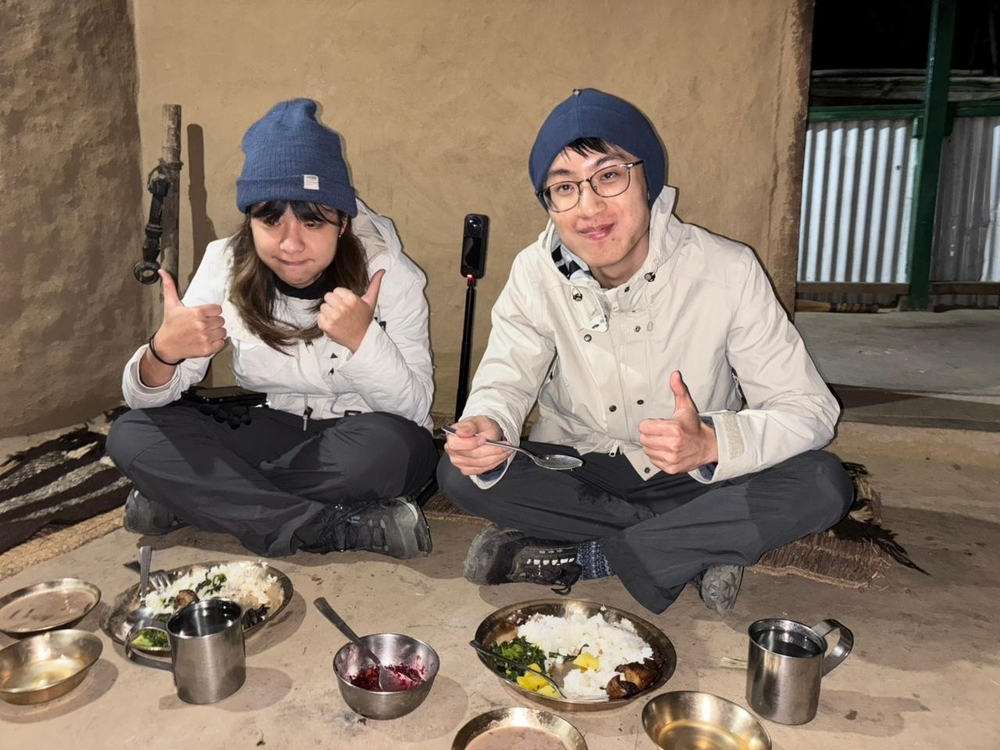 Since human activities affect the movement of wildlife, Louise shared her experience of going to remote areas and identifying animal paths and footprints and installing cameras. According to her, when installing cameras, the cameras are installed at about knee height, keeping in mind the main path of the animal. Louise said that if the camera is placed at a slightly sideways angle instead of facing the road, the animal will stay in the frame for a longer time and will be more likely to capture a clear image.
Although the trek up to 2,000 meters with a backpack weighing more than 10 kg was physically and mentally strenuous, Andy said that the reward was encouraging. The camera captured the endangered black leopard, as well as the Thar, clouded leopard, leopard, Assamese monkey, ghoral, wild tiger, red deer, spotted mouse, dhole, small porcupine, large water cat, dumshi, gazelle water cat, mountain skunk and skunk, indicating that Khotang's biodiversity is still rich, Andy said.
In addition, they experienced that the 'sea of clouds visible from above' and the view of the distant mountain range made them forget all their fatigue. ‘That scene would give me energy again,’ said Andy, ‘all difficulties would turn into inspiration.’
They said they learned to conduct forest monitoring and survey wildlife through discussions with officials of various community forests in Diktel Rupakot, Majhuwagadhi Municipality-12, Jalpa, 11 Kharmi and Kepilasgadhi Rural Municipality-1, Phedi. The researchers, led by the Community Forest User Group, and the videos and photos of wildlife captured by them on camera traps were made public in Jalpa last Saturday.
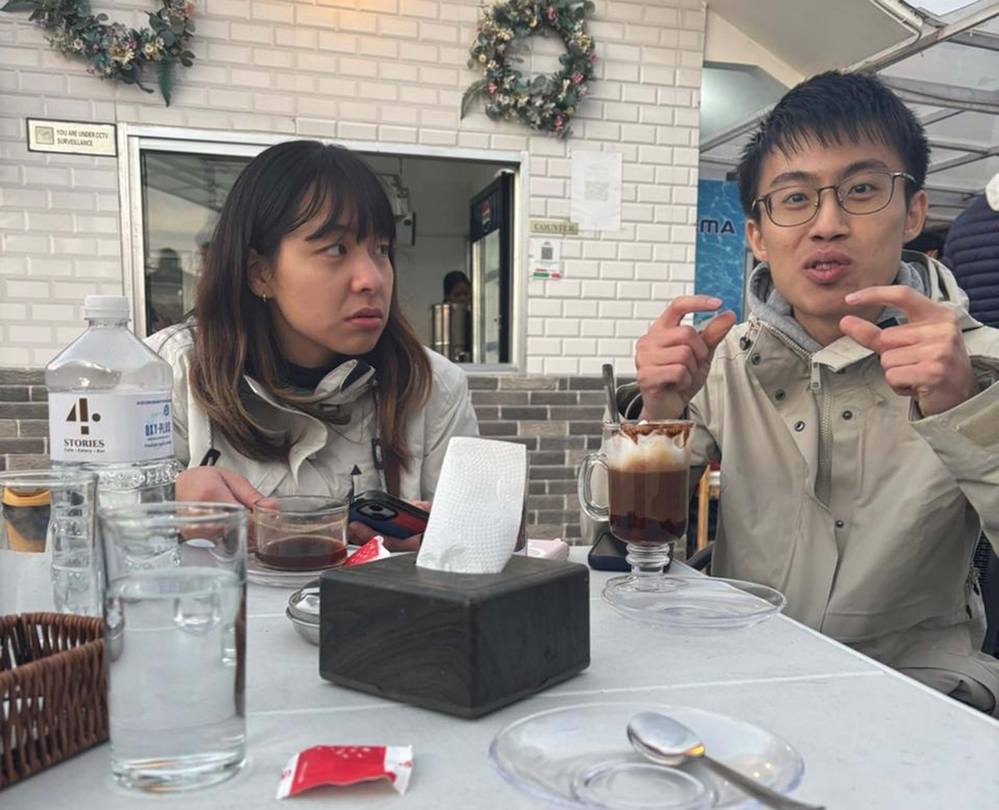 In addition, they also observed the school. They also exchanged experiences in conducting environmental activities with the environmental protection groups of Jalpa Secondary School and Diktel English Boarding School.
Andy said that he was even happier to see information boards on black lizard conservation placed in the school premises, mentioning the habitat, behavior and dangers faced by the lizard. In addition, he said that he realized the important role of the local community and educational institutions when he saw two old lizard nests in the school forest area.
In addition, Louise said that she was touched by the warm hospitality of the locals during the trip. ‘The frequent reminders to avoid the cold, the arrangement of small but intimate snacks made us feel at home,’ Louise said. ‘In addition, we are grateful to the researchers, Jeevan Rai and Sushil Chandra Rai, executive directors of the Nature Conservation and Study Center, who taught us about camera trapping.’ Louise and Andy returned to Hong Kong on Monday after completing their search.