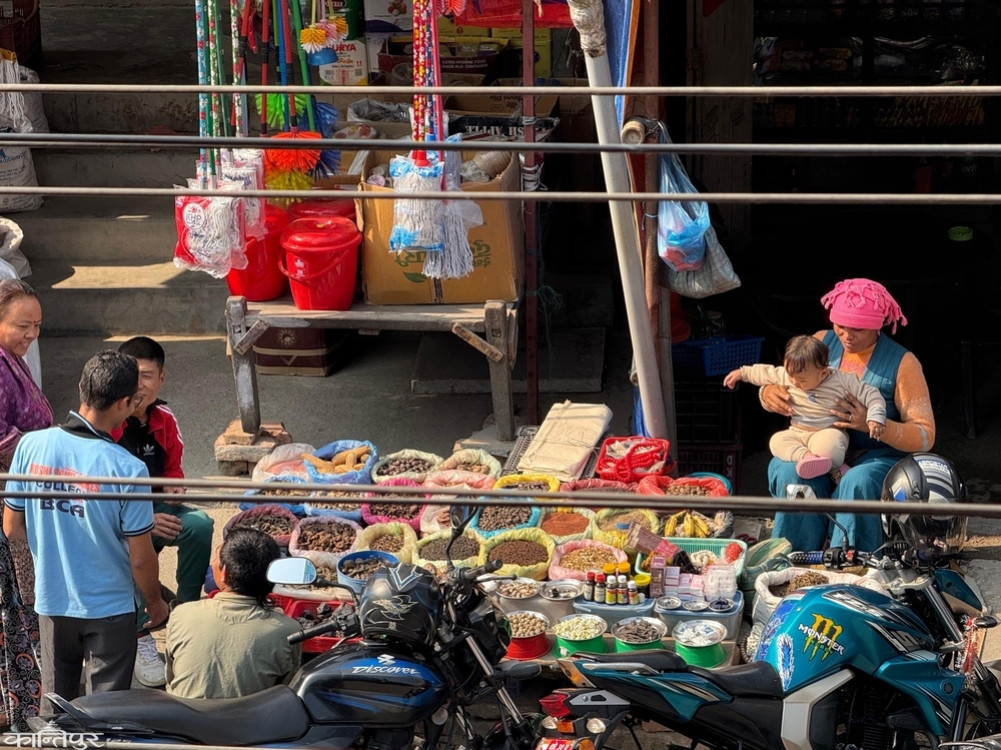
Bhotkhola Rural Municipality has five wards. Families of the Bhote and Lama communities, especially those living in high-mountain settlements like Kimathanka, Hatiya, Chepuwa, and Gola, migrate during the cold season to earn a living.
We use Google Cloud Translation Services. Google requires we provide the following disclaimer relating to use of this service:
This service may contain translations powered by Google. Google disclaims all warranties related to the translations, expressed or implied, including any warranties of accuracy, reliability, and any implied warranties of merchantability, fitness for a particular purpose, and noninfringement.
The high mountainous terrain here. Where the bitter cold stops even daily life after winter sets in. Kanchhathilen Bhote of Chyamtang, Bhotkhola Rural Municipality-2, Sankhuwasabha, witnesses the cold and descends to the district headquarters, Khandbari, every year from the last week of Mangsir. After staying in Khandbari for a few days, he travels to various markets in the Terai, including Lalawala and Jadibuti.
This journey, which has been repeated for years, is called 'Kabela Jharnu' in the local language. Not only Kanchhathilen, but also more than 500 residents of Bhotkhola rural municipality, including Chyamtang, Hungung, Chepuwa, and other settlements, leave the mountains and descend to the Terai every cold season.
As winter begins, the cold increases and it becomes difficult to protect their families, livestock, and even their farms, so they move to warmer places for at least three months. They carry herbs, local products, and traditional goods collected throughout the year and trade in markets in Morang, Sunsari, Bhapa, Itahari, and Biratnagar.
Pasangdorchi Bhote of Hungung also leaves the mountains and descend to the Terai for about three months every year. Carrying some clothes in his bag and a bag of herbs on his shoulder, he descends to the district headquarters with his family. After staying in the Khandbari for two to four days, they travel to Morang, Sunsari, and Jhapa. Their purpose is the same: to wait for the warm weather and buy the necessary goods by selling the herbs they have collected throughout the year.
‘The weather here, the ups and downs and the mountainous risks are equally challenging,’ he said. ‘The cold is terrible, the snow accumulates, and communication and transportation are also difficult.’ He said that the communication facilities in the village are also not very good. ‘Since there is no electricity, the only way to charge mobile phones is through a solar system,’ he said. ‘You have to walk for at least two days to get into a car.’
It is so cold here that when it snows, there is no option but to stay indoors, said Pasangdorchi. ‘It is difficult to preserve potatoes, millet, wheat, and barley in winter.’ That's why we go down to the Terai, sell herbs there and support our family,' he said, 'with that money we buy salt, oil and clothes and climb the mountains after three months.'
Bhotkhola Rural Municipality has five wards. Especially families from the Bhote and Lama communities living in high mountain settlements like Kimathanka, Hatiya, Chepuwa and Gola migrate during the cold season to earn a living. 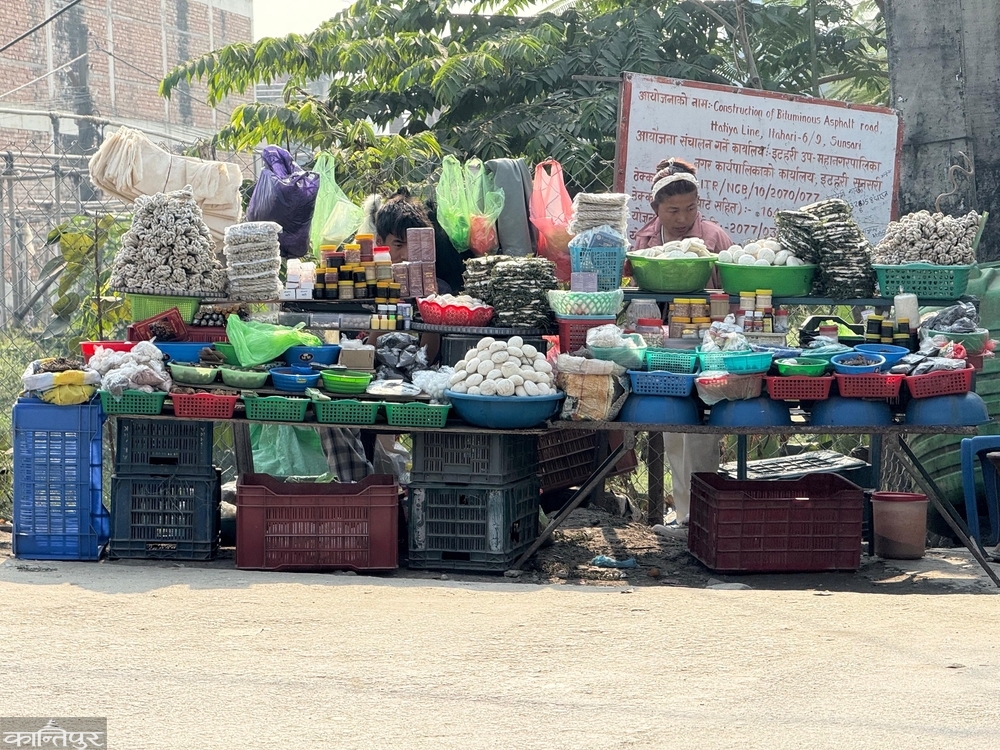
Since the roads are blocked by snow, it is difficult to run a herdsman, and it is challenging to send children to school, all the members go down to the Terai, while only one person is kept at home to look after the cattle.
Herb collection is an old tradition in Bhotkhola and the surrounding mountainous areas. It has been practiced like an ancestral profession among the Bhote, Lama and Sherpa communities. The list of herbs they collect is long. They collect and sell everything from Shilajit, Padamachal, Sugandhawal, Timur, Hing, Kesar, Batisa, Jethimadhu, Padmashal to Yarsagumba. By selling these herbs in the Tarai market for three months, they buy household expenses, children's education, household goods, and salt and oil.
Those who descend from Bhotkhola to the Tarai also carry items for religious and cultural purposes. They sell everything from the items used in Sakela Ubhauli-Udhauli by the Kirat community to the tails of the chauri used in the Lakhe Jatra by the Newar community. Since the tails of the chauri are brought from Tibet, it gives them additional income. They also sell everything from the marcha used to make alcohol to various herbal incense sticks and medicinal materials.
According to Bhotkhola Rural Municipality Chairman Bangchhedar Lama, they bring more than 100 types of herbs and traditional materials when they go to the Terai. There are also families who earn more than one hundred thousand rupees in three months. This journey has become a must for them as it not only protects them from the cold but also provides good income.
Most of the settlements in Bhotkhola Rural Municipality are at an altitude of 2,500 meters to 4,000 meters. It snows continuously in winter. Locals say, ‘Sometimes there is a situation where the sun does not shine for a week.’ Everything from household work to farming comes to a standstill.’ Apart from that, snow also affects school operations. There are about 350 students in Bhotkhola-9 Community School. As the winter worsens, the school has to give a ‘winter break’ throughout the month of Magh.
Chairman Lama said that it will be difficult to conduct classes as even the teachers go to the Terai. ‘Kabela migration is a traditional way of life and an economic option,’ he said. According to local elders, the practice of descending the Kabela has been a cultural tradition for many years. ‘Although Kabela is done to protect oneself from the cold, in recent decades it has also become a business opportunity,’ he said. ‘The herbal trade has provided a sustainable source of income for many families in the high Himalayan region.’
He said that when the temperature drops too much, it will become impossible to live in the village. ‘The cold stops daily life. Electricity has not reached the villages. We have to live on tuki,’ he said. ‘Those who can afford it and those who can afford it have connected solar panels. Those who cannot afford it live on tuki.’ At such a time, the herbal trade has become their main source of income and a means of livelihood.
Earlier, they had to travel on foot for five to seven days to reach Bhotkhola. Now, a dirt road has reached Chyamtang, which is about 120 kilometers from Khandbari. The locals have felt some relief after the road was reached. Although the road is blocked during the rainy season, small vehicles ply during the winter season.
Five different units of the Nepal Police and the Armed Police Force provide security for security management. There is a police presence in Hatiya, Saksilagola, Chepuwa, Ridak and Kimathanka. Chairman Lama said that this has provided security and confidence to the locals in collecting herbs, trading and traveling.
The village is deserted for three months in winter. As the cold increases, the villages of Bhotkhola Rural Municipality are gradually becoming deserted. Most families have moved to the lower regions, leaving behind their households, livestock, stables and traditional settlements. In the markets of the Terai, the number of people from the Bhote and Lama communities is increasing. They are conducting economic activities by selling herbs, traditional goods and cultural materials in the markets of Morang and Sunsari.
Temperatures start rising in the mountainous district of Sankhuwasabha from the last week of Falgun. The residents of Bhotkhola, who have come down to the Terai, return to their own mountainous villages after completing a three-month business trip. ‘The migration of the residents of Bhotkhola is not only a battle with the weather, but also an efficient strategy for earning a living,’ said Nurbu Bhote, chairman of Bhotkhola Rural Municipality-1. ‘Despite the challenges of the cold weather, tradition and herbal trade have made their livelihood possible.’
He also said that it is not certain how long the tradition of coming down to the Terai in winter will continue. ‘For now, going down to Kabela has become the most effective way to earn a living, continue their culture and avoid the cold,’ he said.