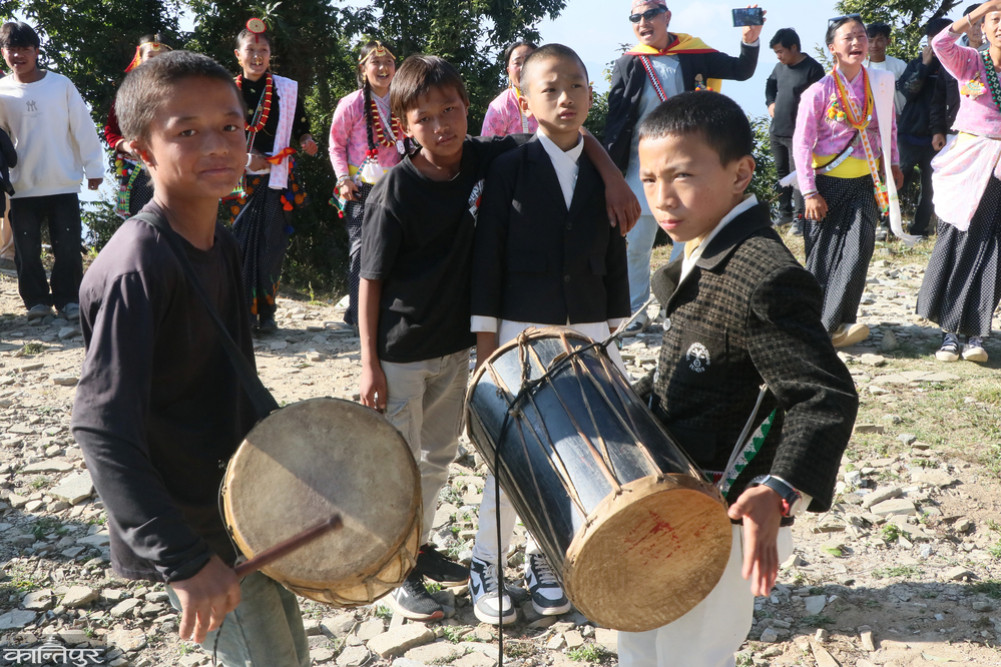
Kirati youth and adults have performed Sakela Sili dance in Majhuwagadhi, playing chamar and khaijadi to the rhythm of dhol and jhyamta. They performed Sakela Sili on Thursday on the occasion of Udhauli of the 5085th year of the Yale Sambat.
We use Google Cloud Translation Services. Google requires we provide the following disclaimer relating to use of this service:
This service may contain translations powered by Google. Google disclaims all warranties related to the translations, expressed or implied, including any warranties of accuracy, reliability, and any implied warranties of merchantability, fitness for a particular purpose, and noninfringement.
The stick of the hawk is bent, the one who holds it is bent, the one who holds it is naked. Who sees hunger and thirst, who sees nakedness, the one who holds it is naked.
Kirati youth and adults danced Sakela Sili in Majhuwagadhi, playing the drums, chamar and khaijadi to the tune of dhol, jhyamta. They danced Sakela Sili on Thursday on the occasion of Udhauli of the year 5085.
The Kirati community celebrates Udhauli and Ubhauli twice a year. There is a culture of celebrating Udhauli on the full moon day of Mangsire and Ubhauli on the full moon day of Baisakhe. Kirat Rai Yayokka Khotang Chairman Yugsan Kirat said that during the harvesting season, it is customary to worship nature to ensure that the crops are plentiful and there is no famine. Kirats say that Udhauli is called Udhauli because aquatic and terrestrial animals migrate to escape the cold during this time.
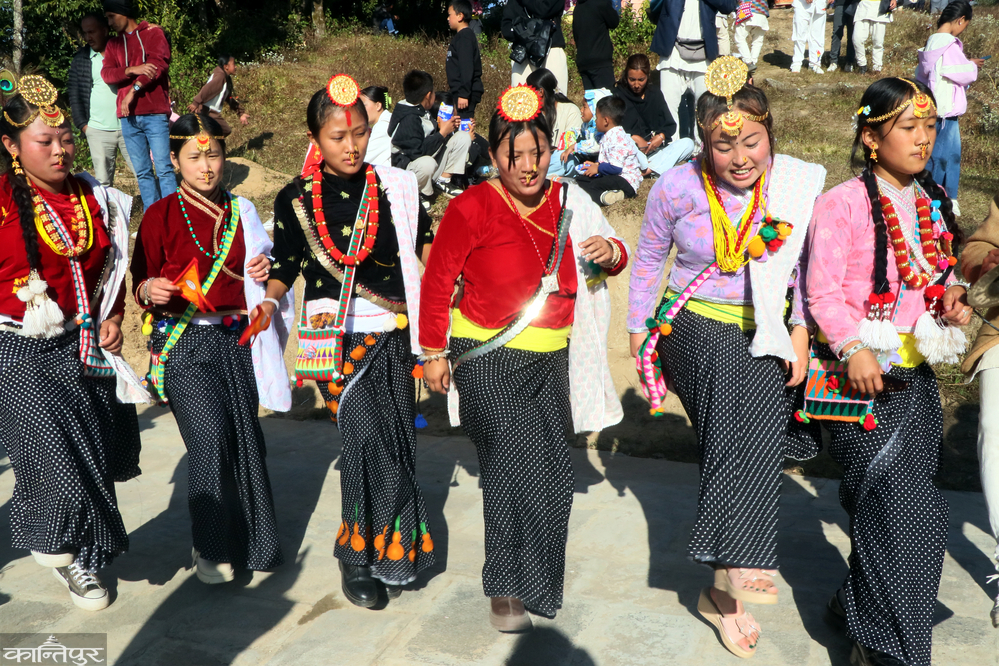
Similarly, during the full moon day of Baisakhe, the Kirats have narrated that there is a tradition of worshipping nature during the rainy season, praying for the prevention of landslides, natural disasters, and good crops. The Kirats have stated that it is called Ubhauli because aquatic and terrestrial animals migrate to the lake to escape the heat during the full moon day of Baisakhe. During Udhauli-Ubhauli, it is customary to meet relatives and seek blessings from relatives. ‘The experience of life (from birth to death) is presented through Sakela Sili,’ said the Kirats. ‘There is a tradition of worshipping nature during Udhauli-Ubhauli, imbibing the unique gifts of nature, and dancing Sakela Sili.’
Sakela Sili is danced not only by Kirats but also by non-Kirats. Sakela has developed into a common and rich culture for all, said San Bahadur Rai, head of the District Coordination Committee, Khotang. 'Sakela has become common not only for Kirats, but for all communities. It has become a means of developing brotherhood among themselves.'
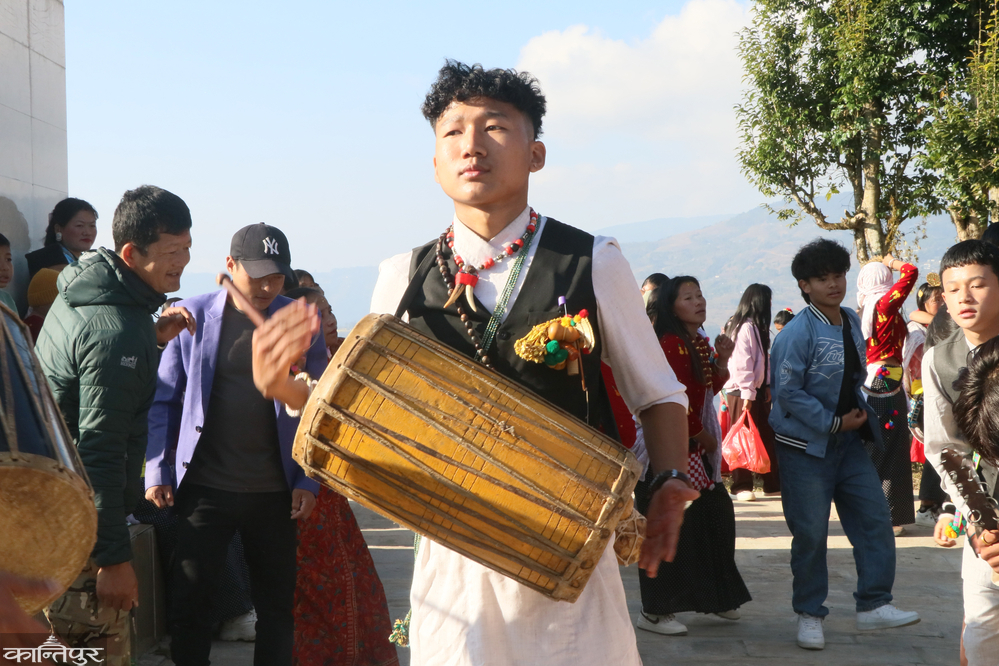
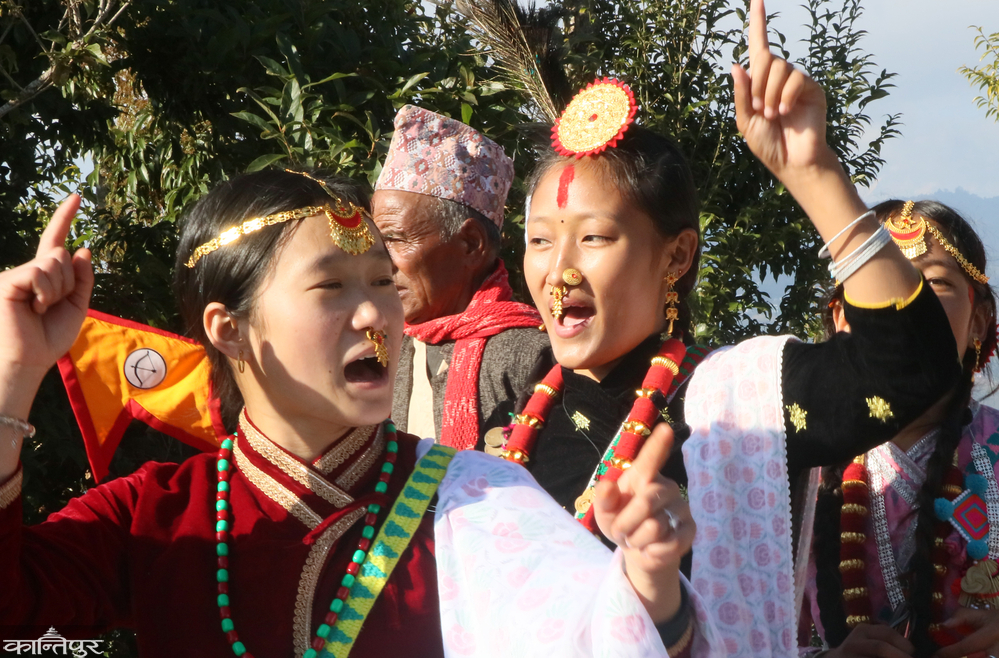
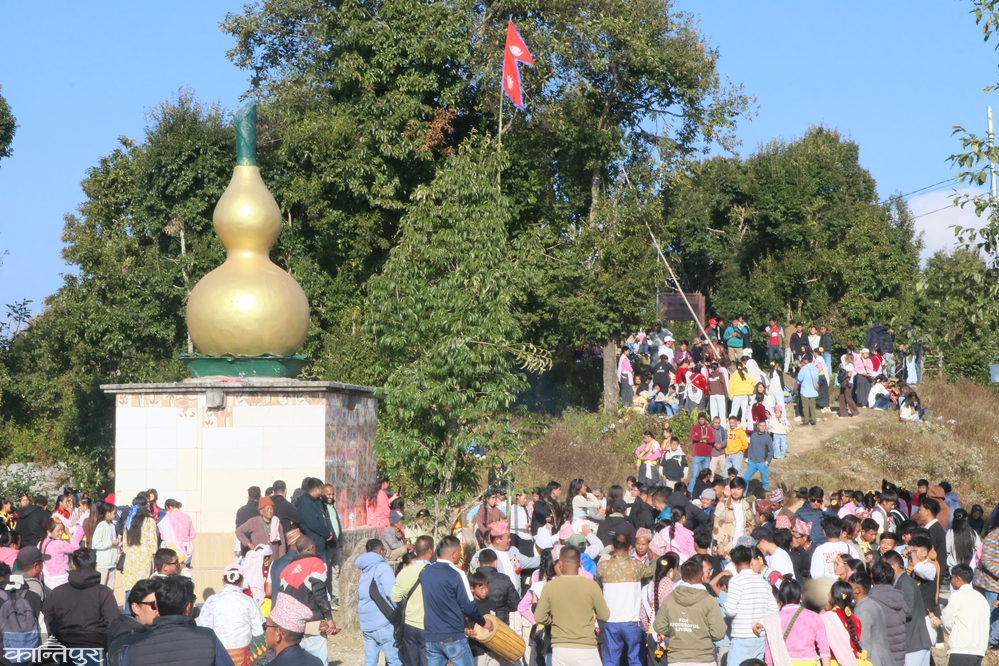
Similarly, on the occasion of Udhauli, Dumi Kirat Rais worshipped nature in Rupakot and danced Sakela Sili. Photos: Dambar Singh Rai/Kantipur