We use Google Cloud Translation Services. Google requires we provide the following disclaimer relating to use of this service:
This service may contain translations powered by Google. Google disclaims all warranties related to the translations, expressed or implied, including any warranties of accuracy, reliability, and any implied warranties of merchantability, fitness for a particular purpose, and noninfringement.
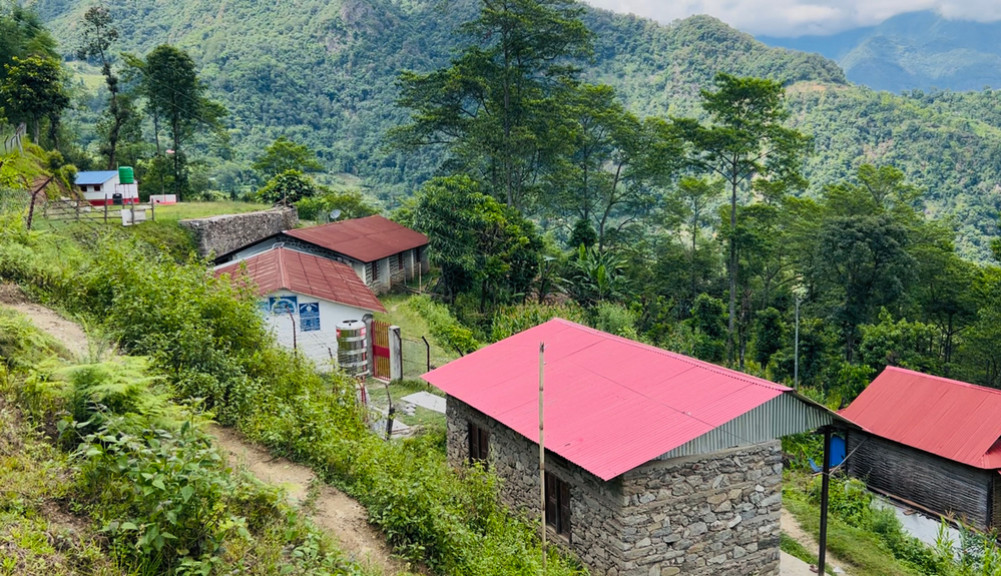
Until five years ago, 60-year-old Manju Sharma of Dhupuki used to go to Jhismise to fill water in a well located half an hour down to get drinking water. It was already 7 am by the time they brought water. There was a situation where 2 hours more time should be allocated daily for the water joho. However, now his daily life has changed.
There is a stream in the courtyard of the house. Where it rains 5 hours a day.
'After a few years, this problem has disappeared after drinking water is easily available in Dhupu,' Sharma said, 'It is now just a matter of bringing water to the well with a line.' Another local Kedar official said that 60 families are facing many problems when they use water from a well in the village. He is now 66 years old, but the officer is happy at his advanced age even though he has come home after a long time. He also now has water connected in his yard.
'The residents of Dhupu, who once woke up in the morning to tap a drop of water, are now playing with the water fountain in the yard,' he said. Nepal Red Cross Society's Ek Ghar Ek Dhara Project has changed their daily life.
'We had to walk for one hour down and two hours uphill for water,' the officer said, 'Women's daily routine was spent fetching water for a bucket of water. Even school children were sometimes late due to lack of water. Now you can wake up in the morning and open the tap in the yard to get water. I did not think that I would get such a relief in my life.'
Chairman Saroj Bajracharya said that Red Cross prioritized cooperation with the local government, community ownership and local labor while conducting this project. "The community has also been active in the responsibility of resource management, pipeline connection, and tank construction with the aim of providing water to every house," he said, "This plan has become a sustainable solution to the village's clean water problem." Now we have also carried out hygiene and sanitation programs together.'
Red Cross has conducted water sanitation promotion and disaster risk reduction project in collaboration with the local government. He said that about 728 households will directly benefit from this program, which has been carried forward with the aim of improving hygiene, health and living standards.
is now operational after the construction of water pipes in the houses of 400 locals. Tanks have been built in 3 springs in different places of Dhupu and water has been delivered to the homes of the locals. They pay 50 rupees per month for using water. With the collected money, the staff to open and repair the water has been managed.
According to the Red Cross, 38.2 million 35 thousand will be spent for the construction of 726 water pipes with tanks in 6 schools. The project has been conducted with 50 percent of the Red Cross, 30 percent of Sabhapokhari Rural Municipality and 20 percent of the community. The locals, who have been suffering from water shortage for a long time, have now felt relief after getting running water at home.
'Water not only comes in the stream, it also carries health, time, hygiene and opportunity,' said Sunita Rai of Dhupoo, 'Especially the daily labor of women has decreased, children have started going to school regularly.'
With the increase in sanitation, the locals have experienced a decrease in diarrhea, typhoid, and water-borne diseases. Since this project is cheap, simple and sustainable, the Red Cross has prepared to extend it to other wards as well. According to Red Cross President Bajracharya, local youth have been taught the skills of pipe connection, pumping and maintenance.