We use Google Cloud Translation Services. Google requires we provide the following disclaimer relating to use of this service:
This service may contain translations powered by Google. Google disclaims all warranties related to the translations, expressed or implied, including any warranties of accuracy, reliability, and any implied warranties of merchantability, fitness for a particular purpose, and noninfringement.
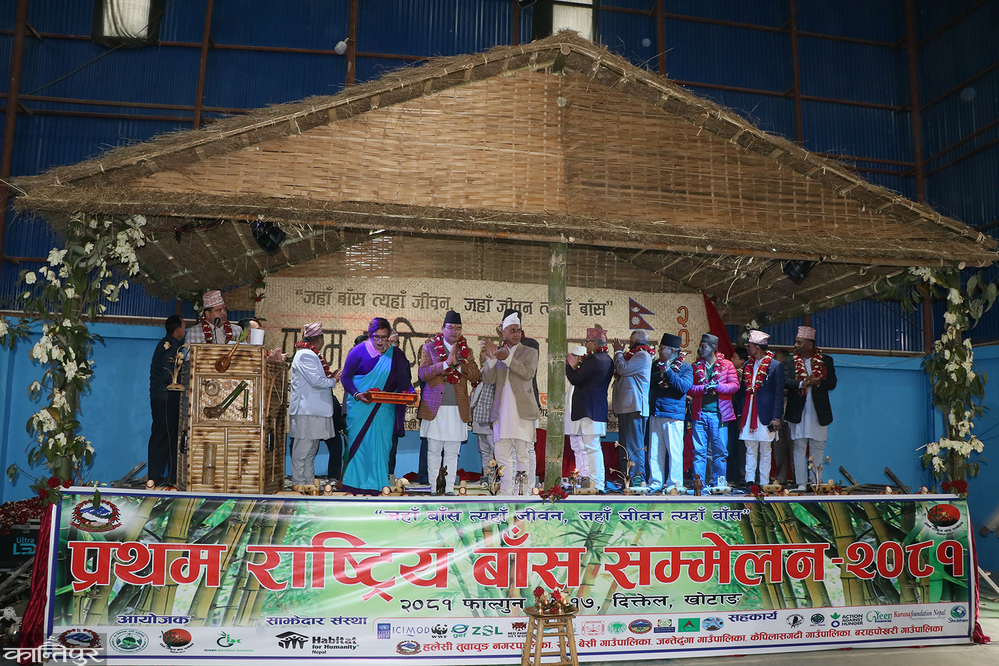
The first national conference has been completed with a 35-point manifesto. The conference was concluded on Saturday by issuing a manifesto on various issues such as production, promotion, income generation of bamboo products.
In order to promote and sustainably manage bamboo cultivation, it is mentioned to promote the commercial cultivation of various species of bamboo according to the market demand, to expand the production and cultivation of bamboo plants, to promote the planting of bamboo in non-agricultural land on the banks of rivers, barren lands and community forests, to encourage studies, teaching, research and knowledge sharing related to bamboo cultivation, to protect the local original art, culture and traditional knowledge and pass it on from generation to generation.
In order to strengthen the bamboo industry and market development, it is mentioned to develop a strategic business model to improve efficiency and product quality in the bamboo-based industry, to promote modern technology and the latest products, to diversify bamboo products and promote them in the national and international markets, to create favorable policies for the bamboo industry, and to take initiatives for investment opportunities and incentives. Similarly, it is mentioned in the manifesto to strengthen the network between bamboo farmers, producers, builders and consumers, to encourage the green infrastructure based on bamboo, etc., and to initiate the Nepal government to prepare the necessary standards and guidelines for this, and to use the residual products from the bamboo enterprise in agriculture, environmental protection, clothing and beauty processing industries .
Bamboo-related study, research, innovation and capacity building for bamboo-related studies and teaching programs, promotion of bamboo-based construction materials and environmentally friendly new technologies, initiatives for certification and approval of bamboo as a structural material, promotion of collaboration between researchers, entrepreneurs and stakeholders and policy makers, conducting a nationwide awareness campaign about the importance of bamboo and taking initiatives to include it in the curriculum of school education, placing bamboo research and survey as a national priority, And there is a mention of documenting and protecting local species .
Thanking the Government of Nepal, the Ministry of Forestry and Environment for the National Bamboo and Cane Development Strategy, the manifesto mentions supporting the Government of Nepal for the implementation of this policy, taking the initiative to include bamboo in the national economic and environmental strategy, and developing guidelines and standards for bamboo production and use.
To solve environmental and climate challenges, it is mentioned in the manifesto to promote the role of bamboo in prevention of forest destruction, reduction of soil erosion and carbon absorption, encouragement of large-scale bamboo planting, and promotion of bamboo-based alternatives to reduce plastic waste.
Strengthening the bamboo supply chain for the expansion of employment and livelihood, creating jobs in disadvantaged areas by managing farmers, producers, design and markets, conducting skill development and capacity building programs for bamboo craftsmen and entrepreneurs, building the basic knowledge and skills of local bamboo craftsmen and tribal tribes and doing necessary work in their promotion, ensuring access to financial support and incentives for small, medium and large bamboo enterprises, promoting para-tourism based on bamboo and other natural resources. mentioned .
In addition, initiatives to establish a bamboo museum in Khotang as the capital of bamboo, initiatives to establish a bamboo study and research center in Khotang's Diktel, initiatives to celebrate the day of the National Bamboo Conference on February 15th as 'National Bamboo Awareness Day' have been mentioned in the manifesto. At the
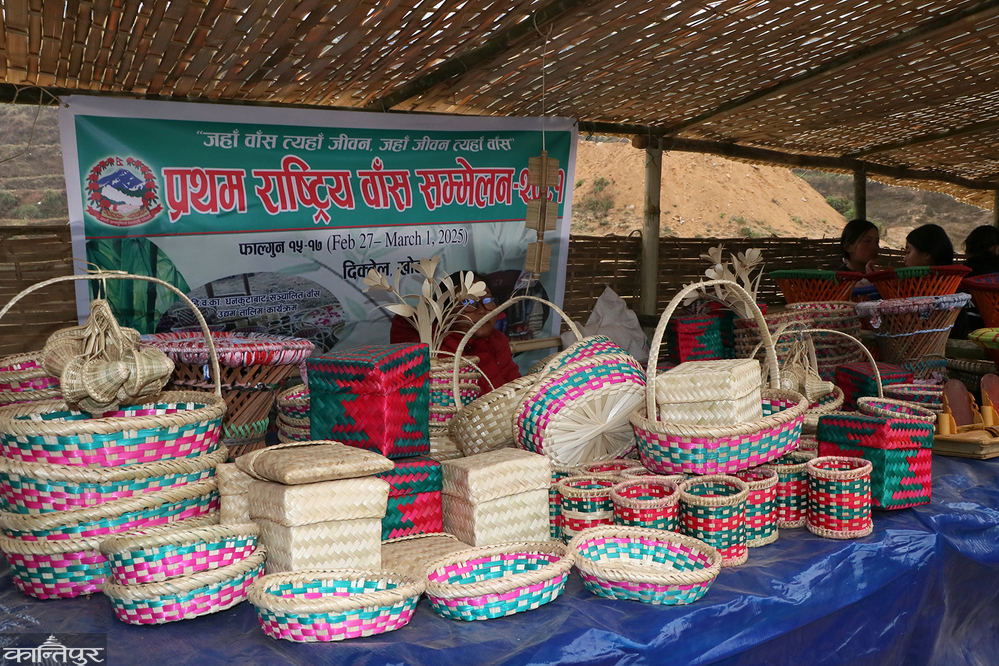
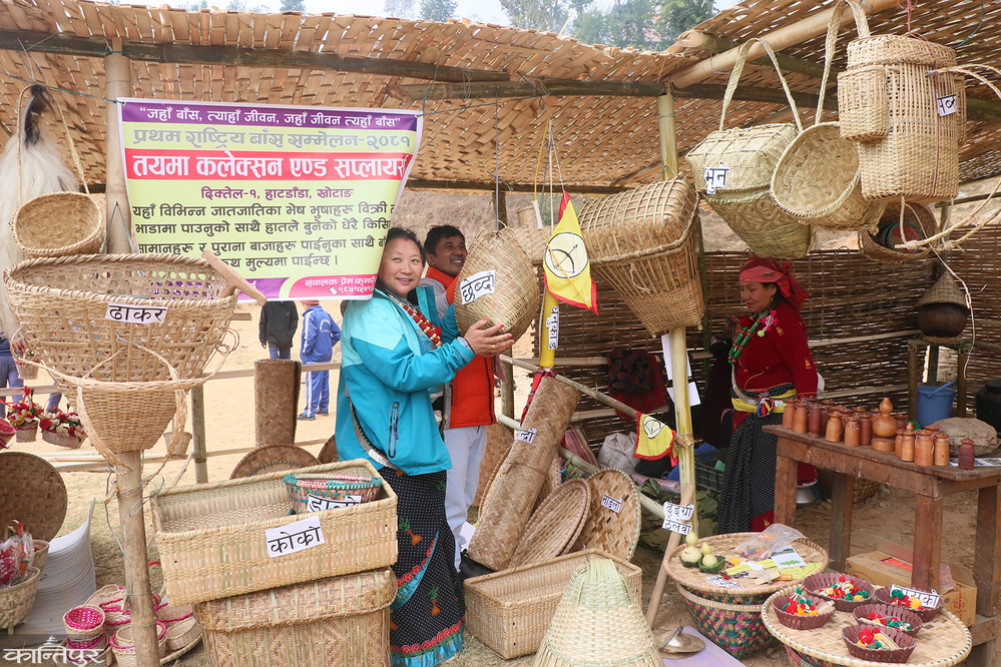
conference, entrepreneurs related to bamboo from all over the country had 24 stalls . The head of agriculture branch of Diktel Rupakot Majhuwagadhi Municipality Tejprakash Jaisi said that entrepreneurs of Khotang have kept various types of products produced in the district including food dishes. "Entrepreneurs from different districts had set up 24 stalls", Jaisi said.
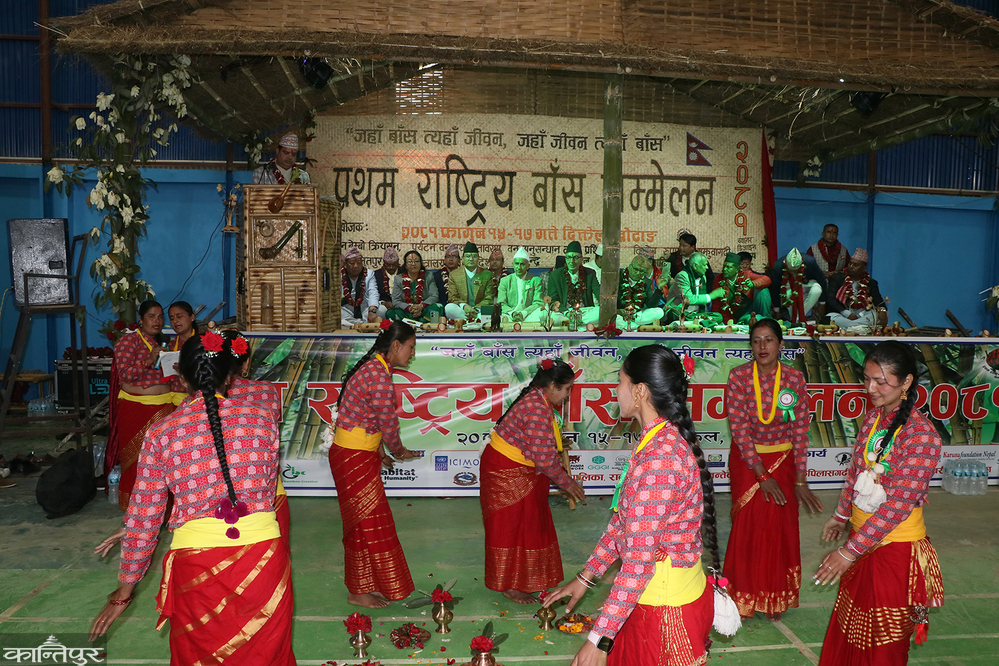
Various papers related to bamboo were presented for three days . The conference, which was inaugurated by the Minister of Forest and Environment, Ain Bahadur Shahi Thakuri on February 15, was concluded with the chief hospitality of Professor Dr. Shilu Manandhar, Vice-Chancellor of Nepal Open University. Various individuals and organizations who played an important role in making the conference a success have also been honoured. Heads and representatives of government and non-government bodies including various universities participated in the conference.