We use Google Cloud Translation Services. Google requires we provide the following disclaimer relating to use of this service:
This service may contain translations powered by Google. Google disclaims all warranties related to the translations, expressed or implied, including any warranties of accuracy, reliability, and any implied warranties of merchantability, fitness for a particular purpose, and noninfringement.
18-year-old Santosh Magar, who is studying in class 9 at Dharapani High School in Dumredharapani, Rawabesi Rural Municipality-4, now runs to Rawakhola every day. They catch two to three kg of fish in a day and return home after selling it at the rate of 600 rupees per kg.
He said that since the fish in the mountain rivers are delicious and the demand for fish is increasing, they swim in the river to earn money. Magar said that he used to catch fish by using skills such as cutting the wall, throwing the net, tapping the net, and tying the hook. "If you fish all day long, you earn from 1200 to 1800," he said.
But this year compared to the previous years, since there are no fish in the river, people who earn their living from fish are worried. Ratnamaya Ramtel, who runs a fish shop in Katrebesi, said that the fish shop was destroyed after not getting any fish. "At one time, up to 50,000 fish were sold in one day, but this year there is no fish in the river," she said. business has been broken .'
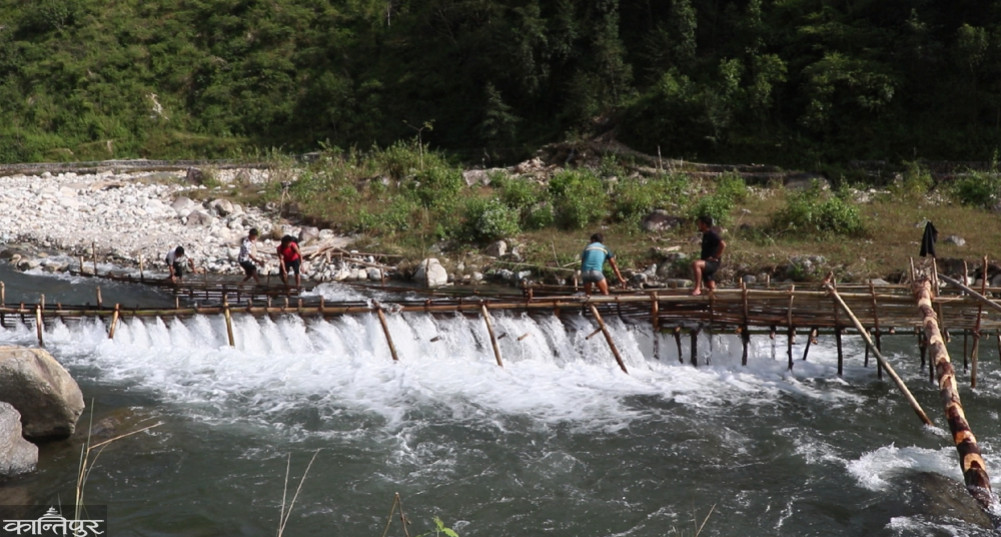
Dolraj Basnet, Ward President of Rawabasi Rural Municipality-2 Kharpa, said that due to current, blasting, flood, climate change, the fish has decreased. Basnet says that in Rawakhola 6-7 places are tapped every year. "Last year, three to four hundred kg of fish were produced in one tip (Sorai), this year it was not even 100 kg," he said, "Due to current, blasting, and climate change, fish decreased." Tilketar, Chalise of Ward 2 Kharpa, Kathare of Ward 4 Dumredharapani, Piple of Ward 5 Dubekol, Chindevdaurebesi, etc. Among them, the Majhi community wears winter sorai in Tillketar. In various places including Chalise, Piple, Katharebisi, annual sorai is performed. "During this rain, the sorai of Chalise, Katharebesi, Piple was washed away," said Basnet, "The sorai that was washed in Chalise and Katharebesi was made again". "From the previous local government to the current local government, even the wards have been banning electricity, blasting and poisoning, but they have not been successful," said Basnet. 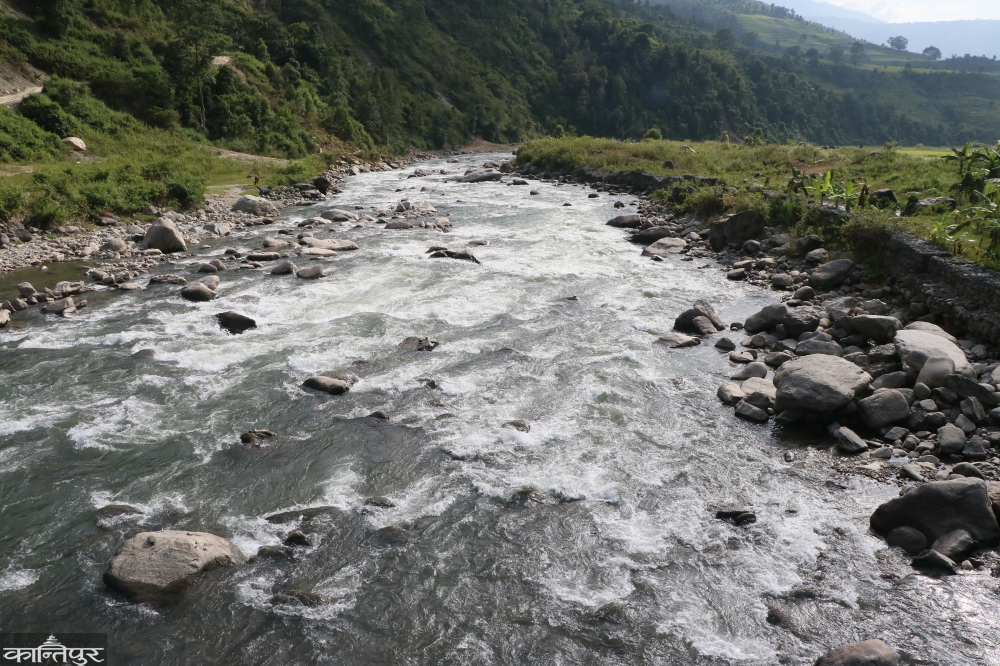
According to Basnet, even after catching a team of fishermen using current and blasting and taking them to the police, they could not be controlled. "Once a fisherman was caught using current and blasting and taken to the police, when it came to the attention of the leaders, he was released after promising not to do so," said Basnet, "However, there was no control." Basnet said that Asla and other local species of fish are on the verge of extinction. "If you use current and blasting, the fish will die, but the surviving fish and sawdust will also be injured, and that's why the fish has decreased, now it has reached the stage of extinction," said District Coordination Committee Khotang Coordinating chief San Bahadur Rai said that two months ago, they had written to the relevant local levels to kill fish using current, blasting and poison in various rivers including Rawakhola, Tapkhola, Sapsu Khola, Mewa Khola. Rai said that an inspection is also being conducted to see if it has been implemented or not. "Two months ago, we have already sent a letter not to kill fish using electricity, blasting, poison, and accordingly, continuous monitoring is being done. Yesterday, a team including chiefs of CDI and security agencies conducted monitoring in Rawakhola area," Rai said, "If found, legal action will be taken."