They look like three, but they are the same soul of the Nepalese women's volleyball team. Salina Shrestha's defense, Aruna Shahi's setting and Usha Bhandari's spike have lit up the entire sky of Nepali volleyball.
We use Google Cloud Translation Services. Google requires we provide the following disclaimer relating to use of this service:
This service may contain translations powered by Google. Google disclaims all warranties related to the translations, expressed or implied, including any warranties of accuracy, reliability, and any implied warranties of merchantability, fitness for a particular purpose, and noninfringement.
Not all games are popular. Popular games don't always lead to success. In the case of Nepal, volleyball is an exception. Volleyball is becoming popular in Nepal, it is also among the medal-winning sports. The fact that Nepal Volleyball Association is the only association with branches in all 77 districts also confirms its popularity.
This popularity and success of volleyball was declared by the government as a national game in 2074 realizing parental responsibility. General spectators went to the ground to watch the game as parents. The Volleyball Association internationalized the active game in Mofusal fulfilling the parental responsibility. Some parents also came out who
led his children to the volleyball court. Now they have become the conductor of Nepali women's volleyball. They look like three, but in particular, they are the same soul of the Nepalese women's volleyball team. Salina Shrestha's defense, Usha Bhandari's spike and Aruna Shahi's setting have made them three stars in the whole sky of Nepali volleyball.
Raghuganga Rural Municipality of Myagdi is the birthplace of Aruna Shahi. His father and brother played volleyball. Mother doesn't like her daughter's play as much. However, due to her father's inspiration, Aruna started playing volleyball. Also, there were no other games in the village at that time. While playing in Myagdi, Aruna caught the eye of Kausheela Khatri. After that, he got a chance to study and learn volleyball at Gyanubaba Secondary Boarding School in Pokhara. Despite the fulfillment of his dream of playing volley, his eyes were filled with tears for many nights amid the compulsion to leave home. Similar tears fell when Nepal defeated India for the first time under the captaincy of Aruna in the league stage of the Kava Women's Volleyball League on 19 July 2081.
The Nepali women's team spent the night without success despite knowing that they would have to compete against a strong team, Iran, the next day. She says, 'Not all victories give the same happiness. India's image of being invincible was to be erased. It felt like revenge for the loss to India in the final of the 13th green. When I was happy, I always had a good sleep, people can't even sleep when they are so happy.
The 13th Saag in Kathmandu was the same competition where Aruna, Salina and Usha were in the same team. While Aruna and Salina were regular members of the national team, Usha was making her debut in the team. In the match against Bangladesh in November 2076, Usha scored some points in the spike. Coincidentally, it was captain Aruna Shahi who set the ball to him. Before that, Usha joined the camp for AVC Women's Senior Central Zone Volleyball, but she did not make it to the final team. However, now he is not only a regular member of the national team, but also the main spiker of Nepal.
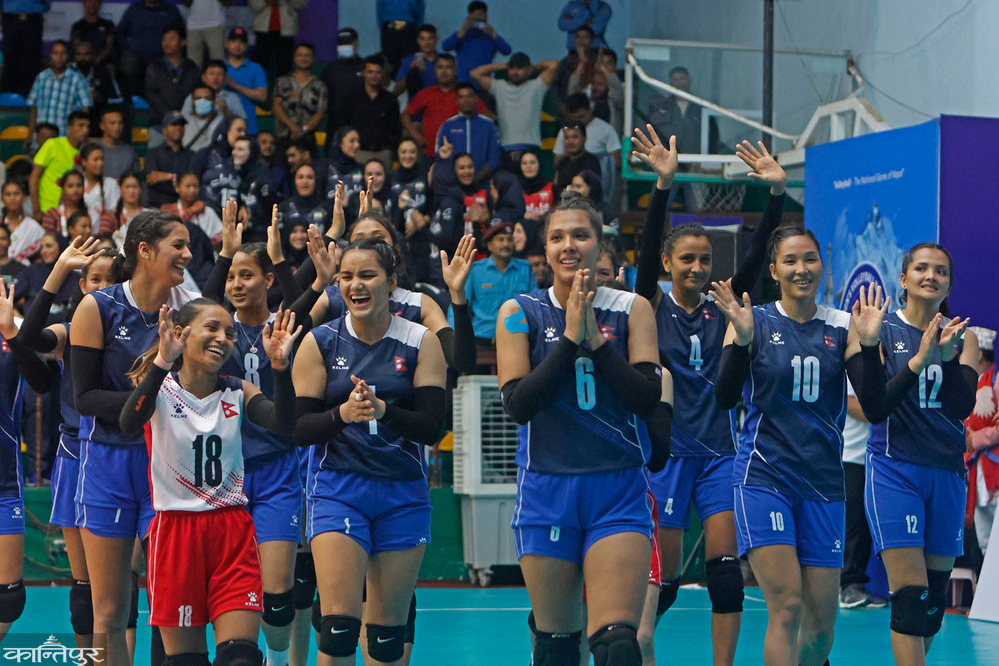
In particular, Usha also represents the Gandaki region. Born in Bhimad, Tanahun, Usha used to play badminton and football. Gajendra Bhandari, the father of volleyball, decided to make his daughter a volleyball player. Usha grew up near the premises of Dhorpatan Club.
Manveer Chantyal, president of Dhorpatan club, invited Usha to play volleyball after consulting her father Gajendra. Later, she joined the police school in Samakhushi and started her volleyball career from there. Initially, Usha played an all-round position.
When police club's spiker Kamna Bista got injured, she started playing as a spiker. Usha, who started playing in the police club within 6 months of starting training, made it to the national team within 3 years of playing. Police coach Rupesh Bisht says, 'Usha's defense is as strong as a spike. While training in the early days, she learned defense along with the art of dribbling with her senior brothers in Dhorpatan. It has increased her confidence.'
Because of Usha's good height, the school also trained her in basketball. However, his rhythm had settled in volleyball. Father Gajendra was the source of inspiration. Inspired by her father, she made her debut in the national team at the age of 14. They did not get a place in the matches other than Bangladesh. Coach Jagdish Bhatt probably did not want to take 'risk' because of his young age. However, after Pratibha Mali was injured, she is one of the players who will continuously handle the attack of Nepali volleyball.
Usha has played professional volleyball even in Maldives. Usha, who performed brilliantly in Maldives three times, is also very popular among the audience there. Usha is the marquee player of Kathmandu Spikers in franchise women's volleyball that started in Nepal recently.
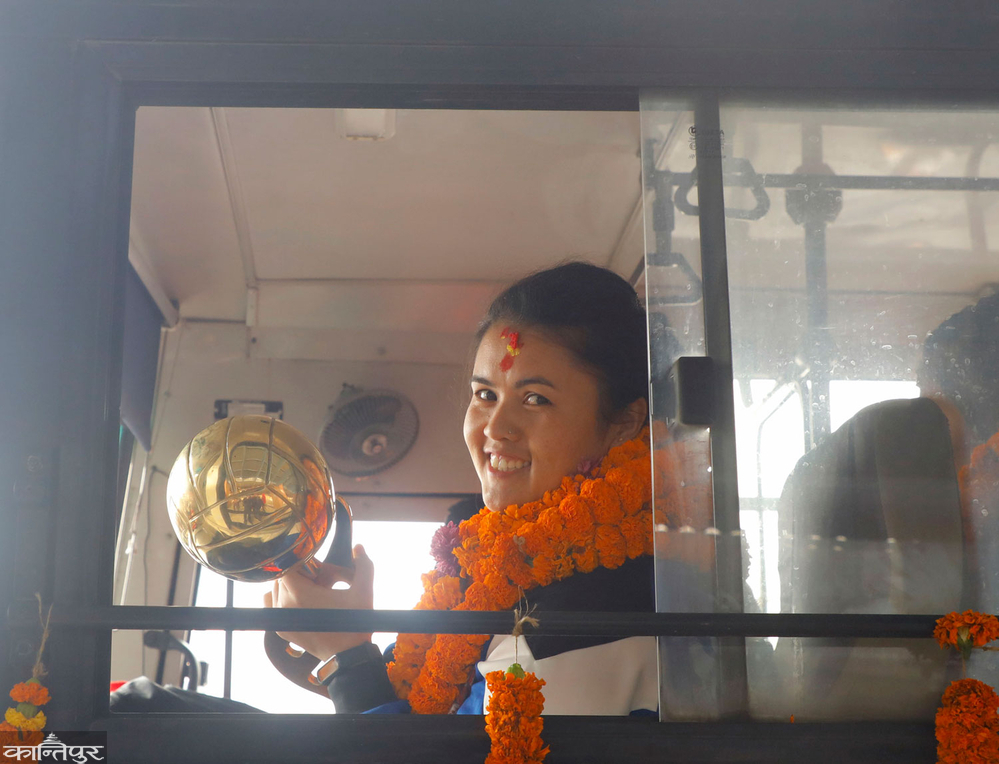
When talking about women's volleyball competition, the 13th green final against India is always discussed. It wasn't just a game. There was also a test of patriotism, women empowerment and self-strength. Nepal trailed 2-3 in the
set score, but in every set the players fought to win the hearts of the audience. The covered hall of the Dasharath Rangshala was resounding with Nepali Nepali voices. Even though the match was lost in the last set, it became a 'pride victory' and spread throughout the country. On that day, all the Nepalis had one thing in mind - we played our best, we did not lose.
That was the same day, after which Salina Shrestha introduced to others that I am also a volleyball player and I did not have to walk. After that day, a new adjective was discussed in the Nepali sports circle - Hocho kad, tall sports performance. However, Nepal, who lost the first set due to Salina's all-round performance, came back to win the second and third sets. Nepal finished second while India dominated the fourth and fifth.
No one who meets or sees Salina outside of the volleyball court calls her a regular player. When Salina is 4 feet 9 inches tall, when she is on the court, her performance is much higher than that of taller players.
Salina also made her national team debut in 2019 through the AVC Women's Senior Central Zone. Including 9 new players, Nepal won the tournament by remaining undefeated after playing five matches at that time. Salina tasted the title in her first international participation.
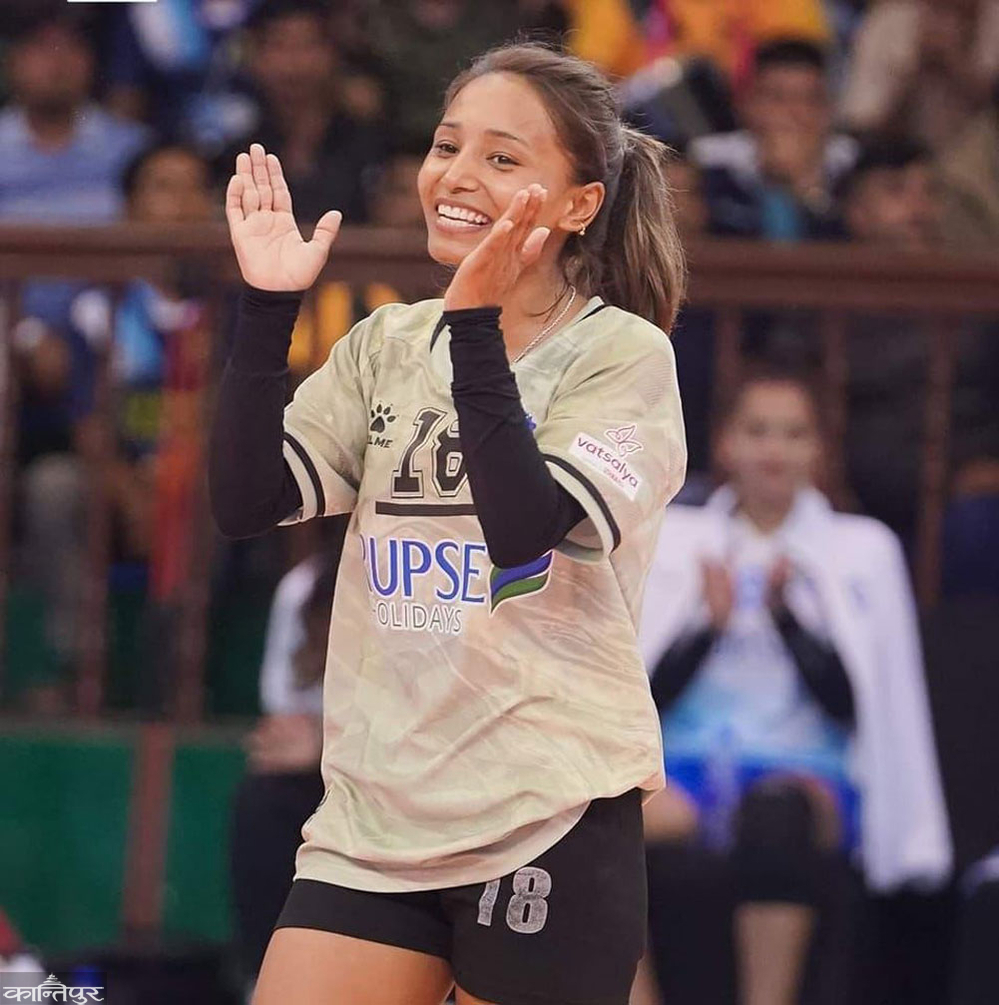
Salina was a key member of the team when Nepal won a historic silver in the 13th SAG held on home soil in 2019. Similarly, when Nepal won the title in the second AVC Women's Senior Central Zone held in Bangladesh in 2022, Salina was declared the best libero. Salina got the best libero award when Nepal finished third in the Kava Women's Volleyball Challenge League.
No one in Salina's family is into sports. The mother did not like her daughter playing. Father wanted his daughter to make a name for herself no matter what she did. However, he did not get to see his daughter climb the peak of success. By taking up volleyball, she got a godfather – Kumar Rai. Kumar is the one who briefly coached Aruna to play as a setter by switching positions and eventually converted her into a setter. After the setter Kripa Adhikari joined the army, Kumar started playing Aruna in his place.
Enrolling in New Diamond Academy and catching the eye of Kumar also proved to be a boon for Salina. Sometimes she used to push me to play. Salina, who grew up watching Reshma Bhandari and Ramila Tandukar play volleyball in school, started volleyball training only when she was in class 6. Kumar wanted to play him in the libero position after seeing his short stature and graceful manner. Now she has become Nepal's No. 1 libero.
Salina was a member of the team that won the 2069 NVA Club Championship at New Diamond, beating the divisional teams. She then became an established libero, playing consistently for New Diamond. We had to wait for a while to open the doors of the national team. Now she is the marquee player of Lalitpur Queens in Franchise Women's Volleyball League.
He has the unpleasant experience of being thrown out of the game twice because of his height. Salina is a shining example of recent times that has proven that even a small person can be played. "I play in the libero position, it requires a lot of movement," she says, "now it has been proven that height is not necessary in the libero position."
Salina and Usha are at the 'peak' of their sports life. Usha is saddened by the injury. In his absence on the court, Tim is disappointed when he performs poorly. However, there is no option to watch Tulutulu. "A player's hard work alone is not enough. It is important to pay attention to how to keep yourself fit and injury free. An injury can end a player's career. We need to be trained in this," she says.
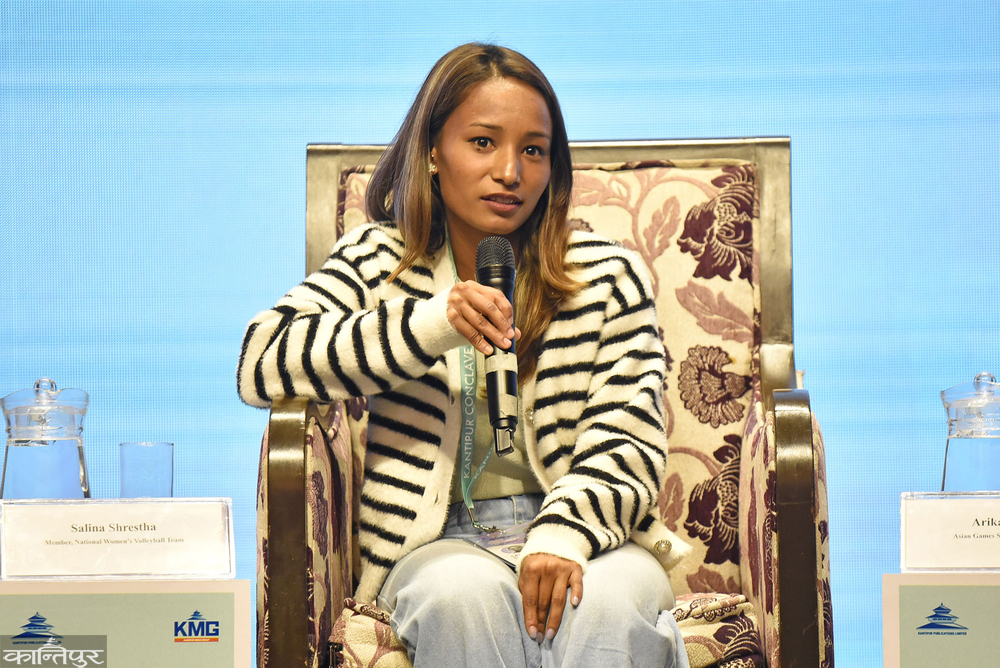
Both Salina and Usha are planning to make their respective clubs franchise league champions this time. Salina also wants to make New Diamond a national champion. But Aruna has a different idea. Gandaki Province was once the hub of women's volleyball. He plans to continue the legacy earned by Manju Gurung, Sipora Gurung, Fishtail School, Gyanubaba School in volleyball. Men's volleyball is good in Gandaki but women's volleyball is not at the same level. She said, 'There is a desire to restore the reputation of women's volleyball in Gandaki.'
The three pillars of Nepali women's volleyball are Aruna, Salina and Usha. Today they are shining as much as they are inspiring the new generation. State-level competitions, school leagues, formation of private clubs and growing interest in women's volleyball have been made possible by their contribution.
The combination of Salina Shrestha's defense, Usha Bhandari's attack and Aruna Shahi's setting and leadership — these three aspects together have become the basis for establishing Nepal's women's volleyball at the Asian level.
They stood at the same time, raised the same flag, dreamed the same dream. Today, those three stars are shining in the same sky. And that sky is the future of Nepali volleyball.

