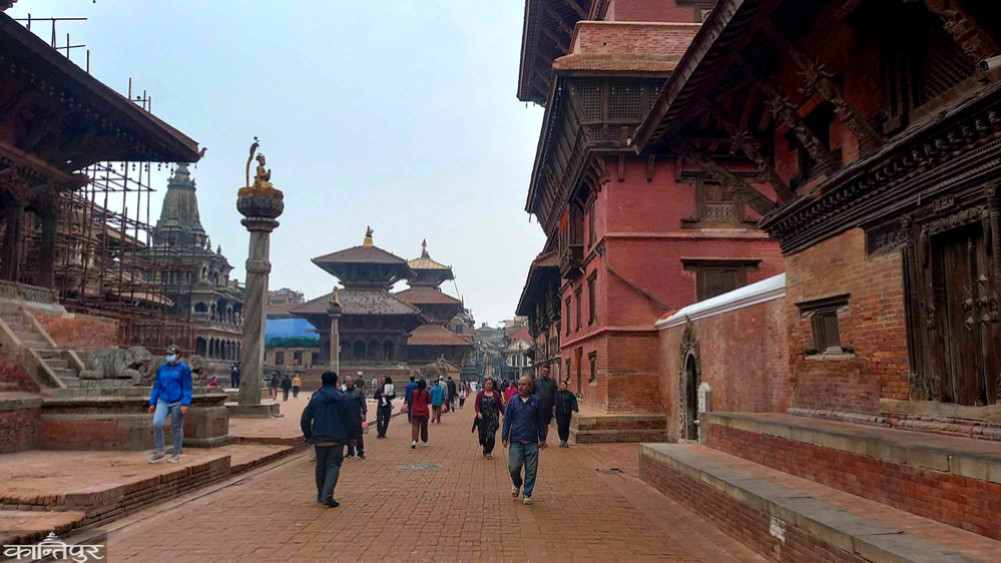
In spite of what happened in the last 4/5 decades, we are still in a position to preserve the old cities to some extent, the sloped houses that have been built can be rebuilt in the old style without tearing them down.
We use Google Cloud Translation Services. Google requires we provide the following disclaimer relating to use of this service:
This service may contain translations powered by Google. Google disclaims all warranties related to the translations, expressed or implied, including any warranties of accuracy, reliability, and any implied warranties of merchantability, fitness for a particular purpose, and noninfringement.
Rather than saying that there were heritage sites within the valley, it is more appropriate to say that the entire Kathmandu Valley was a heritage site. The three cities of the valley were full of heritage. When Tony Hagan and Inger Lisanovich (Voris Lisanovich's wife) came to Kathmandu, they said, 'This is the largest heritage site since World War II'.
They fell in love with the city from their first visit. Because at that time, the houses of everyone living in the Kathmandu Valley were decorated with special art. Dhara, patipauwa, monastery, temple and temple were all part of the heritage here.
When cement entered the valley full of heritage, the journey of destruction began here. It seems that in the name of development, we have destroyed 90 percent of the heritage here in the last 50 years. If our heritage area had been kept as it was, this city would have been a center of attraction like Venice, Rome, Florence and Paris. Here too, like in those cities, 3 to 40 million tourists used to enter every year. But we missed the chance.
Even though I was born in the heritage area of Bhaktapur, I got to witness the heritage splendor of this city and the gradual journey of its destruction. Bhaktapur was like this during my childhood and early teenage years, all the squares from Dattatray to Nagpokhari were like this, where even looking at 360 degrees, you could see the splendor of Malla style architecture. Similar was the situation in the Chowks of Patan. Going from one square to another in Patan, everywhere you look, you can see only houses with art of the Malla period.
In the past, Kathmandu Valley was filled with houses of Malla and Rana period architecture. There were houses here that were at least one hundred to five hundred years old. Houses with history faded away over time. When I used to come to Kathmandu from Bhaktapur to study, I used to see the old houses on my way to Maitidevi from Putlisadak via Dillibazar. A number of traditional houses were also seen on the road from Sorahkhutte to Samakhushi. While searching these roads now only 8-10 traditional houses are found.
Before telling what is happening in the heritage sector, you have to take a long breath. Sloped houses are covering the squares and alleys of historical importance.
What is the originality of our house? Cities have stopped answering the question of what is our unique heritage. Encroachment on property increased after 2046. In the name of urbanization, there was such a frenzy of construction of indiscriminate structures that no one thought how it would spoil the appearance of the entire city . To some extent, Kain Pati of Kathmandu and Patan was changed to ward office. Club offices started to be built in equal parts. By massaging the heritage area, making shutters and making money, there was a frenzy.
Despite this, the temples and palaces of the valley have been preserved to some extent. After the earthquake, the reconstruction of monasteries and palaces became the focus of everyone. We need the city in its original form. Because now the whole world is afraid of looking the same. Our present structure does not support us to show that we are different from other cities of the world and that we were once prosperous. 25 years ago I bought an old and dilapidated Malla style house for 7 lakhs. I rebuilt that house by spending an additional 1.5 million. Hundreds of domestic/foreign tourists come to see this model house every year. If tourists come to see a house like this, what would have happened if the heritage of the entire valley had been preserved!
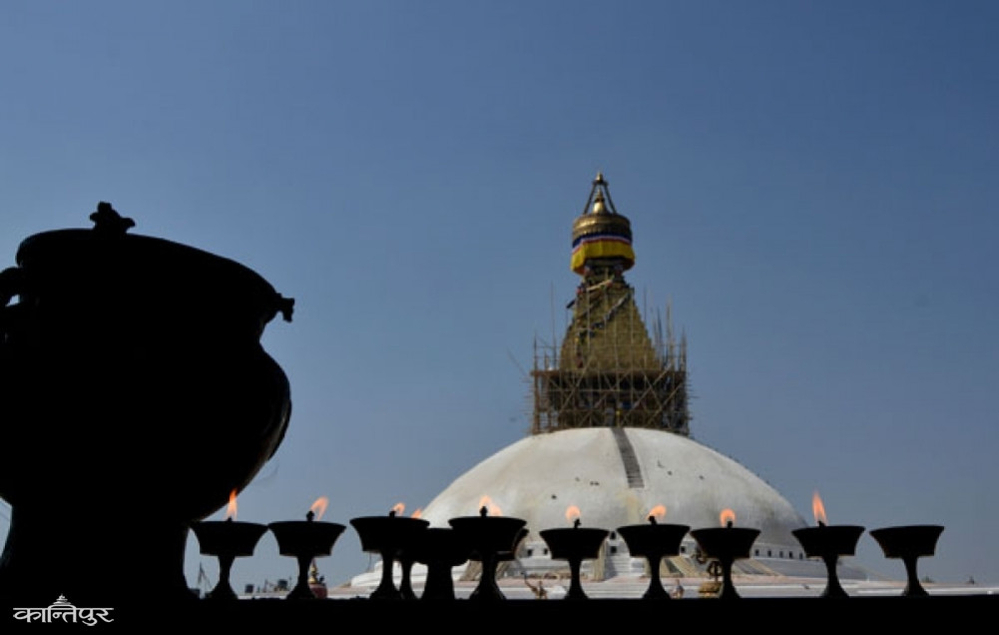
The old history of the heritage is maintained only if it is restored using the old items of the heritage which are broken or in need of repair. Otherwise, the heritage will not be preserved by building a structure that looks old by sloping it or by using modern construction materials. It should be understood that even old houses or properties can be renovated. The municipality or archeology department or heritage workers can help with that.
We are in such a situation of strange development, if we don't correct it now, the new generation will not get to see the houses that are 2 or 300 years old. Whatever happened in the last four/five decades, we are still in a position to preserve the old cities to some extent. Built-up sloped houses can be converted to the old style without tearing them down. Like, Tony Hagan House in Bhaktapur. We built this sloping house in the old style. Not only the temple and patipauwa, but also the house can be made heritage-friendly. If this can be done, then we can return the remaining credit. Even though 90 percent of heritage areas are Swahili, there are still 7 heritage areas in the valley. Tourists from all over the world come here to see this.