What has been lost from Nepali society in three to four decades? The list can be long! From dhiki to walkman, from mit saino to armparam, from typewriter to letter-manjusha, from double play to ideology.... Many things were lost. His memory remains. It is the law of the constant flow of time that old things or customs or cultures disappear and new ones come in their place.
We use Google Cloud Translation Services. Google requires we provide the following disclaimer relating to use of this service:
This service may contain translations powered by Google. Google disclaims all warranties related to the translations, expressed or implied, including any warranties of accuracy, reliability, and any implied warranties of merchantability, fitness for a particular purpose, and noninfringement.
The plots of days gone by are stuck - as if history were a curio. Man suffers daily from the nostalgia of life's ups and downs. And those 'ghost days' are also dear to him. In the flow of time, many things are lost, lost! Nothing remains with a person except his memory. The past is not only yesterday's thing, it affects the present.
Botanist Tirtha Bahadur Shrestha (88), who has been observing the subtle nature of nature for years, is also haunted by the past. He feels like a beloved character in the ordinary life he once lived. Reel cameras, typewriters, old Sony company radios, tape recorders, cassette players, handwritten books of Swasthani, slate boards, bamboo pens, two hundred years old copper money, Chundam, etc., etc., are safe in the glass case of the house in Sanepa. Thinking that they should not get damaged or covered with dust, they often keep searching and they are surrounded by the memories of the days they have walked by looking at these things. The slate, on which he learned multiplication, addition and subtraction at the age of 8. He is still playing with the bamboo pen that his father handed over to him, like a child.
Perhaps nostalgia is a window into memory, a diagram of the future. In fact, it is not only a lane leading to the past, but also a corridor leading to the imagination of the future, from where lost sounds, forgotten smells, vanished arts, old favorites and forgotten memories come alive again.
The bridge of Tirtha Bahadur's memories is connected with those things and his nostalgia. He searches for the inconsistency, harmony, simplicity and beauty of life in those things. "Those things are not just inanimate objects that fit in a museum, they are living forms of memory," he said while standing on the green lawn in front of the house, "I clean their dust and remember the old days." However, old things are replaced by new things, so there is no such wonder that those things have disappeared.'' In Tirtha Bahadur's opinion, those antique items should be displayed in the museum and they should be remembered, 'because now they have become curios, they have become the dobs of our feet.'
is a technique of leading people by the hand. Maxim Gorky discusses the ever-changing technology by saying 'Life is complex', 'Life was becoming more complex than before and it was demanding hard work. With the advent of each new decade, technology was accelerating the pace of life. Technology is doing this today and it will continue to do so tomorrow.'
Our tangible cultural heritage (tangible), which were - items used in a certain period of time (tape-recorder, gramophone, pager, letter-book, typewriter, radio set, lantern, cassette player, glass jar, postcard, letter-letter, autograph, reel camera, ball of socks...) and intangible heritage (custom of asking for fire, armperm, miteri sign, night marriage...) who have now almost disappeared, became a legend, but why do we keep reminiscing about them? And, do we feel the smell of the past in him?
Why are we sad when 'loved things' disappear? Should they be brought back or not? Man is past-oriented. "Happiness, happiness becomes nostalgic with the feeling that it was before," says anthropologist Suresh Dhakal, "Culture is changeable, but it does not move in a simple line, the path of change can also be cyclical, that is, people can bring extinct culture back into use."
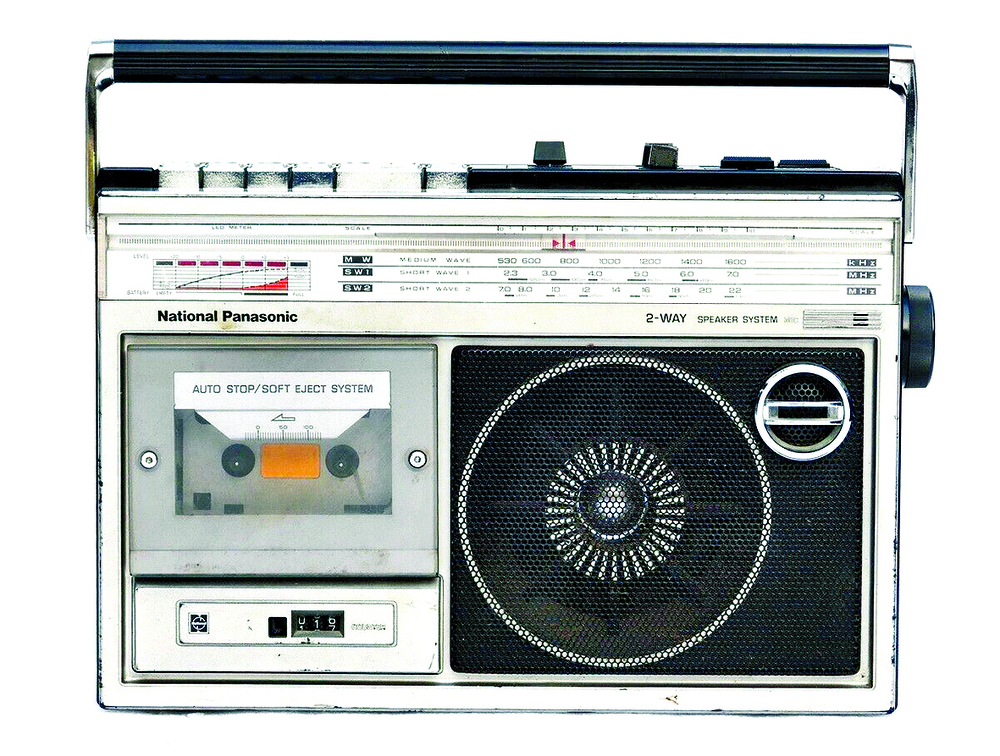
We have lost many things before our eyes - many dimensions of technology, art, lifestyle and social relations! What have we lost? The menu can be long. 'Technostalgia' reminds us of electronic gadgets that we have lost. This rapid change means that some techniques are becoming memories and curios before they become 'history', preserved in the mind as memories like social rituals. But, are lost goods only physical objects? Perhaps not, they are time-traveled through objects, where intersouls communicate deeply. Let's discuss some tangible and intangible goods and assets that are lost from society, preserved in the letters of people's minds.
Mitjeu Nostalgia
was a unique and original image of Nepali culture - miteri sino, that was - a sacred relationship, which is now captured in the social and collective memory-box. There were some great sayings in the society that solved the riddle of kinship, which grandmother used to tell - "Brothers are separated, kinship is never separated, remember sisters in happiness, kinship in sorrow," "Seven relatives of a brother, four relatives of a brother"...! On top of that, the friendship story of Krishna and Sudama was popular in Hindu folk life.
According to the anthropologist Janak Rai, our friendship was sino - associated with morality, commitment and reciprocity. "Meet Sino was useful to mingle with the castes and communities of the new geography. It increased social integration," says Janak. "Though this sign was small, it also added warmth and respect to the caste-class hierarchical structure. It was a cultural-traditional organization that connected the Nepalese society, which tied a sign above the blood and marriage relationship - it connected inter-community and inter-geography.'
Actually, dating was not a 'fast-track' relationship like becoming friends on Facebook, it was a moral social relationship. However, society no longer needed a social institution, as we entered 'modernity'. Anthropologists Suresh Dhakal and Naveen Rawal wrote a research paper titled 'Mit Relations in Far West: Ritual, Reciprocity and Reproduction of Social Relationships' on Miteri Signo in 2017 - after studying Miteri in the Far West region. The letter says that there is a unique social bond between the Dalits and the upper castes in rural areas where there is no caste touch, where reciprocity and cordiality have grown beyond caste boundaries. But, Mitjeu is no more, old generation people live in their hearts - Mitjeu Nostalgia!
Walkman memories
Man went from manual to machine. An 'antique-piece' is captured in people's memories - a 'modern-style' Walkman of the olden days of the city. From mid-1979 onwards, walkman appeared sporadically and from the first half of 1980 - in Kathmandu. Probably after 1989, Walkman users gradually disappeared. Even though Walkman is untimely, its memory is etched in poet Vinod Vikram KC's heart and mind, "To be completely cut off from the external sound world by wearing ear-covering earphones and feeling the sound of the drumset and the jingle of the guitar right in the middle of your head!" Even with the abundant availability of audio-visual devices today, the sound of the Walkman is being missed.'
For this poet, around fifty-one years ago, Walkman was the most advanced gadget. And, that was – the fruit of a dream or should we say, the distant moon. ``To buy a football ('Mr. Yod' was very popular at that time) and to go on a hunger strike for three or four days against the parental authority, it was only a dream to own a Walkman in the poverty-stricken situation,'' Vinod wanders to the narrow gorge of the far-flung shores of three decades ago. I was willing to do anything for a Walkman. Just as Dr. Faustus sold his soul to Satan to gain magical powers, I was ready to sell my soul for the Walkman. Alas, the buyer's unavailability was Joe.'
Whoever had a Walkman, would be a hero. The humorists who were eager to enjoy that thing for a while used that 'hero' very much. The memory of listening to Michael Jackson's 'Thriller' song after work wearing earphones, and quickly removing the earphones after being frightened by the end of the song, keeps repeating itself in his mind. Some generous Walkman-rich people used to pay for their kindness by forcing them to buy 'Everyday Battery-950'.
000
The story-legend is 'resting' on the book-shelf - poet Biplav Prateik's Walkman, whose memory keeps haunting him from time to time. The days of 'now' are over now, but the memory of the days of listening to Walkman in the street with the bulky earphones that cover the entire area of the ear have not been removed from Biplav's mind. Most of the guys were walking around with walkmans. And all eyes were on them. Surely a Walkman user would get the trick and be amazed. Since not everyone could easily afford it, the user was considered rich and accessible in society and his luxury was something to behold, just as the Macbook, Apple-Watch or iPhone now represent a bit of a 'household' status, at that time that glory was preserved by the Walkman. Biplav is saying in Smritiyan, "Walkman, which was introduced when the fashion of bell bottom pants was about to go away, went into a phase of disappearance shortly after the fashion of choose pants."
In those golden times, Biplav used to wander the streets of the city engrossed in his Walkman. The walkman he had was a Sony company, with a rechargeable battery. "I used to listen to Cliff Richard, The Beatles and Dire Straits. I still remember listening to Jagjit Chitra's album 'Echoes' a lot before I left the company of Walkman,' Biplav said one evening while standing in the same street of Dollibazar where he used to listen to music on Walkman in the past, 'At some point, many people must have stopped using it on a daily basis because the battery doesn't last long and the rechargeable battery doesn't work for long.' Should be.
000
In the memory of culturalist/poet Suresh Kiran, the 'portable' size walkman, which can be tied around the waist, remains the same 'beloved'! During school days, Suresh and his friends used to call the Walkman 'Walkman'. When bringing clothes from Bangkok, Thailand, a few percent discount was given at the airport customs, it was called 'Jhitigunta'. Along with the Jhitigunta, the Walkman was also brought in and sold in New Road shops - from 12 to 1500, which was the favorite technology of the 22-25 year old. Helmets were not mandatory when riding motorcycles, youths rode with earphones in their ears. 'Baggy pants' were in fashion. The pants were tight around the ankles, but looser from the waist to the knees. The 'rocky-pants' of shoulder-length lace-up jeans had a patch on the chest. The boys bought a Walkman in the same bag. The pair of jeans became 'popular' in Kathmandu after Sanjay and heroine Tina Munim wore them in Sanjay Dutt's first film 'Rocky' (1981). Suresh's Walkman memory is pleasant, "At that time, it was more common to listen to English songs than Hindi songs on the Walkman." The cassette called 'Disco 80' was very popular. Walkman is now preserved as a beautiful memory within the 'technostalgia' of memoir-museums.
Huri-Smriti : A Kiranti story
In the distant past, a collective labor-system was prevalent in the Kiranti society of eastern Nepal, which was called the Huri practice (Politics of Culture/TB Subba- 1999). Now the Hurri labor system has completely disappeared, surviving only in history and documents. At the time of farming, a group of about a dozen close and like-minded young men and women took turns doing the farming. In fact, it was a collective labor system, which can also be called a socialist labor system, says scholar/researcher Bhogiraj Chamling. Kiranti society had a system of collective ownership of land, called 'Bobby'.
'Collective ownership over land was prevalent even in Kipat system, it must be the product of collective land ownership - Hurri', Bhogiraj says, 'However, there are still many collectivistic cultures alive in Kirant society.' In Kirant area, even a few years ago, there was a practice of cleaning the road collectively once a year. However, that custom has disappeared now. "Perhaps the extensive construction of rural roads disappeared, after modernity entered the village, the collective responsibility to clean the roads also disappeared," says Bhogiraj's study.
Items such as bamboo, wood and other natural raw materials such as nanglo, dalo, mandro and chitra are disappearing. They have been replaced by plastic and metal products. Instead of Wabu/Wabuk (Chindo) used as cultural material, Dew, Pepsi, Coca-Cola came in. It would be best to be nature-friendly, but industrial goods are burdening the environment. The Kirantis were self-sufficient in cloth, grew cotton, wove and sewed cloth themselves. This endangered practice is still alive and kicking, but they have been alienated from the traditional skills of cloth production. One of the reasons for this is to open up the Nepali market for cheap clothes manufactured by the British in Nepal. And, similarly, the opening of textile industries,' says Bhogiraj, 'Industry should not be banned, but the government should make separate policy arrangements to protect such local domestic and traditional skills, which will protect our knowledge-system, maintain self-reliance, help in income equality, and contribute to environmental protection.'
The Kirantis were skilled and self-reliant in terms of industrial skills – who worked in iron and copper. But, those skills disappeared, why? According to Bhogiraj, "After being affected by the Hindu caste system, the Kirantis separated themselves from metal work due to the fear of becoming victims of untouchability." The Hindu caste system alienated the Kiranti from industrial skills, which is a great loss for the Nepalese society. In the Kiranti society, slingshots and bows were used to hunt birds and animals, but now they are limited to performance as cultural tools in ancestral worship. Those weapons were the means of livelihood of Kiranti ancestors in ancient times. However, in modern times, entertainment, partial hunting and cultural material became only.
The revolving house – evidence of history
Things connected with life and cultural value are lost. Every thing is new for that time, it becomes old with time. And, people enjoy old nostalgia associated with stuff. Ghat-Chowtaro-Pandhero are disappearing, Dhakkar, Tokma, Dhiki, Janto, Perungo, Soli-Thunche, Bhakari, Ghum, Pirka, Sandus, Halo, Ulinkath, etc., which are becoming less necessary in rural daily life, are also disappearing. Those masinu are physical evidence of masinu history, which should be preserved in practical-cultural life or museum.
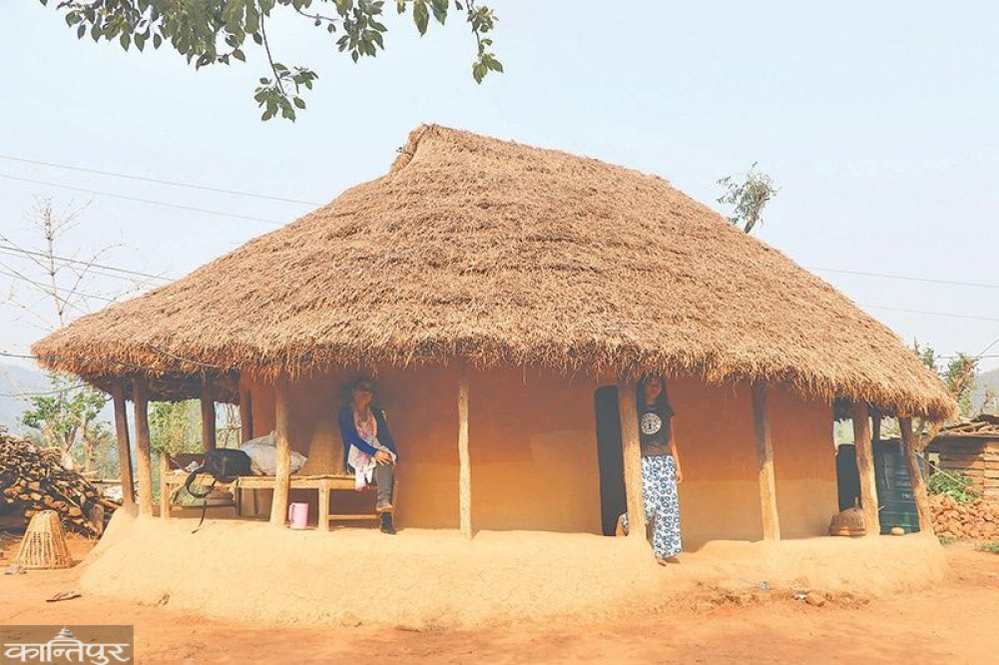
According to political analyst Jhalak Subedi, the disappearance of goods and customs has an impact on people's culture, but after using new goods, a new culture also begins. "The changes in production, technology, knowledge and inventions replace old cultures and create new ones. It should be accepted,' says Jhalak, 'a lot has been lost in the society since the form of relationship, this process of change and transformation is continuous, it does not stop.'
Jhalak's village Kaski, Makaikhola-Kaure houses have disappeared. When he was young there were all but two 'turning houses' in Cowre, not one now. The house was characterized by being warm in winter and cool in summer. However, inside the house it was dark, the rooms were not separate and there was no privacy.
The revolving house gradually disappeared, and the four-cornered house with a new architecture was built - made of stone and mud. Now those houses also disappeared, one-storied cement houses started to be built.
Jhalak Subedi had to cross Bumle-Khola and Mauri-Khola to go to school. In Jhalak's memory, a glimpse of the village-transformation is as follows, 'First we crossed the river, then a narrow and suspension bridge made of wood, now a cement motor bridge was built in Bumle-Khola. A bridge is being built over the Maury river.' So Jhalak is not sad about the loss of old things.
memory-culture
culture and memory are also associated with history, sociology, art, literature, philosophy, theology, psychology and neuroscience. Things disappear over time, they may or may not come back. A horse-drawn buggy never goes away, but some old cars do. Bellybottom pants come and go. The crew-cut (shaved above the ears) hairstyle is primitive, it is fading away. Even hairstyles such as pony-tails and crown braids do not disappear, they have been coming and going for centuries.
Professor Arun Gupto's study - 'Culture and memory' has 3 dimensional aspects - social or historical aspect (where people, relationships and institutions are discussed), substance or objective aspect (where artefacts, media are discussed) and mental aspect (where thoughts, states of mind are studied).
Among these, the 'substance or objective aspect' is the most effective, people do not forget the memory of the things they use in their daily life. Some things are museumised – like artefacts, customs. Stories, art and media are also making museums. "The things that get lost or are not used, go to the museum. They are being documented aesthetically,' says Gupto, 'Not only things that are not useful, but also philosophy and theory are discarded. His relevance may return again.'
Arun's mind is fixated on the missing item – the menu – on the round brass glistening kerosene stove, which his mother used 60 years ago. Arun has decorated it in a glass socket as an 'antique-piece', Pittale-stove. Over time, the lost gramophone was also transformed into a decoration material of the 'elite', that is, the class transformation of the gramophone. That which has no relevance, disappears like the kerosene stove, walkman, gramophone disappeared and 'technostalgia' remains in the corner of the brain.
People enjoy new discoveries – from food to objects and ideas. As the search progresses, the objects in the way move backwards. But, old things are also beautiful, people are happy in memories-stories,' Gupto says, 'satisfaction lies in forgetting lost things or in being remembered - that person's choice decides. Choice, satisfaction and desire lie in – the lifespan of goods.'
s are people's priceless possessions - lost goods. They should be archived - both 'Marx' and 'Buddha' should be kept in museums. They are the silent witnesses of the days we have gone - the lost goods and their memory-worlds, which probably survive as a marginal story beyond the main plot of life and the world.
000
- Suresh Dhakal, anthropologist

In every era, some tangible and intangible culture disappears. Everyone thinks that these have disappeared only in our age. Why do people feel like that? And what are you missing while you see?
culture is inherently changeable. The constant change of tangible or intangible culture is the basic natural characteristic of culture. Like many other subjects, we have a non-historical or contemporary approach to the question of seeing and understanding culture . Thus, when we don't understand the historicity or chronology of culture, we don't understand the dynamic of culture that is constantly changing, then we think that these are only in our era.
Culture change doesn't just happen linearly or exponentially, it can be cyclical. A culture that has been extinct for a period of time is being revived/reestablished after a period of time.
Culture: Festivals, food, behavior, worship, faith tradition, professional tradition, thinking, ethics, what we understand as culture, are specific to time and place . Along with the change in time and place, there is also a change in the culture. Culture is not individual or personal, it is collective. Culture therefore fulfills the physical needs and psychological needs of the community. When such collective needs and aspirations cannot be met, certain elements of culture become irrelevant and disappear gradually.
Whether a culture changes, disappears, evolves or is adopted depends on many factors . Something seems to be rapidly changing or disappearing, something slow or gradual . Every person experiences such changes during their average life.
I grew up watching the swinging flint start a fire . Food processing technology like dhiki-janto was in vogue. In Gaunghar, it was customary to bring fire from the neighborhood, firewood was the main source of cooking fuel, a corner of Kathmandu, where I was born and brought up, Balighare custom was still in place . After the end of the rains and before the coming of Dashain, the collective cleaning of wells, ponds, water sources, road repairs and cleaning was done in the annual calendar of the village. Farming was done on the basis of Armaparma. During Dashain-Tihar, there was a custom of soaking rice in Alopalo and beating chiura in Okhal, which was possible only in a group.
I heard, in our grandfather's neighborhood, the same-aged men of the neighborhood used to gather in the evening to smoke tobacco in the hookah-chilim, which continued until my father's time. All these practices that I experienced when I was a child, which were also a part of the culture, have now all disappeared. Many of the games we played as children have disappeared. This was the story of the Kanth of Kathmandu (a ward within the current Kathmandu Metropolitan City). Examples can be many .
Why are people focused on the past ? And, the extinct culture is remembered nostalgically ?
As a human being has an emotional relationship with another human being, the same emotional relationship exists with non-human beings, physical objects, behavior. When he loses her, he becomes apathetic, depressed, amnesiac and nostalgic.
Even though the second person cannot easily change himself according to the change, he becomes extreme . Happiness, the feeling that happiness was already there is extreme .
An even more important dimension is the power structure hidden within culture. Many of us overlook this aspect. Especially the culture/tradition is legitimizing the power structure. In the name of culture and tradition, some people are under pressure, others are getting extra facilities and respect. When it breaks down, then he is overjoyed at the loss of yesterday's gains and prestige.
Why do bad cultures persist and good cultures disappear?
Anthropologists do not study cultures by classifying them as 'Ku' or 'Su'. We don't compare cultures with other cultures and call them better/bad, superior/inferior, good/bad. However, it has to be seen in reference to time and place. Any culture should be viewed and understood relative to a specific time and place, not by comparing it with another culture, by understanding it based on the evaluation of people with different cultures and worldviews. Every culture has emerged and developed through a specific development process, so the said culture should be understood in that context . A non-violent person who is a vegetarian based on one religious belief may not consider the sacrificial practice of another religion to be cultured . Alcohol is an integral part of culture in a community, but people of another community, sect, caste, and religion may have a different view of such culture. Therefore, who is the authority to distinguish between good culture and bad culture? How can a culture be good and bad? The generalizations such as culture and culture are wrong from both angles. Why and how do things disappear from
society? One of them is the Marxian analysis of the relationship between the foundation and the superstructure The social, political, and cultural aspects are based on the production relationship, so the culture changes or is displaced. However, after the introduction of the farming system, the culture of the feudalist society and the capitalist society were different It's natural. Any culture fulfills people's collective needs, material or mental needs, and when it fails to do so, the culture becomes irrelevant and disappears over time, sometimes it merges with other cultures, and changes continuously by adopting aspects of other cultures Blossoms of lost & nbsp;? Who loses the & nbsp;? Negotiable culture is necessary to bring back the lost culture or nbsp;?
prefer to see what Guma culture is lost than you lost the culture and nbsp; I look forward & nbsp;. The first thing man is basically cultural creature and Nbsp ;. Culture is his most important identification & nbsp;.. That is why the person without eco culture is the animal's equality & nbsp;. His culture has given him the delinted identification Yes & nbsp;. & Nbsp;
Culture is the directive of Production Contacts / System & Nbsp ;. Production systems and a major cause of dissertation / purge culture is to lose and nbsp;... There are many reasons to change the production system and relationships & nbsp;. & Nbsp;
is receiving additional social, economic, political gains in the basis of the social structure and the power of the power and the cover of the culture and Nbsp ;. The class / group is such a profit while giving special culture Losing & Nbsp;. & Nbsp;
on the other hand, because of the source of culture common identity, there is strong criminal descent to destroy the identity of the such groups and NBSP;. Such groups lose collectives of collecting collecting the culture by living in the face of strength of strength. & Nbspa;. & Nbsp;
is required that you don't grow & nbsp;? What dimension or side of it is talking about which dimension or side of culture Really depends on & nbsp; 5 There was something reliated because of the violation that collapse that collapse was relying on that no culture was deprived of any culture and Nbsp ;. The decision that is necessary to bring back the
missing culture is the relying of man, fiancies and nbsp;. So I don't think that it contains any regulatory or instructional criteria of the subject. Even in the beginning, there is a culture changing, but it does not only walk in a simple line only & NBSP;. The way to that change There may be cyclicity, or people can re-use of old cultures, which can be re-in-use and nbsp. There are many instances of such cultures to the restorations and nbsp;. & Nbsp;

