We use Google Cloud Translation Services. Google requires we provide the following disclaimer relating to use of this service:
This service may contain translations powered by Google. Google disclaims all warranties related to the translations, expressed or implied, including any warranties of accuracy, reliability, and any implied warranties of merchantability, fitness for a particular purpose, and noninfringement.
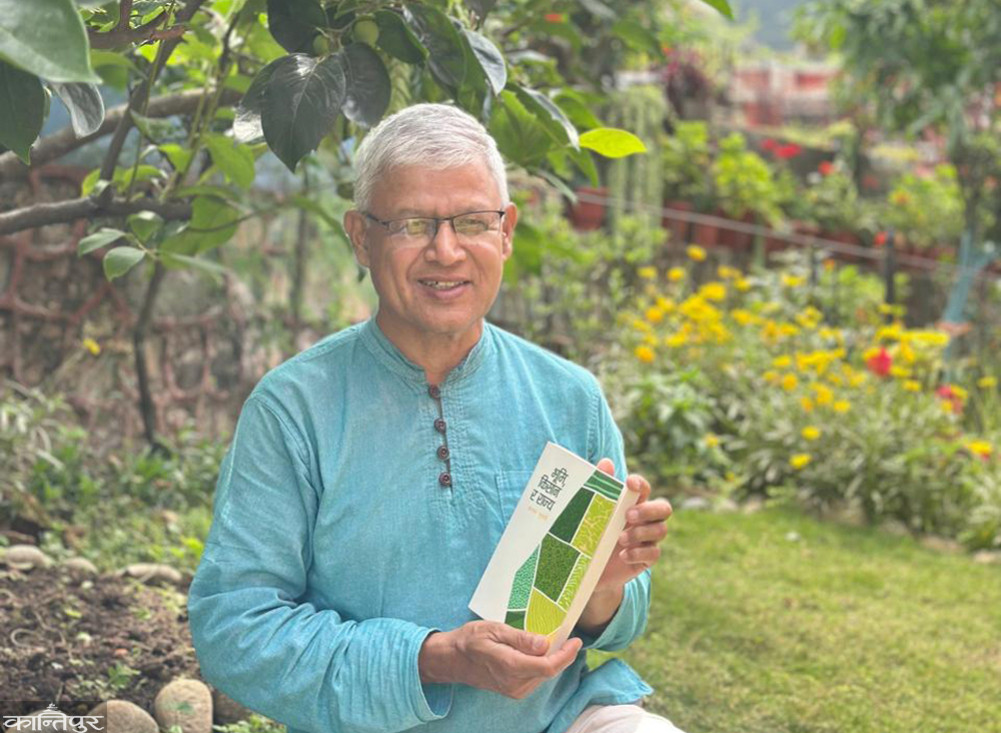
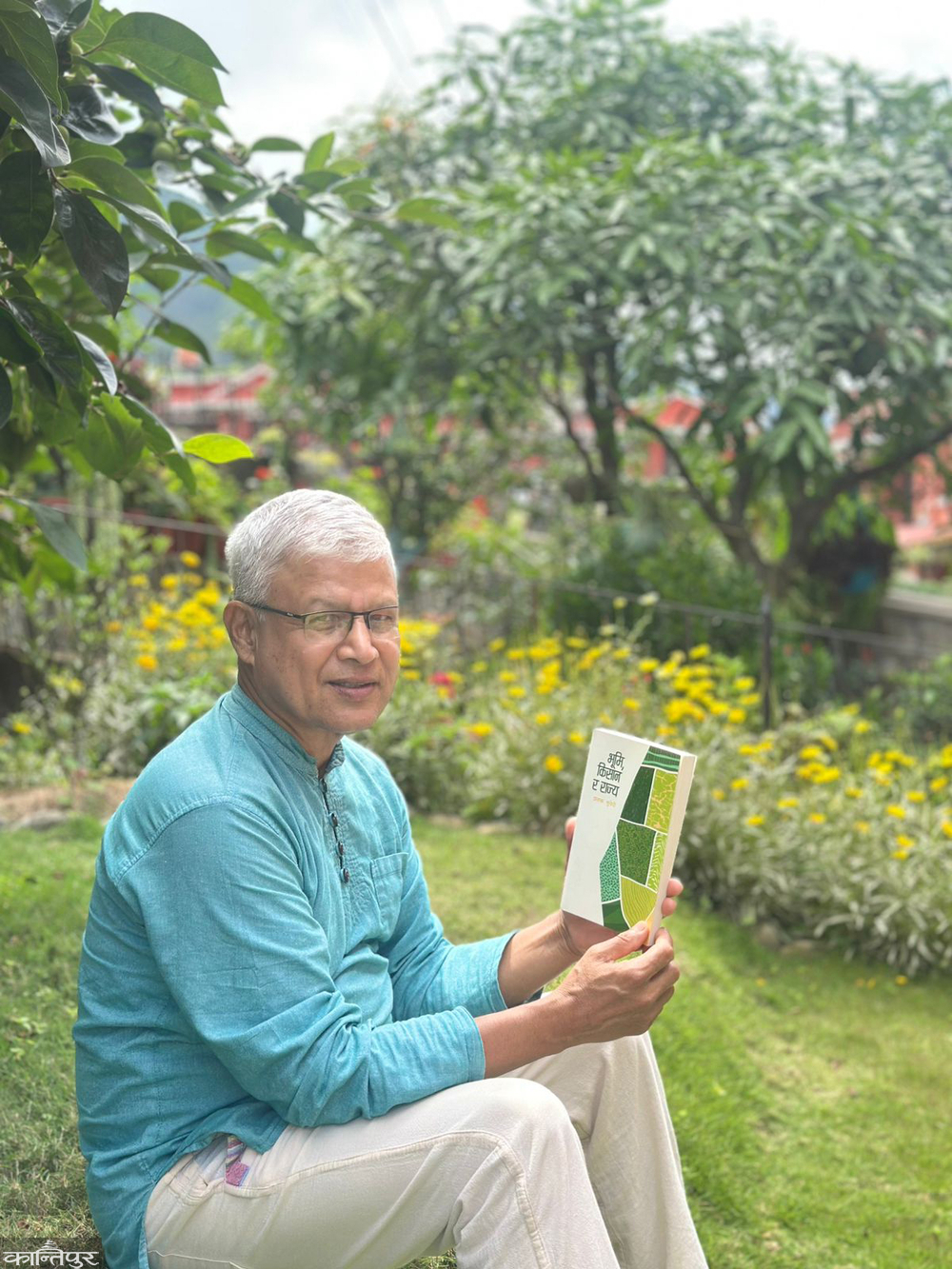
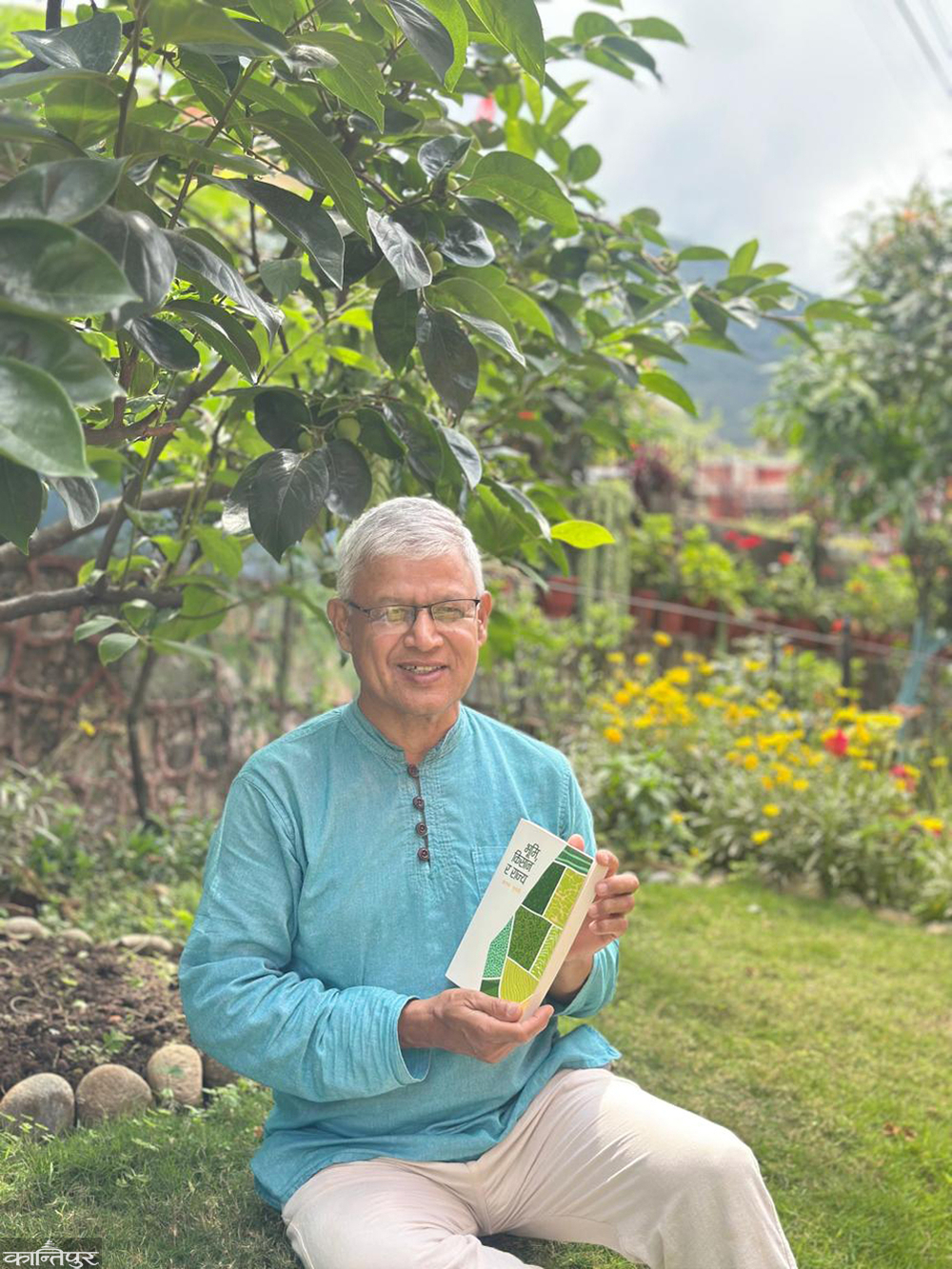
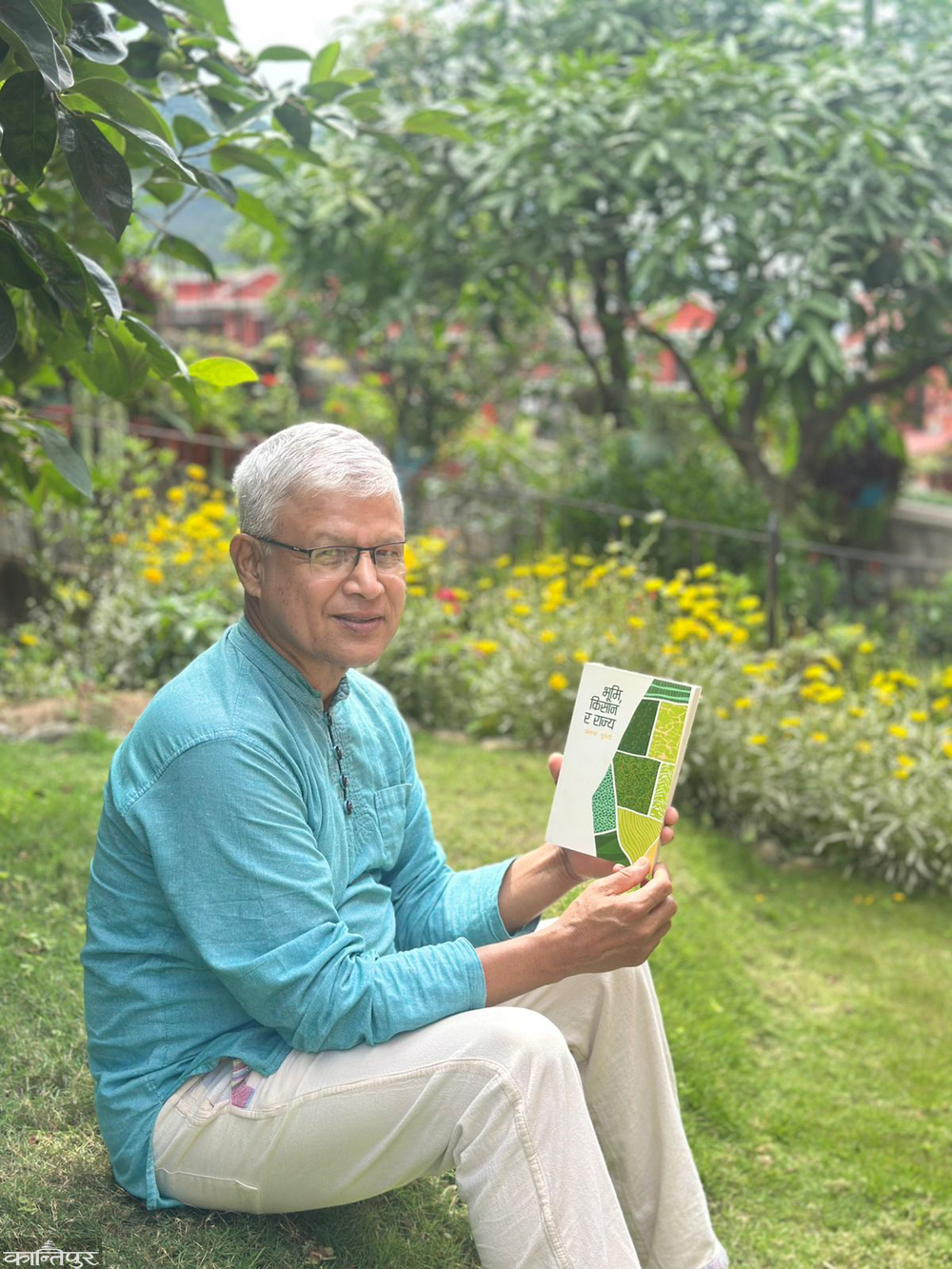
Novelist Jhalak Subedi is also an established writer in non-fiction. Subedi's book 'Bhoomi, Kisan ar Rajya', famous for his political commentary, discusses several papers on the relationship between land dependent farmers and the state.
Central to the unequal distribution of land and the marginalization of farmers, this book discusses Nepal's market, production, and the conflict between the landless and the landlord. Jhalak Subedi dialogue with Deepak Sapkota in the Serofero of 'Bhoomi, Kisan ar Rajya':
A report says - 4 lakh, 50 thousand families are landless in Nepal. Due to feudal land ownership they are living completely or partially landless life. 60% of the farmers lack grain even after plowing the land daily. How could this terrible day come when the farmer who sweats in the land is starving?
Let's look at this question a little differently. There are many reasons why the number of landless families in Nepal is so high. The first reason for this is the centralized and organized feudal land relations with the expansion of the Gorkha state. For a long time, the land was distributed by the state so that it remained under the control of certain groups that had access to state power. Control of land in the form of birta, guthi and jajira passed into the hands of limited families.
The rest of the peasants were in a state of earning their land as a hobby and living off of their labor and taxes. It was only after 1923 that a modern system of land distribution was gradually adopted, which helped to expand the size of rakkar holdings. Later, when some fragmented land reform programs were implemented and some landlords started selling land to mobilize resources in the non-agricultural sector, the land gradually went from the landlords' hands to the hands of the farmers.
Similarly, the state itself had inspired the farmers to migrate to new places to occupy the land. Even if the main population of the Terai is of Madhesi origin or from the hills, they have come to live with the encouragement of the state. Thus, land distribution and land relations have undergone major changes in the last 70 years. Now in Nepal, the problem of the farmers who are connected to the land is that they have very less land than the landless and the misery of the marginal farmers is more.
Due to structural oppression, the number of people who are deprived of land ownership is also very large in our society. Dalits, people of the Tharu community living in Kamaiya Kamlari, mountain tribes like Chepang, Madhesi tribals who lost their land due to land killing by administrators and Thatabatha, those displaced by floods, Maji Botes who were pushed to the margins due to increasing control of the government in the forest are many groups who did not own or lost land due to structural reasons. In this way two groups of those who have land and those who do not exist. Those who do not own land and are not engaged in other non-agricultural occupations are more poor. The reason why poor and marginal farmers are starving is the state's neglect.
Why did the issue of land reform become only 'vote politics' for the parties?
First of all, the question of land reform is not just the politics of votes. From 2007 to 2017, Nepal Communist Party and Nepali Congress took land reform seriously. Some proper/improper things done by King Mahendra in the name of land reform disguised the real issue of land reform. After 2048, the phase of land reform was weakened.
As much as there was a possibility of intervention, it could not be implemented due to the political leadership of rich peasant background. This is the reason why the Badal commission report has not been implemented. During the armed uprising, the Maoists took away the land of the landlords and distributed it to the farmers in some places. However, after coming to the peace process, one of the other parties made the issue of returning such land to the zamindar a condition of the peace process. The other, for whatever reason, was also abandoned by the Maoists. Now land reform has lost its traditional meaning. Therefore, if someone still talks about land reform, it is nothing but vote politics.
What is the relationship between 'land, farmer and state'? What is your conclusion after long research?
In the feudal era, the land belonged to the king and was a means of production for whoever the king gave it to (zamindars or feudal lords). For the enjoyment of such land, he used to pay taxes to the king, arrange military service for the king. Farmers were like semi-slaves of feudal lords. The land belongs to one, the earner belongs to another, that type of relationship was called feudal land relationship. However, feudalism and feudalism are not the main trends in land relations in present-day Nepal.
Some remnants of feudal land relations remain but today's land relations are capitalist in nature. Market is becoming the main and real agency of land management. Now the man who owns the land is not a feudal lord, but a capitalist, and the peasant who works on it is usually an agricultural laborer. If someone earns a few years by contracting land at a fixed price, he is not a mohi, but a small manager. Therefore, feudal land relations are no longer maintained as the main trend in land.
The distribution and consumption of land no longer has the character of the feudal era. Having and not having land has started to carry different meanings than before. In the hill villages there is land, but there are no farmers to till it. Earlier farmers migrated in search of fallow land and clearing forests. Now, after urbanization and livelihood opportunities have started to be obtained from wage labor in the city rather than from agriculture, working families who cannot afford houses have started occupying land near highways and city markets. They are not farmers.
The relationship between land, peasants and the state is dynamic and cannot be seen as a static character. Farmers who are dependent on agriculture, but do not own land, are victims of the wrong policies of the state. Those who do agriculture but do not have land are also struggling to ask the state for land to be removed, those who do not have permanent housing but are occupying public land by building houses are also demanding housing rights from the state. There is a conflict between these parties and the state. There is also a conflict between the tribal way of life and the policies of the state.
In this way, the subject of distribution of jurisdiction over the use of natural resources available in the state has become a subject of struggle between the state and the farmers. Now that land has been commoditized, the market has joined the struggle for control as a third party in this struggle. This inter-conflict seems to be the character of the struggle over land. The state first stood on the side of the landlord, now it is liberal on the side of the market and lax on the side of the farmer, and the farmer is always the victim. The perverted politics of the land management commissions is an example of the state's lack of commitment to intervene on behalf of the landless peasants.
Why are the communists who say 'whosoever plows, his boat' were unkind to the tillers?
, as you said, the communists of Nepal are unfriendly to the plowers, who used to say 'whosoever plows, his vessel'. The Communist Party was led by middle and rich peasant families. He looked after his class interests. After coming to power, he clashed with the ruling class, who had a lot of land in their hands. After taking a policy of compromise with the ruling class, he left Jotaha. The reason for this is the transformation of class and ideas of communists.
How does the story of the landless and farmers show the face of Nepali society?
The poorest people in present-day Nepal are the landless and poor peasant families. This is confirmed by the fact that the number of rural poor is higher than the urban poor or the percentage of rural poverty is higher. This situation is also related to land distribution. He who has a lot of land is not poor. If the land is less but the farmer is in profession, he is poor. And, such a poor person either earns the land of others and is not getting the value of the productivity of his labor or he is an agricultural laborer, who has no certainty of employment.
Unequal distribution of land, the compulsion to cultivate in dry land, the compulsion to use traditional production tools and knowledge even when earning the land of the landlord or land owner, the low price of agricultural produce and the inability to compete in the market, the small farmers are falling into rapid marginalization. The small farmers of today's Nepal have become victims of the wrong policies of the state and have also been exploited by the market, which makes their faces look ugly.
In connection with the land, our poverty has two characters. Due to the effects of a feudal land distribution system, those born into zamindar or bhoomipati families already have more land. By using it, he did reading and writing at a high level and added wealth by using land. He also became rich by entering into the sphere of capitalist production because he was born into a rich family.
The family members who earned his land could not read, after growing up, they earned again by dividing their father's land or started earning from other people's fields at high cost. He didn't have any extra income to save enough to eat. So why did he become poor because he was born in a poor family.
Along with this, Dalits were deprived of ownership of land for thousands of years due to caste system. Even now, Dalits are generally underprivileged, so that even now they are at the bottom of the social hierarchy under traditional oppression. Feudal land relations were one reason for this, further complicated by the market.
What is the current real battle between land and not?
If we talk only about the agricultural sector, then the main struggle of the landless is ownership of the land and the search for full ownership of the products produced from it due to labor in the fields. In the case of the landlord, he wants to achieve the full production of his land by exploiting the labor of the peasants or agricultural labourers. The intention is to control both the labor and agency of the peasants by keeping ownership of the land in their hands. Usury is practiced by paying money, allowing land to be earned, and controlling votes.
What will be the issue of land reform that has never found its edge in the future?
The issue of land reform is no longer on the political agenda except in intellectual discourse. It would have been very good even if the issue of distributing land once for housing to landless Dalit families in accordance with the provisions of the constitution, to unorganized residents and squatters who are occupying public land but do not own land, for housing and in the case of occupied land for agriculture, would have been very good.
The issue of land reform is now a matter of history in Nepali political discourse, except for the matter of giving Mohi its rights to the land already occupied by Mohi. Although it is the main issue of the communists, this program, which even the capitalists (in Nepal, the feudal lords) tried to implement in some countries, has fallen, and there is no possibility of conception again.
Is the state's land policy helping farmers or making them more victims?
I don't think there is a land policy to help farmers, even the existing policies have not worked. So far the land policy is only to help the land owners. It is not even in the favor of the capitalist who wants to farm on a large scale.
What can the state do to create a situation where no one remains landless?
Making everyone landless or not keeping anyone landless is not compatible with the current production system. Now the state should emphasize only on the issue of giving land to farmers for cultivation, transferring the land that is being cultivated or currently being cultivated in the name of farmers and providing housing to Sahariya squatters. The rest should be left to the community and the market.