The tragic story of George Mallory who went to climb Mount Everest is like a scene from a terrible movie, Shamsher Pun and Man Bahadur in Mallory's climbing team got lost in the snow.
We use Google Cloud Translation Services. Google requires we provide the following disclaimer relating to use of this service:
This service may contain translations powered by Google. Google disclaims all warranties related to the translations, expressed or implied, including any warranties of accuracy, reliability, and any implied warranties of merchantability, fitness for a particular purpose, and noninfringement.
...the candle is going out and I must stop Dear, I wish you all the best. Before you get this letter, your worries will be over, along with the good news. That too very fast. Well, it's the same against 50 for us, but we'll hit hard and do ourselves proud.– Much love to you, your ever-loving, George
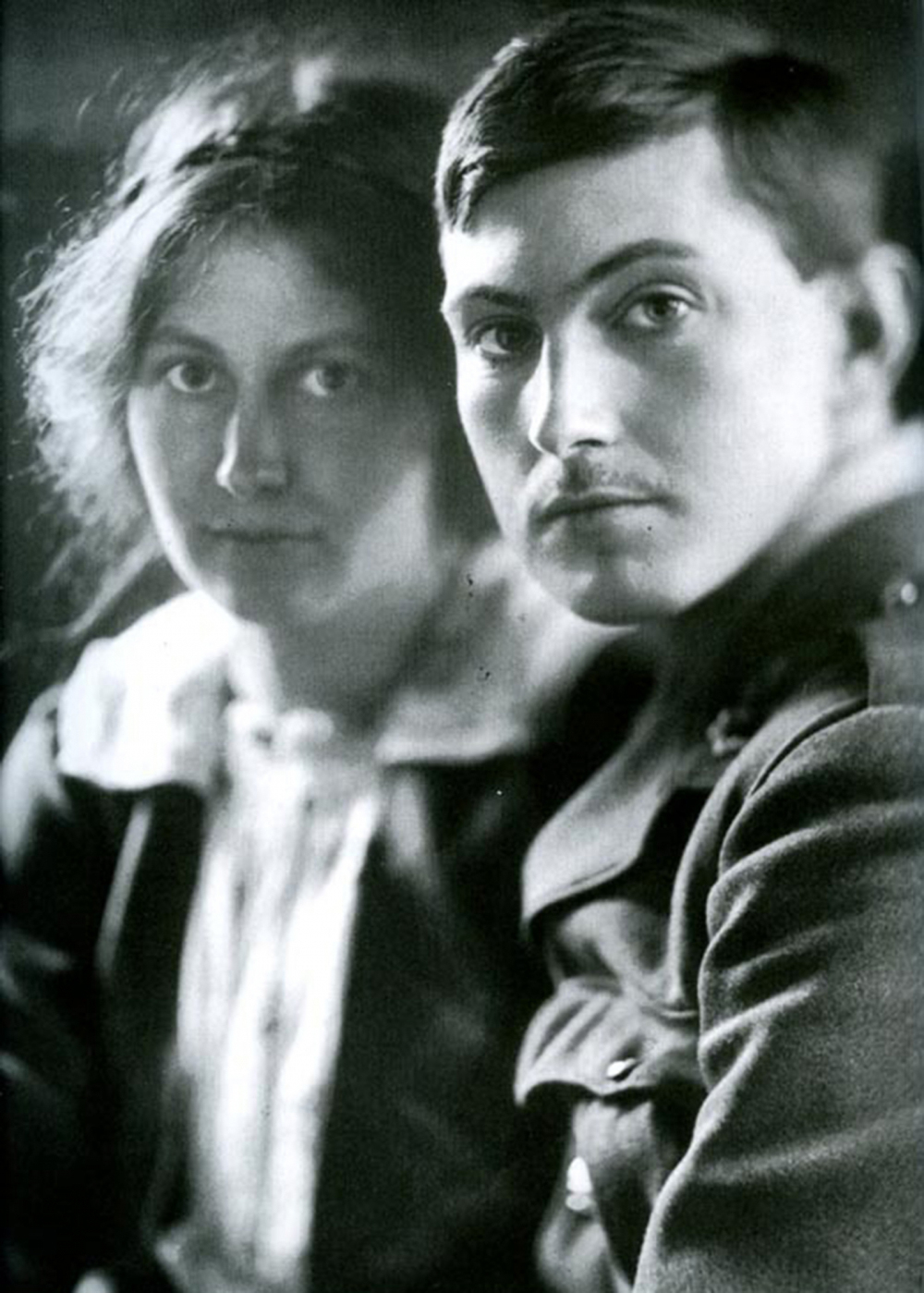
This is the last sentence of the last letter George Harbutt Lee Mallory wrote to Mrs. Ruth from the first camp of Everest on May 27, 1924. 10 days later, on June 8, Mallory and his companion Andrew Irvine, who were climbing to the summit, lost forever at about 8,600 meters above sea level. Ruth couldn't hear the good news. Instead, I had to listen to the news as if the earth itself was standing.
'Up, still up, the two (Mallory and Irvine) were climbing. They were close to the summit,' says photographer John Baptiste Lucius Noel in the documentary 'The Epic of Everest'. From that awe-inspiring summit they had fallen nearly 600 feet below. ...close to God, where no man had reached before.' For two days and two nights, the members of the climbing team, including Odell, went searching up to 7,000 meters. Finding nothing, they returned. Two days later, Noil, who was taking photos and videos from an altitude of about 6,700 meters (Eagle View Point), saw mist descending over the human figures. They were trying to signal something. What could be the sign of life or death? We were watching. They spread six blankets on the white snow in a cross sign and walked away', Noel said, 'That was the sign of death, and there was no hope left.' Americans reached the North Pole in 1908 and Norwegians reached the South Pole in 1911. Britain, who was racing to become the world champion, was determined to set another record by reaching the summit of Mount Everest.
One of those resolvers was a stubborn and courageous climber, Mallory. Hence, Mount Everest was named the third pole. No project to reach space and moon had been started. Reaching the summit of Mount Everest was more difficult than stepping on the moon at that time. Hearing these stories of the tragedy of George Mallory, who went for the third ascent of the third pole, sounds like a scene from a terrible movie.
What is an interesting fact that not many people know is that in 1924, two Nepalis who were part of Mallory's climbing party lost their lives. They were Shamsher Pun, a lace hero of the Gorkhali army, and Man Bahadur, who was taken to work as a shoemaker. Man Bahadur's surname and address are not mentioned anywhere. However, many have written clearly that they are Nepalese.
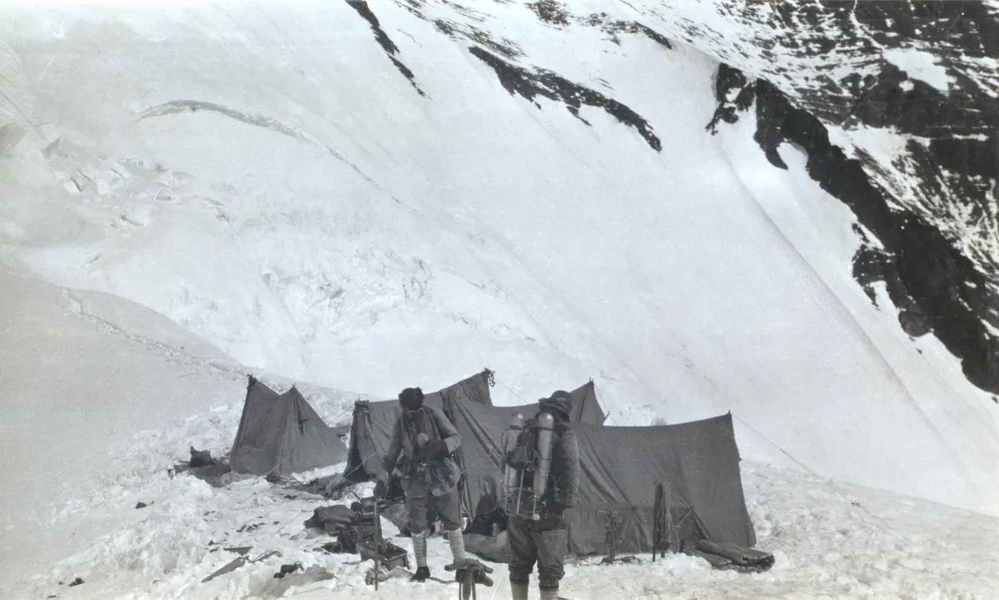
According to Howard Summervale, a member of the same climbing party, Man Bahadur who was taken to work as a shoemaker. He had 'severe frostbite' and both feet were frostbitten. He also died of pneumonia on May 25 at the base camp (p. 219, Alpine Journal 1924).
Captain John Geoffrey Bruce of the 6th Gurkha Regiment said in the material published in the Alpine Journal in 1924, "Gurkha NCO Shamsher Pun was in a very serious condition due to brain haemorrhage. After twenty-four hours of unconsciousness, he died on May 13 while being carried on a stretcher to the base camp. His death was an irreparable loss to the Mounted Party and the Regiment as a whole. Undoubtedly his future was still bright.' (p. 257, Alpine Journal 1924).
7 Nepalese Sherpas lost their lives in an avalanche during the 1922 climb. The incident is described in detail in Captain John Geoffrey Bruce's book 'The Assault on Mount Everest-1922'. Members of the climbing party, accompanied by Sherpas, reached only 600 feet below the fourth camp.
The weather was bright, but there was no wind. Everyone was so exhausted that there was no sound other than the hiss of their breathing. A terrible roar like a bomb blast was heard breaking through that void. It was the sound of an avalanche. Seven of the Sherpas who were walking on the same rope were swept away by the avalanche.
That was the first major accident that happened during the climb of Mount Everest. Although 9 people were killed in the landslide, 2 people were rescued. A total of 9 Nepalis lost their lives in that ambitious climbing plan of the British government and George Mallory. 4 foreigners including Mallory lost their lives. Among them, British citizen Alexander Michael Kelas and an Indian (whose name is not mentioned) died during the climbing attempt in 1921.
29 years after that failed attempt from Tibetan Mohada, Edmund Hillary from New Zealand and Tenzing Norge Sherpa from Nepal climbed the summit from Nepal. The British climbing team tried many times for permission to climb from Nepal. However, at that time, Nepal had not opened mountain climbing. Chandrashamsher Rana was Prime Minister and King Tribhuvan in Nepal.
In 1921, George Mallory's team attempted to climb from the western face of Mount Everest while trying to identify the route. But failed. As climbing from Western Mohada seemed impossible, he assumed that it would be possible to build a base camp towards Nepal. In the book 'Climbing Everest', a collection of his writings, he said, 'Trying to climb from the western side of Mount Everest is not only extremely difficult, but also impractical. And, even if that is possible, that work can only be done by setting up a base camp on the Nepal side, at that time permission was closed for foreigners from the Nepal side.'
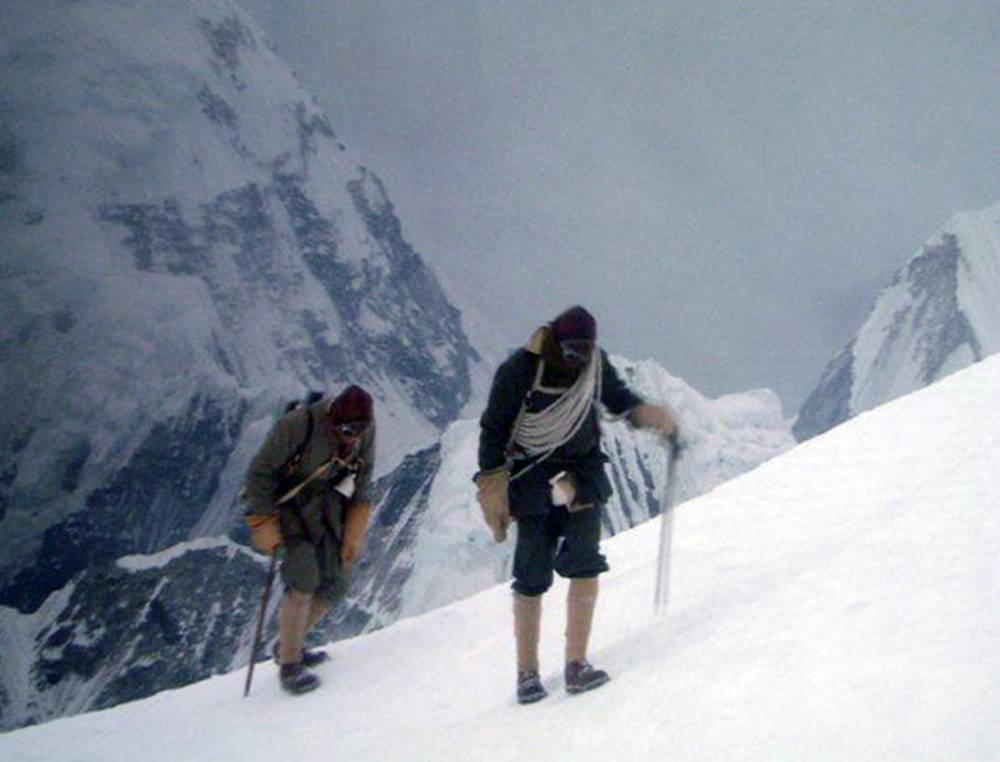
He was more drawn to Nepal and the Himalayan geography towards Nepal. He described in his article about the view he saw towards Nepal while returning from the upper area of Mount Everest, "We saw the snow ranges towards Nepal in the distance. Beautiful, holy and yet unknown. I wondered. What are these mountains? Has anyone written anything about them? At that moment I had a deep realization. This world is really vast and there are countless beauties hidden in its every corner to be explored.
Thus, the struggle to set human foot on the third pole, which started 104 years ago, is still continuing. Even after 72 years since the first ascent was confirmed, the possibility of rewriting that history is still not over. If Andrew Irvine's 'Kodak VPK' camera is found with him along with his body, the history of mountaineering will not be rewritten.
The team of the Mallory and Irvine Research Expedition found Mallory's body in 1999 at an altitude of 8,155 meters. He did not find a picture of his wife Ruth with him, which he had promised Ruth he would leave at the summit. Tom Holzel, an American researcher who has deeply researched the history of Mount Everest, has speculated about the location where Irvine's body could be found, claiming on some grounds, based on which Irvine's body is still being searched for. Among the world's climbers, the attraction towards Everest is still the same.
Climbing Mount Everest is not as impossible as it was in Mallory's time. However, as easy as the market rumor sounds, it is definitely not. After all, the tragedies of life are not easy for anyone. However, the tragedy of the mountains is very terrible and terrible. The story of the eight deaths on Mount Everest in 1996 is one of the best-selling stories in the world. Dozens of books have been published about this incident and a Hollywood movie named 'Everest' has also been made.
Famous climbers Rob Hall from New Zealand, Scott Fisher from America, Doug Hansen, eight people died on Mount Everest. Critics of the famous book "Into Thin Air" by John Crocker, an American journalist who is part of the climbing team led by Rob Hull, have mentioned the cause of death. He said that the commercialization of Mount Everest, the ambition of humans and the power of nature, the weakness of the leadership of the climbing team and insufficient preparation are the main ones. The book has a poignant explanation about the struggle, loss and regret of people to survive in the mountains.
The dialogue between Rob Hall and his wife Jan Arnold in that incident is heartbreaking. Before Hall breathed his last near the summit of Mount Everest, the base camp team contacted his pregnant wife via radio set and had a brief conversation. In that dialogue, Hall said, 'I am fine considering this height and situation. i love you Sleep well, don't worry too much about me.'
And here, too, Hal's consolation to Jan Arnold was no different from Mallory's letter to Ruth. Coincidentally: Jamling Tenzing Norge (son of Tenzing Norge), who went to climb Mt. Everest at the same time, said about the incident through his book "Touching My Father's Soul", not respecting Mt. Everest spiritually, western society considering climbing as a medal, over-commercializing the mountain, devaluing the importance of Sherpas are the main reasons for these incidents.
Also, in 2006, when 11 people died on Mount Everest, some ethical questions were raised about mountain climbing around the world due to the death of British climber David Sharp. Sarp, who went to climb Mt. Everest without oxygen, died at the 'death zone' i.e. eight thousand 500 meters.
Why didn't anyone help to save her even though her condition was serious? The issue was discussed in the international world as the moral question of climbers. After Nick Hill published the book 'The Dark Summit' regarding the incident, what are the moral responsibilities of climbers? There were various debates about that.
The question arose as to why many climbers of the climbing team did not help the snake after meeting and seeing it on the way. Among those who met him were professional Sherpas and other foreign guides.
In the midst of these ethical questions, many climbers and Sherpas argue that instead of saving their own lives in the death zone, they cannot put themselves at risk by helping others. Dawa Sherpa, one of those who met Sarp in the last state, said in Nick Hill's book, 'From where? From which company? But the snake just blinked.
Dawa and two Turkish climbers tried to get him out of that cave-like place. However, the snake was not in a position to stand. All the limbs were frozen like iron. "We tried to carry him but it was not possible," Dawa said. That was all we could do in that situation. Dawa's team was very tired. They had already spent half an hour there. As it was already 12 o'clock in the afternoon, it was not fit to stay longer and they left the snake to his fate and went down.
Everest has not discriminated against anyone. Babuchiri Sherpa, who managed to hang a tent without oxygen for 21 hours on the summit of Mt. Everest, which seems impossible to any climber, died on Mt. at the age of 35, who set the record for the fastest ascent by climbing Mt. Mt. in 16 hours and 56 minutes. Having reached the summit 10 times, he fell in Kharpas near the second camp in 2001 and died there. Frances Arsentive, the first American woman to climb Mount Everest without oxygen, died on the way back in 1998. While trying to save her, her husband Sergey Arsentiev also died in the death zone.
Nepal's first female climber Pasang Lhamu Sherpa succeeded in reaching the summit of Mount Everest in her third attempt, but she died about 150 meters below the summit on April 23, 1993 due to adverse weather conditions while returning from the summit.
Khimlal Gautam, the last on-site surveyor of Everest, says, "The history of Nepali climbers in the mountains is a mixture of blood, tears and sweat." Three decades before Mallory attempted to climb Everest, the Gurkhas of that time joined the British Empire and shed blood, sweat and tears in the mountains. Its history is different. However, let us discuss here only the context of climbing Mount Everest. Even if we want to remember the Nepali climbers who died along with Mallory, the history has reached 104 years, which has not been discussed anywhere significantly.
Most of the stories of foreign climbers who have died on Mount Everest have been published in book form. While 135 Nepalis have lost their lives on Mount Everest. In 2014, 14 Sherpas were buried in an avalanche at the Khumbu Icefall. A book by Dawatasi Sherpa, one of the survivors of the incident, is being published. 11 of the 22 Nepalese who died in the mountains in the Great Earthquake of 2015 died in the Everest base camp.
This year alone, 456 climbers have taken permission to climb Mount Everest. At the top of the 'Summit Fever' and 'Record Fever' list of adventure climbers is Mount Everest. So far 340 people have died on Mount Everest due to various causes. According to the data of 'Himalayan Database', the main causes of death are diseases caused by high altitudes, avalanches, falls, collapse of snow mounds, getting lost, exhaustion and other diseases.
According to Anish Dahal, head of the 'Himalayan Institute of Tourism Education and Development', an organization studying mountain tourism, 68.4 percent of those who died on Mount Everest were due to illness, 26.1 percent fell and 5.4 percent were due to various disasters.
In a 2020 study conducted by four scholars, including retired emeritus professor Raymond Huey of the University of Washington, on the deaths on Mount Everest from 1921 to 2006, 54 percent of the deaths were due to disaster and exposure. In the
study, it is mentioned that the remaining 46 percent died due to problems including 'high altitude'. This study suggests that preparations for climbing Mt. Everest are now more unsafe and hasty than before. So far, 12,884 human steps have been taken on Mount Everest, of which 9,156 steps were taken from Nepal. So far, two thousand 347 climbing teams have obtained climbing permits from both China and Nepal (except for the year 2025).
Nepal is known the most in the world, if there is anything, it is the mountains and there is no doubt that the mountains also have Everest. However, there are still only porters and helpers in most Nepalese mountains. It seems that the Sherpas, who are considered to be the best in the history of climbing, are not qualified by the government for any search, research or exploration.
In the midst of many weaknesses of the state, the Sherpas have kept history alive with their lives in their palms. The world has understood the importance of Mount Everest. However, in terms of mountains, Nepal is still in the situation of a muskrat running after the fragrance without knowing where it is.

