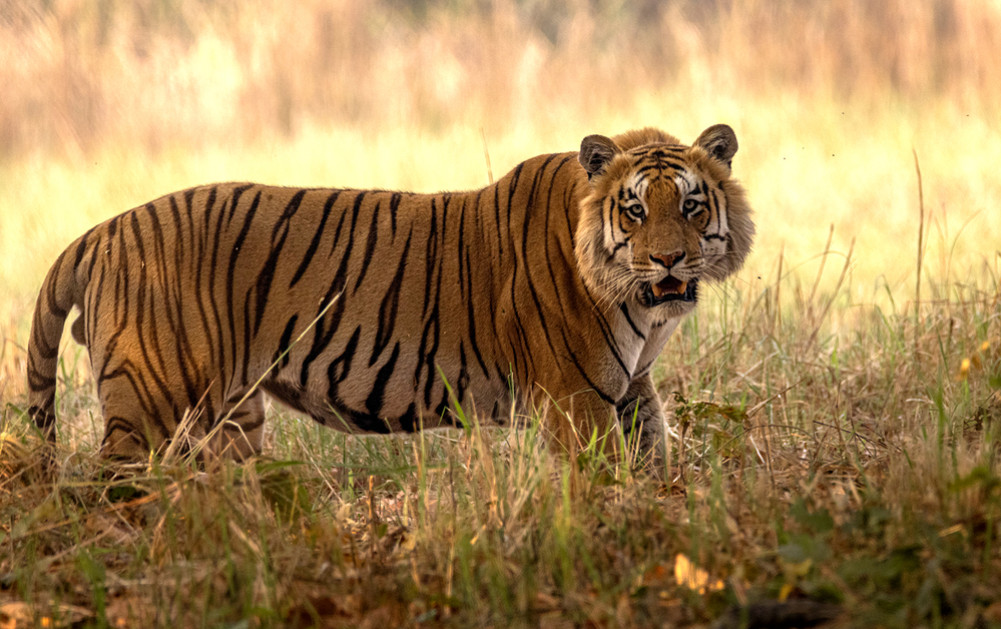
By keeping abreast of the habits of wild animals and changing their behavior accordingly, one can avoid their attacks
We use Google Cloud Translation Services. Google requires we provide the following disclaimer relating to use of this service:
This service may contain translations powered by Google. Google disclaims all warranties related to the translations, expressed or implied, including any warranties of accuracy, reliability, and any implied warranties of merchantability, fitness for a particular purpose, and noninfringement.
About 5 km south of Arun river in Nawalpur district on the east-west Mahendra highway is Tamaspur settlement. To reach this settlement from the highway, one has to cross a 4 km forest road. Around the year 2033/34, there was no dense population here like it is now. According to Kantprasad Kumal, the ward president of Madhyabindu Municipality-12 and a local, there were only 180 houses of Kumals and 5 houses of Tharu (tribals there) living in this place. Now the village is full of people who have migrated from different places.
Now there are about 1,300 households in this village. During the 2036 referendum, ex-servicemen and policemen were brought here from the hilly districts. Later, human settlement increased here. This settlement on the banks of the Narayani River is on the other side - Chitwan National Park. At that time people depended on forest resources. There was a compulsion to go to the forest for all the resources including grass, firewood, roots. The forest/forest was the source of livelihood of the people. In this way, while going to the forest, he used to meet with wild animals like tigers, rhinoceros, and bears. We had to go to the forest. There was no alternative to gas for cooking like now," says Kantprasad Kumal, "and in the forest/jungle, there were encounters with wild animals. Sometimes the animals came from the park to the settlement.' The
event is from the year 2033. Kumal studied in 7th standard. One day a rhinoceros came within the reach of the school in Tamaspur where he was studying. In the evening, his friends chased the rhinoceros to the edge of the Narayani river. Grazing cattle with rhinos, he had no idea that 'rhinoceros will attack'. However, on that day, after the rhinoceros chased by his friends took him to the Narayani river bank, Fanak returned and attacked them and ran away. Those who could not run lay on the bugger. However, the rhinoceros moved past them. We were in Narayani Bagar, we could not escape. 16 of us lay on the floor. One of our friends could even run. It chased him,” he says about why the rhino chased the friend, “he was wearing a white shirt. The friend took off his shirt and threw it on the floor. The rhino trampled the white shirt and Dara tore the shirt and threw it away. And expressed happiness by shouting. The rhinoceros did nothing to anyone who was lying on the ground.'
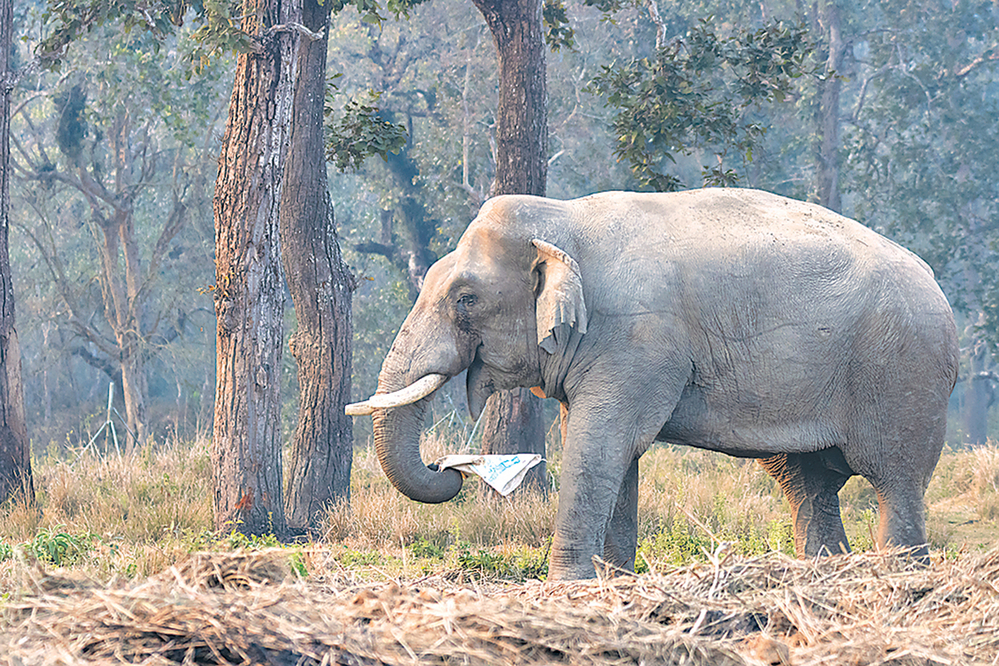 Photo: Illustration Bidari
Kumal says that as rhinoceros 'target' white clothes more at night and red during the day, you should pay attention to those clothes when you go to the forest/jungle and wildlife areas. He suspects that if his friend had not taken off his white shirt and thrown it on the ground that day, the rhinoceros would have killed his friend there.
Ved Kumar Dhakal, spokesperson and joint secretary of the National Parks and Wildlife Conservation Department, says that the death incidents caused by wild animal attacks in the last year have made human-wildlife coexistence a matter of constant challenge. According to the department, from the financial year 2071 to 2080, around 277 people have died due to wild animal attacks. Such incidents happen when people go to collect forest produce in and around the national park. DB Chaudhary, a tourist guide and conservationist from Kawasoti in Nawalpur, says that if you know how to behave to avoid wild animals when you go to the forest, you can avoid attacks by wild animals.
Wild animals attack people when they go to the forest. If you don't take precautions while going to the forest and don't follow the rules, such incidents can happen," he says. "When are wild animals active in the forest? And if it happens, how to avoid it? It is very important to have the information.'
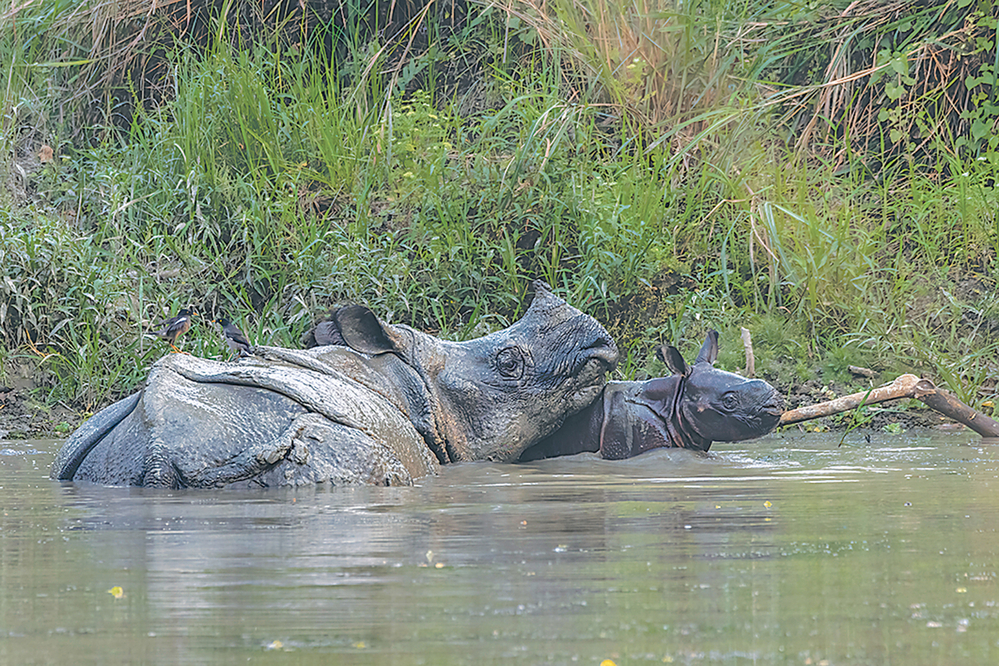 Photo: Illustration Bidari
The time when wildlife is not active is from 10 am to 2 pm. At that time they are resting. Chaudhary says that when going to the forest/jungle, one should not go alone as much as possible and get information about the behavior of wild animals.
'He does not attack unless the animal is disturbed, for example tigers are more aggressive when they are old, injured, breeding and feeding. A tiger is a violent animal, but it is afraid of humans," says Choudhary. "Wherever a tiger sits, a strong tiger will remove it from there. In such a situation the tiger comes out of the forest and looks for easy food. First looks at dogs, pets. Man is the last victim, he does not go and attack people's house.'
Chowdhury himself has managed to escape because he took precautions in the forest many times while taking tourists around. The incident was in 1998. He was guiding tourists in the core area of Chitwan National Park. Suddenly there was a loud roar of a deer. He guessed that there was a tiger or a leopard nearby after the deer roared loudly. He understood that - at such a time, one should be very careful. That is the situation where the tiger is moving for food and ambush. The deer came stomping towards them. A minute later the tiger also arrived.
At this time, the tiger moves with a very tight body. They hid on the road and saw the tiger. At that time, the tiger should not be disturbed so that he does not get a move. From where they were, the tiger went to the right. After the tiger was gone, they moved on. But, the tiger is going ahead and coming through that way. An encounter with a tiger. The tiger roared loudly and jumped to the left,” he says, “The tiger roared loudly. Now it is my last day. It would have been enough for me if the tiger had made a jump. I was ready too. I sat down with a stick. I had six guests.'
A rhinoceros is a herbivore. However, people are also losing their lives due to rhinoceros attacks. According to the statistics of the park department, the number of deaths due to rhino attacks in the last 10 years is more than 90. People are not aware of the behavior of the rhinoceros, so they tease it and when they get close, the rhinoceros gets angry and attacks people, says Tikaram Giri, an old nature guide in Chitwan. Rhinos have weak eyes and cannot see far. The attack of the rhinoceros depends on its mood, season. More aggressive when breeding or having children. He says that if you keep your distance, you will not be afraid of the rhinoceros.
What clothes to wear? What to do if a rhinoceros comes to attack? If you know that, you can avoid rhinoceros attacks. Red and white clothes should not be worn while going to the forest. A rhinoceros with these two colored cloths is aggressive and can quickly attack. As much as possible, you should wear clothes that match the trees and plants of the forest, if you disturb the rhinoceros, it will attack only. They signal before attacking humans. You should know about it first. If he makes noises, hisses, lowers his head to the ground, erects his ears, then it is an attacking situation. In that case, there should be information about things like escape, bangotingo escape.
A stick must be carried when going to the forest. Choudhary says that if you use different scented perfumes when you go to the forest, the chances of being attacked by rhinoceros are higher. Similarly, you should always be careful when going to the forest. You can find out whether there is a rhinoceros from the footprints, feces, the place where the animal played, and the place where it grazed. Considering all these things, going to the forest reduces the Ricks factor. However, people keep rhinos as pets and attacks occur. Let's see an example - a rhinoceros was seen on the banks of the Narayani river after it was swept away by the floods on 11th, 12th and 13th of October. However, people started teasing, beating with sticks and filming the rhinoceros brought by the flood. The rhinoceros got angry and attacked a woman and a man. "Rhinoceros washed away by floods are tired. They need rest too. People reach there and tease in an unnatural manner,' says Kantprasad Kumal, 'and what to do without attacking people
! We have encroached on wildlife habitats. They have come to their place. Similarly, two years ago, a rhinoceros came to Tamaspur village. When the rhinoceros came, the people screamed and ran away. The frightened rhinoceros got angry and started killing wild animals in the villages. At the same time, a woman who was cutting grass was attacked and killed.
Tigers, rhinoceros and elephants kill people every year. Unaware of the habits of elephants and being forced to chase an elephant that comes to the village, it gets angry and becomes aggressive and starts attacking people. Ashok Ram, Chief Conservation Officer of Bardia National Park, who has done his studies on elephants, says that elephants are more aggressive when they are drunk, during breeding season. What kind of behavior does the elephant have at what time? That information is essential. There is always a chance of encountering wild elephants when visiting the forest. That's why you have to check whether the elephant has footprints or feces. If the branch of a tree is broken, there is an elephant in that place. Ashok says that you should be mentally prepared in advance as to what to do in case of a close encounter. Elephants signal before attacking – bringing ears forward, making sounds.
Big animals can't run downhill, so they have to run downhill to avoid elephants and rhinos as much as possible. And you can avoid them even if you go to pits and holes. Conservationist and nature guide DB Choudhary says that people have knowledge about conservation but they do not know how to avoid wild animals and how to change their behavior. Humans got the knowledge to protect. However, they could not get education on how to avoid protected animals," he says. "It is necessary to carry out awareness programs widely. Behavioral change is needed in the curriculum itself. Learning such things helps a lot.'