Many countries use spy satellites to monitor military activities, natural disasters, and each other's space missions. However, countries like Nepal are dependent on satellites from other countries due to high costs, lack of infrastructure and technology as well as manpower.
We use Google Cloud Translation Services. Google requires we provide the following disclaimer relating to use of this service:
This service may contain translations powered by Google. Google disclaims all warranties related to the translations, expressed or implied, including any warranties of accuracy, reliability, and any implied warranties of merchantability, fitness for a particular purpose, and noninfringement.
Last week (March 24) a curved, blue conical shape suddenly appeared in the UK and European skies. Many suspected it to be an unidentified flying craft (UFO) or 'aliens' from another planet. And, he posted photos and videos on social media. However, it was not an unknown object. It was a reflection of the light generated during the launch of a spy satellite (spy satellite) made for the US government by billionaire Elon Musk's company 'SpaceX', which manufactures advanced space-related equipment.
SpaceX is building a network of spy satellites called 'StarShield' under a secret contract with the US National Reconnaissance Office (NRO). For that, the company conducted a test flight of the Falcon 9 rocket from the Cape Canaveral Space Force Station in Florida. Experts have said that when the fuel released from the rocket collided with a crystal made of gas and vapor, the sun's light created a cone-shaped shape. Jeff Baumgardner, a space physicist at Boston University, told The Washington Post that because the Falcon 9 rocket flew up in a circular motion, a circular shape was also seen in the sky.
However, the incident has re-introduced the secret $1.8 billion contract between the US spy satellite management agency NRO and SpaceX for the 'StarShield' project in 2021. SpaceX has conducted three such test flights in the last one year. The project shows how the US government and Musk, who are talking about reaching Mars and the Moon, are trying to dominate Earth's orbit. According to Reuters, the network of spy satellites being built by NRO and the StarShield business unit will enable the US government to easily observe any part of the Earth.

The view of the Starshield project launched by SpaceX
After the news about this project came out last year, Russia responded by saying that the US built a spying system through a commercial satellite service provider like SpaceX, which poses a challenge to space security. "We are aware that Washington is trying to attract the private sector to fulfill its military space ambitions," Russian Foreign Ministry spokeswoman Maria Zakharova said. He said that Russia is of the opinion that the space system should not be used to give strength to geopolitical competitors.
The White House said that Russia was developing a "space-based" anti-satellite weapon and that although it was a "concerning" issue, it did not pose a threat. The debate and competition between the US and Russia (formerly the Soviet Union) over satellites is not new. Since the beginning of the space mission on Earth, these two countries have been fighting each other. In the 1950s, the United States and Russia worked together to send satellites into space, and while American launches continued to fail, the Soviet Union successfully launched Sputnik-1 on October 4, 1957.
America was shocked and amazed by the incident and established the space agency NASA in 1958 to gain dominance in this area. Now there are many American satellites in space. Satellites are now the most important medium for power, communication and intelligence purposes. Having its own satellite in space has become a matter of prestige and national security for a sovereign country. According to Orbiting Now.com, 12,048 satellites are orbiting the Earth in the third week of March. The most are 7,302 satellites in low earth orbit, 190 in medium earth orbit, 21 in high earth or graveyard orbit, and 528 in geostationary orbit.
SpaceX's Starlink, Amazon's Project Kuiper, and OneWeb's dozens of satellite clusters are adding to the number of satellites in space every day. These companies aim to expand satellite-based high-speed Internet services around the world. So far, Starlink, which claims to have delivered internet services to more than 100 countries, has more than 4,000 satellites in space alone. Kuiper Sat 1 and 2, which has launched two satellites, has announced plans to send more than 3,000 satellites into low earth orbit. Along with this commercial competition in satellite technology, there is also a rush to create and operate such technologies for spying purposes.
Military satellites that send real-time data
Different countries use spy satellites to monitor military activities, natural disasters and even each other's space missions. America, China and Russia are particularly involved in this. The US NRO has been keeping the Keyhole Class (KH) series of spy satellites called Cannon and Crystal in low Earth orbit for the past four decades. These satellites provide real-time optical observation, according to details on the Gunter's Space page, which informs the space mission. Currently, the resolution of the digital photos taken by the KH-11 satellite in space is 5 to 6 inches, so the number plates of motorcycles on Earth can be read from space.
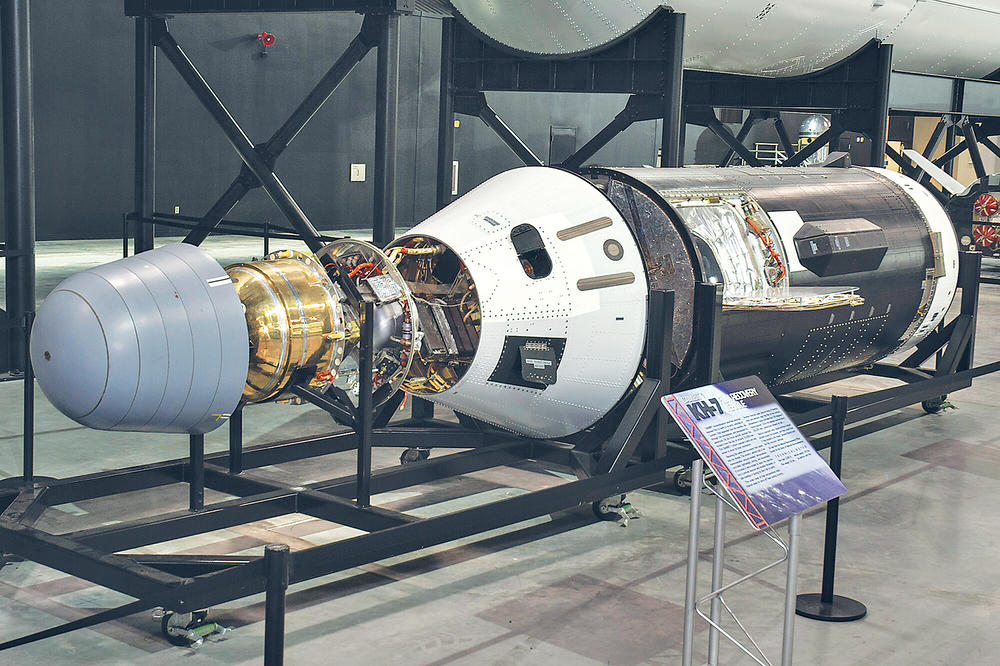 The KH-7 Reconnaissance Satellite at the National Museum of the US Air Force
Recently, more and more countries are using satellites for spying activities. Limited to the US and the Soviet Union during the Cold War, this trend has since reached dozens of countries. Currently, about 250 military satellites from America, 157 from China, 110 from Russia, 17 from France, 12 from Israel, 10 from Italy, 9 from India, and 8 from Germany are orbiting the earth. In addition to spying on different countries and collecting secret information, such satellites are used to provide military target information, mutual communication and early warning.
During the Cold War era, the picture analysis could only be done after the reel of pictures taken by spy or reconnaissance satellites of the US 'corona program' was washed back to earth. Today's satellites can transmit high-resolution digital images and video instantaneously, in any weather and at any time. To strengthen data security, messages sent in this way are exchanged using laser technology. Doug Richardson has mentioned in an article in European Security and Defense that the earlier satellites used by the US sent information about Soviet military radars by radio frequency signals instead of pictures.
Some of the spy satellites are very expensive and expensive. It is said that the cost of a single advanced satellite called KH-11 Cannon of the United States is up to one billion US dollars. It is estimated that an investment of around half a billion US dollars is required for the construction of GPS and DSP (Defense Support Program) satellites. It is estimated that the construction of the Advanced Extremely High Frequency (AEHF) satellite operated by the US Space Force will cost up to one and a half billion US dollars.
In the event of war and conflict in the last decade, most countries have relied on satellite technology. A striking example of this is the Russia-Ukraine war. In this war, in which advanced technology including AI was widely used, the Ukrainian side relied on the satellite communication facilities, information and secret information of companies such as Starlink, Finland's ICEY, along with the US. The Russian side also made extensive use of military satellites. Similarly, Israel has used satellite technology in the Israel-Hamas war. In the conflicts in Azerbaijan, Syria, Yemen, it is mentioned in the reports of the US Department of Defense that military and spy satellites are widely used.
Launch of spy satellite
The then Soviet Union was able to test the world's first satellite at the height of the Cold War and nuclear weapons tensions. In his book 'Sputnik: The Shock of the Century', American author Paul Dixon describes the Soviets' satellite success as 'a serious blow to American psychology and a swift blow to confidence'.
A grand party was given at the Soviet Embassy in Washington DC for the success of Sputnik. About that event, Time magazine wrote, "A colorful metal ball with the shape of a ball has managed to reach 900 km above the surface of the earth last week, crossing all the continents and oceans of the earth so that it cannot be seen with the naked eye." America seemed completely oblivious to the fact that a new chapter in human history had begun as it spun the Earth at a speed of nearly 29 km per hour. This Soviet success has not only added an important chapter to man's pursuit of the natural environment, but also brought a serious new turn in the Cold War.'
How hot the space race was in the 1960s, NASA spent nearly four and a half percent of the federal government's total budget in 1966, and the Soviet Union spent nearly $30 billion. The first weather and communications satellites were launched in this decade. Rather than the search for life in space or the advancement of science and technology, investment in satellites and space technology focused on military capabilities and demonstrating superiority over competitors. Some of the technologies developed in this way were also used in subsequent wars.
For example, the Global Positioning System (GPS) was developed to track where Soviet satellites were in space. The project was initiated by the US Department of Defense for military purposes. In the late 1970s, GPS was gradually developed as a system that could track not only objects in space, but also objects on Earth through satellites. In 1983, after the Soviets shot down the Korean Air plane carrying American Senator Larry McDonald, then President Ronald Reagan decided to allow the GPS system to be used by civilians as well.
In the 1960s, satellite technology began to be used for commercial purposes, from weather and communications to the military. Europe also entered commercial satellite development in the 1980s. Around the year 2000, satellites were created to look around the earth, but now the entry of private companies, including SpaceX, has commercialized this race even further. Dozens of goods and services that we use in our daily lives were invented for space purposes. Dozens of technologies such as water treatment filters, wireless devices, digital imaging technology, memory foam i.e. mattresses, solar energy devices, some fire extinguishing technologies, organs such as artificial limbs, insulin pumps, and dust suction machines were first thought of for astronauts and satellites and then slowly started to be used for common people.
So far, many satellite launchers include the US, Russia, China, Japan, France, UK, European Union, Luxembourg, etc. The US has launched 11,655 satellites along with about 7,100 Space X satellites. According to 'Keep Track', a website that keeps track of space-related topics, second-placed Russia has launched 7,187 (including the Soviet era), China 5,330, Britain 735, France 604, Germany 80, the European Space Agency 102 and the European Union 31. Similarly, Japan has 294, India 218, South Korea 48, Canada 105, Australia 44, Israel 40, New Zealand 38, Luxembourg 68, Spain 35, Brazil 31 and Italy 57 have sent satellites around the Earth. So far, more than 70 countries in the world have launched their own satellites with the help of various government and private technologies.
In 1973, 1,990 satellites were released into the Earth's orbit, and since then, it can be seen that it has been increasing by 19. Now, along with NASA and Space X, Wanweb Satellite, Planet Labs, the Chinese Ministry of Defense, the Russian Ministry of Defense, the US Air Force, and dozens of private company satellites are circling the earth. More than 60 percent of these satellites are for various communication purposes, 22 percent for earth observation, 8 percent for technology development, 4 percent for global positioning, and various aspects of space technology and satellites for commercial purposes are also significant. The use of
Satellite is currently being investigated with the defense of weather forecasts and science. Satellites have also been effective in the care of the size of HyBodi and Himalas, the shape of Homo-technology, forest topics, forest issues. Satellites, such as conflicting storms, earthquakes, ranking, and the rate of the agriculture, Satellites have been effective. & Nbsp; The risk of
in
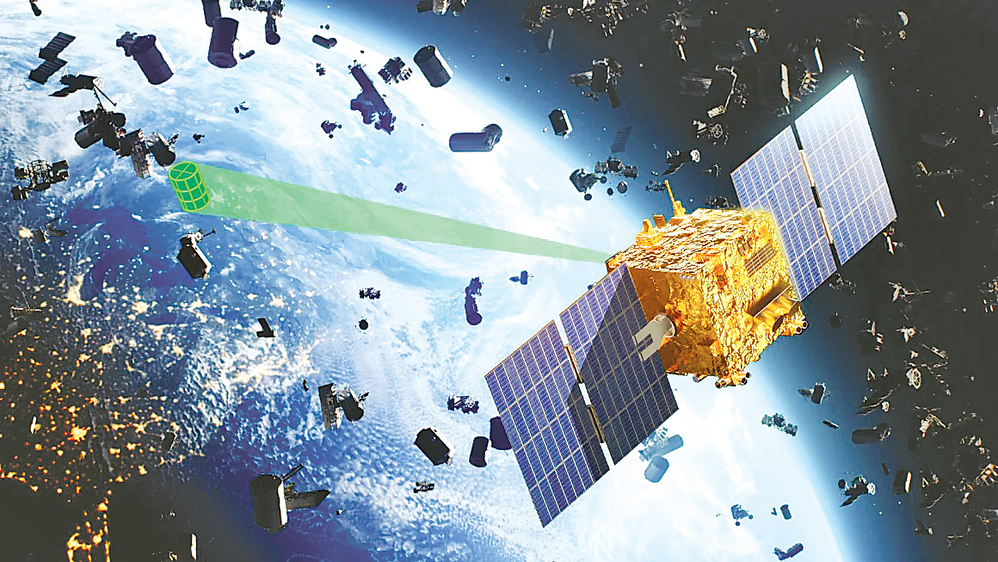
space junk has also added an exposure to the earth, environment and space. In 1978, the corruption called Zetelit, November 954, reached Radioactive fragmented until the northern Section of Canada. Skkilabe was damaged in humanity due to Santalati accident of 1979, 1997, like a 2002 resource seconds in China. In 2009, Iridium 33 and the corruption has been hit by the incident, NASA has considered the victims of the incident.
said that the atmosphere is coming to the atmosphere within half a centimeter, or more than 180 pieces of more than 180 pieces. Until 2009 in October 2009, about 60 pieces were entered at the atmosphere. Some of them will remain in the earth until the end of this century. The Earth's charges are currently rarely reduced, damaged and left with the framework of space, damaged and skipping. According to the Space Evoryoms Statistics, some 11 million pieces of the earth are in the lower cell of 10 cm size in the earth. & Nbsp;
can be trapped in small and rapidly, small and fast speeds are risky and risk of damage to large space missions. These fragments called 'Space Junk' have become concerned for scientists for scientists. Across the thousands of sakelary added to thousands of numbers, who is added to the annual number of the thousands is concern that such space junk will increase and even have environmental effects. The Kesslarights are warning that the space activity has reached the space, which is reiled by the partnership. It is a subsequent option to implement the options of Active Dabri Rumula (ADR) and the lace in the level. & Nbsp; The next risk of increasing the filth of signs story-braaklawright to the story-breasts in this technology to the story-breasts in this technology to the full dependence of Settlement Satellite and Days are probably the potential for big countries. Satellite war is also between large countries. When Russia was aversion called Assell Settlement, ie the AST, from the same Satellite, was passed away from the same Satellite. With war between large countries, these countries can easily guess unpreceivated even if these countries can try to destroy each other by attacking each other. Satellite is also present that Satellite to destroy Satellite, Setalata and the network to destroy the network by the other Setala and the network to destroy another Setlat. Mainters, such as US, China and Russia, have constructed the option of protecting their Soteelaste and attacked at the stenletheite. The United States has already begun to fight such challenges by forms of a separate body called a space force in the previous tenant. All these extremes have become an integral part of human life, the day of human utility is increasing day. Although Nepal has referred to its presence in space for some time in 2019, countries like Nepal has been dependent on Schelettes, such as excessive expenses, infrastructure and technology, due to lack of manpower. Satellite of Satellite in Defense and Jyesu; Despite the risk of growing appearance and space junk, various countries are tempted to acquire their own satellite technology. Nepal is not grand. & Nbsp;
 scientist's book 'Startup'. Shetlamitates in their Book Scientific US Scientific and Author Nile Degrart Tiston 'Starty with important communications and statistics provide a scientific psychiatte to make scientific advancement. He writes, 'Hooding is highly increased to the latest thought and exploration by launching Satellites. But with that, it is also true that the earth's cell is making a windless and risky. & Nbsp;
Neil has time to reducive of space wastes, increase international coordination and the suggestions of space traffic. & nbsp;
(with the help of agency)