There are nine flight paths of birds in the world, which are called 'flyways'. Nepal belongs to the 'Central Asian fly-way'. How do flying birds prepare before their journey? How many days does it take for a bird to fly 5000 kilometers from Siberia to Nepal? Do they fly continuously or do they settle down? What do you do if you get tired of flying?
We use Google Cloud Translation Services. Google requires we provide the following disclaimer relating to use of this service:
This service may contain translations powered by Google. Google disclaims all warranties related to the translations, expressed or implied, including any warranties of accuracy, reliability, and any implied warranties of merchantability, fitness for a particular purpose, and noninfringement.
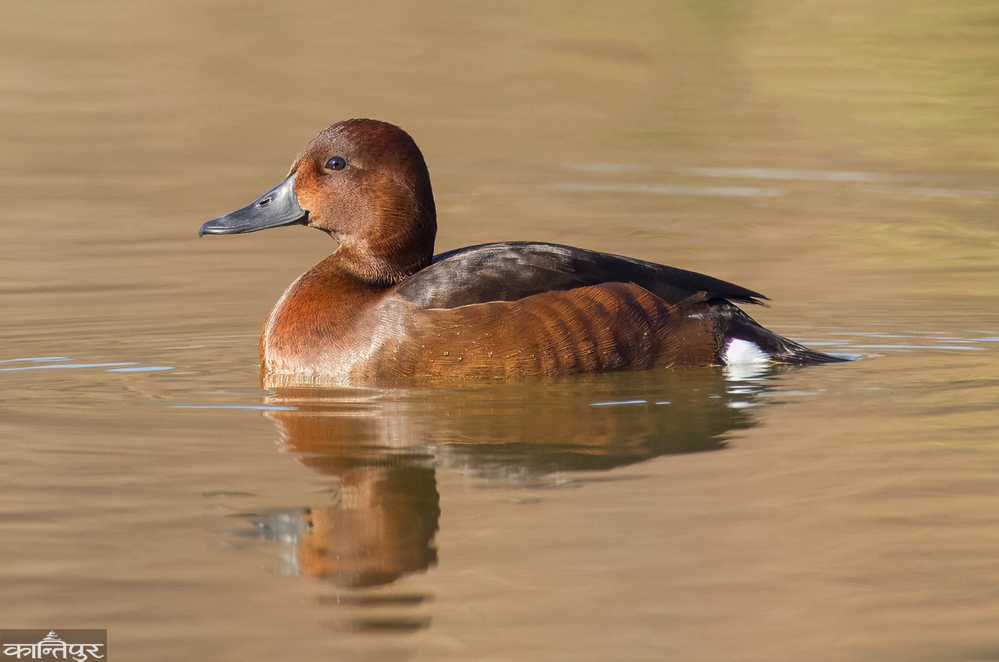
I am at Toudah on a sunny day in January. There are only ducks in this pond at this time. The winter visiting bird has also arrived, after a long journey, with many 'transits', a great challenge. A flock of electric ducks is swimming gracefully in the pond.
A Jaleva has hunted a fish while watching. Some are basking in the sun around the base of a tree standing in the middle of the Jaleva. The trees on the shore are rustling, the little birds are chirping on their bare branches and talking to each other.
Not only in Toudah of Kirtipur - the activity of visiting birds has started from October-November in forest areas including lakes, rivers and wetlands all over the country. Just as people move down from the mountains to the plains after winter, so do birds. When it gets cold in their permanent habitat, they travel to warmer regions in search of food. Birds from Russia's Siberia, where the minimum temperature is more than minus 50 degrees Celsius, have also reached Nepal. In this way, many birds that migrate to the south enjoy the foothills of the Himalayas and the plains, valleys and wetlands.
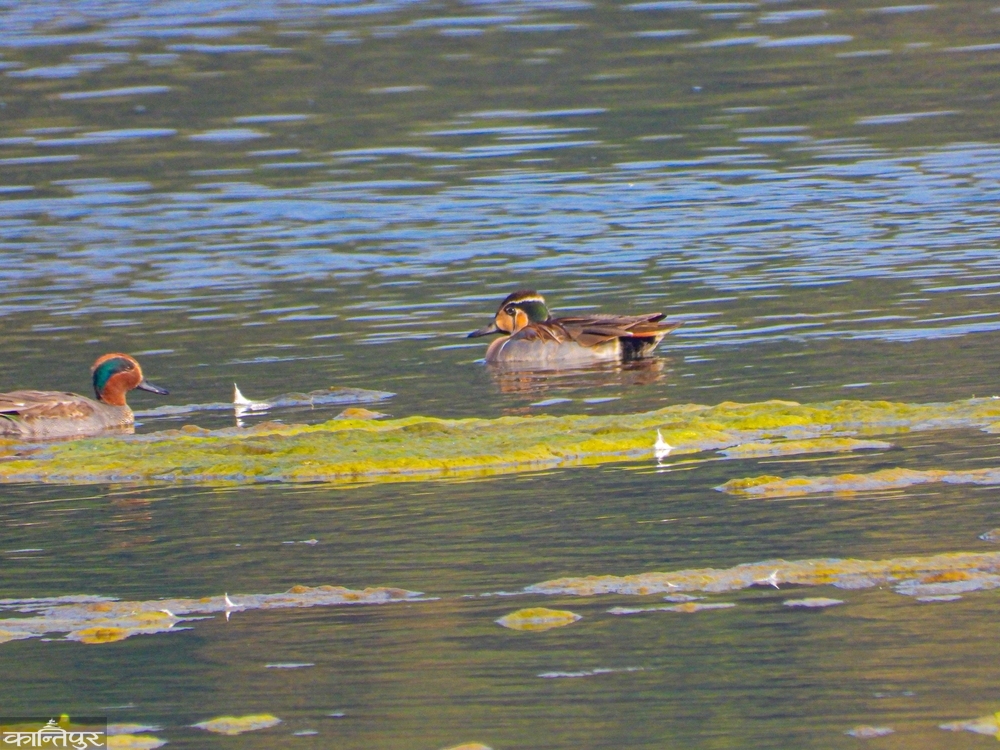
Most of the winter visitors are waterfowl. Common ducks, green-headed ducks, white-tailed ducks, chakhewa, jalewa, laxman stork, needle-billed duck, timtima, chanchar, arjunak, jhapsi, chuian, bhadrai etc. are winter visitors. Jagdishpur Lake, Bisahjari Lake, Ghodaghodi Lake, Koshitappu, Manohara, Gandaki, Narayani, tributaries
and he wanders in different reserves. Some birds of prey, such as chiles, also go south to spend the winter.
Birds arrive in Nepal from cold places in Mongolia, Kyrgyzstan, Korea, Tibet, Eastern Europe and India. Favorable climate, safe habitat, seeking warmth and food are their objectives. How many days will it take for the bird to reach Nepal after crossing nearly 5 thousand kilometers from Siberia? Will they come flying in continuously or will they come and stay? What will you do if you get tired of flying?
'Birds are also moving right and left, so they have traveled more than 5,000 km from Siberia,' says ornithologist Krishna Prasad Bhusal, 'Some birds coming from the north cross the ice range, while others cross the gorges of Arun Valley, Kaligandaki and Karnali. 600 of the 897 species of birds found in Nepal Raithane means the birds that have been roaming in Nepali land for a long time. Such birds are found up to 5000 meters altitude. Those who come in winter and spring season are regular visitors. They are seen only occasionally. They do not come regularly, nor do they migrate through Nepal. "If it is seen more than 10 times, it is put on the batuwa or visitor list," says Bhusal, "we have 74 species of birds." About 50 species of hummingbirds range from India, Pakistan, Sri Lanka and Africa. Not all the birds found in Nepal are found here throughout the year. Some go to India and some to Tibet-China. Also, visiting birds are not the only winter visitors. After spring, about 65 species of summer birds come to Nepal. In this way, bird migration continues throughout the year.
The birds that have come in for the winter start returning to their permanent habitats from March, and at that time, the summer birds' journey to Nepal starts. They stay here till October and return only after drawing a child. Such birds are especially abundant in cuckoo species, most cuckoos nesting in other nests. Summer visitors include Sunchari, Muralichari, Katus tauke, Ranichari, Neelpuchchre, Chitrak pitta, Gazle pitta, Lalchuchche theuwa. Their main habitats are forests, surrounding grasslands and agricultural land. Such birds come from tropical regions of India and Africa.
Most of the 150 species of birds that come in winter are waterfowl. "We have about 200 species that depend on wetlands, there are more than 100 species that live only in water," says ornithologist Hemsagar Baral.
Winter birds especially come from north to south. "They can also come to Koshi Tappu from Sikkim in India," says Laxman Prasad Paudyal, the Nepal coordinator of Wetlands International, "They also come from Karnali, the border of Afghanistan on the Mahakali River, from the northern part of India."
The bird's own way!
Just like the route of an airplane, birds also set their own path during migration. Many use the same route when returning. According to ornithologist Bhusal, birds like Khoya duck and Chakhewa return by following the same route, while Karyangkurung stork rarely returns the same way. "Six karyangkurung storks with satellite tags entered Mongolia from the Bheri Corridor of Karnali," he said There are four, which are called 'fly-ways'. Nepal belongs to the 'Central Asian fly-way', it covers 32 countries. How do the birds that follow their own path prepare before a long journey?
``Before going somewhere far away, we also go out to eat, the same goes for the preparation of the bird,'' says Bhusal. According to him, birds eat a lot to accumulate fat in their body, and because their body structure is the same, they are ready for travel. Even the hereditary qualities of the emigrant do not cause much difficulty in the long journey.
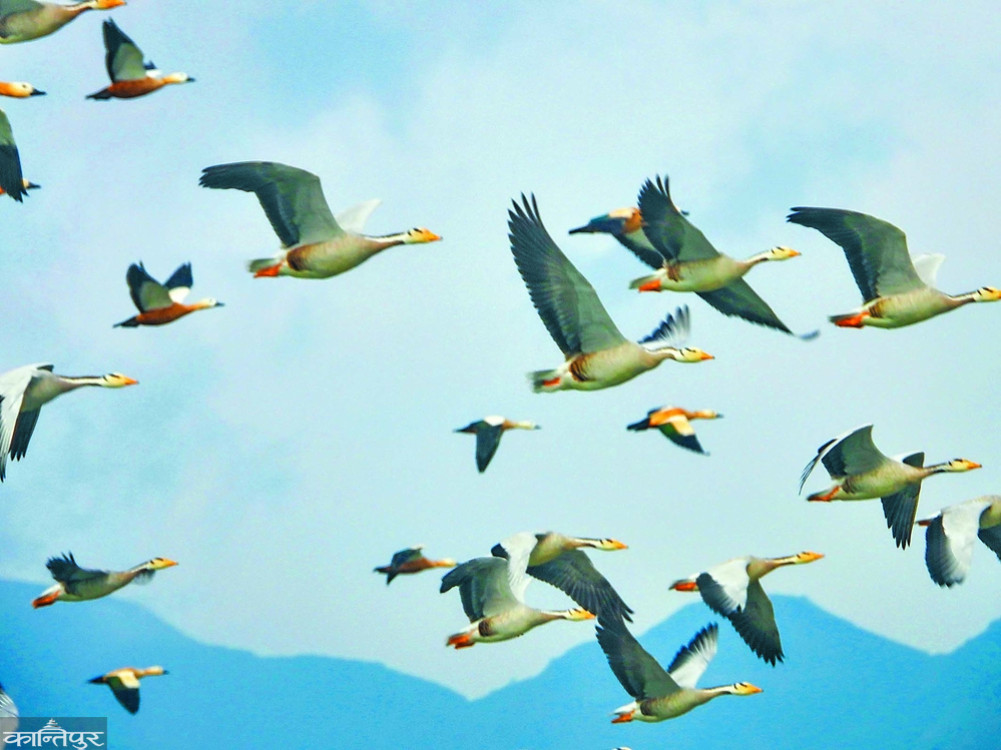
Birds that fly on long journeys are mostly in groups. Ornithologist Baral says that especially the migratory ones fly in groups forming a 'V' shape in the sky. They may have done this to control the flow of air. "Although there is no definite 'leader', it seems that when the bird in front gets tired during the migration, the others take their turn," he said.
Although the migration starts when it gets cold, in some cases, they start their journey just by understanding the weather. If the weather is bad, the trip may be delayed by a few days. They think if it rains or clouds. Because it is important that the flight path is clear,' says Bhusal, 'if there is any weather obstacle while flying, they can take transit in the middle. For example: Karyangkurung stork has been seen sitting in Kaligand's corridor, Mustang's rice paddies, Phaparbari. Chils can attack vulnerable birds even in the sky. Some are unable to board the flight and leave midway. Large numbers can also be caught in traps set by humans at 'stopover sites' (resting or lodging sites). In this way, not all the migrating birds reach their destination.
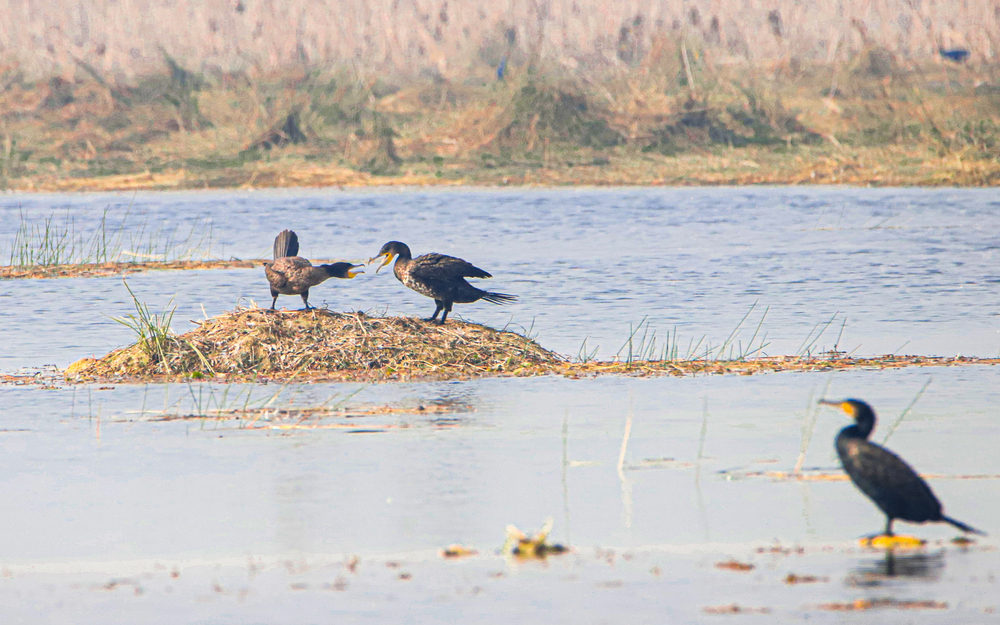
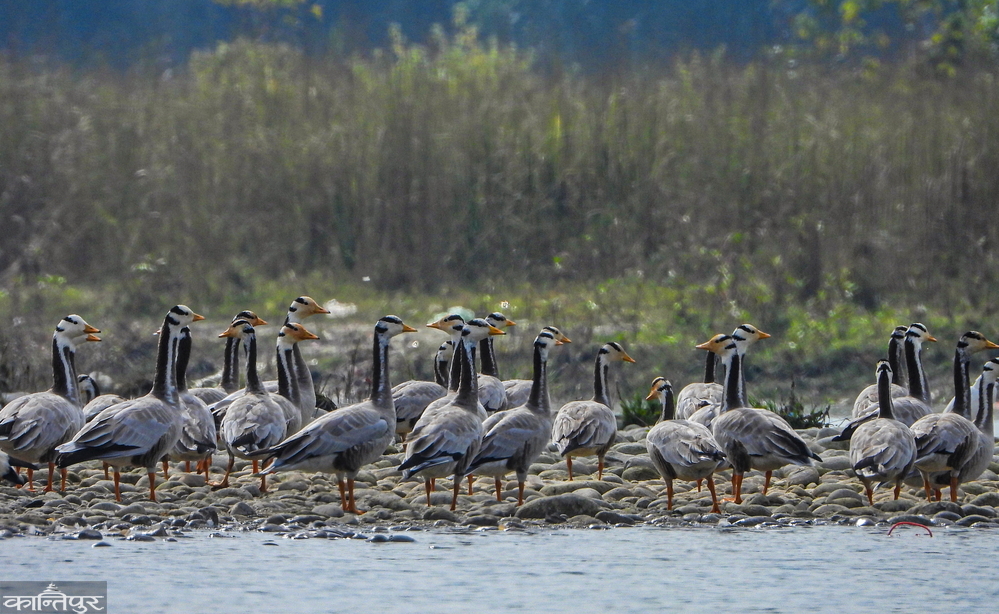
Ornithologists have recorded that the Khoya duck traveled above the height of the world's highest peak, Mount Everest. This brave duck can fly up to 9000 meters. Khoya ducks come to Nepal to spend the winter especially from Qinghai Lake in China and its surroundings. In the first week of January, 6 ducks were also seen in Jagdishpur lake of Kapilvastu.
Similarly, the Lakshmana stork can come across mountains up to 8,000 meters. The summer bird from the continent of Africa, Jure Koili, crosses a distance of about 5,000 km.
Recently, a white vulture that was released in Pokhara with a 'satellite tag' crossed a distance of 250 km and returned to Ayodhya, India. The vulture, which entered India through Rupandehi, Kapilvastu, stayed for three days around the Ganghra river in Ayodhya. On his way back, he arrived at Pokhara via the Rajapani Community Forest of Kapilvastu, Putli Bazar in Syangja, said the ornithologist Bhusal. It is one of the rarest vultures in the world.
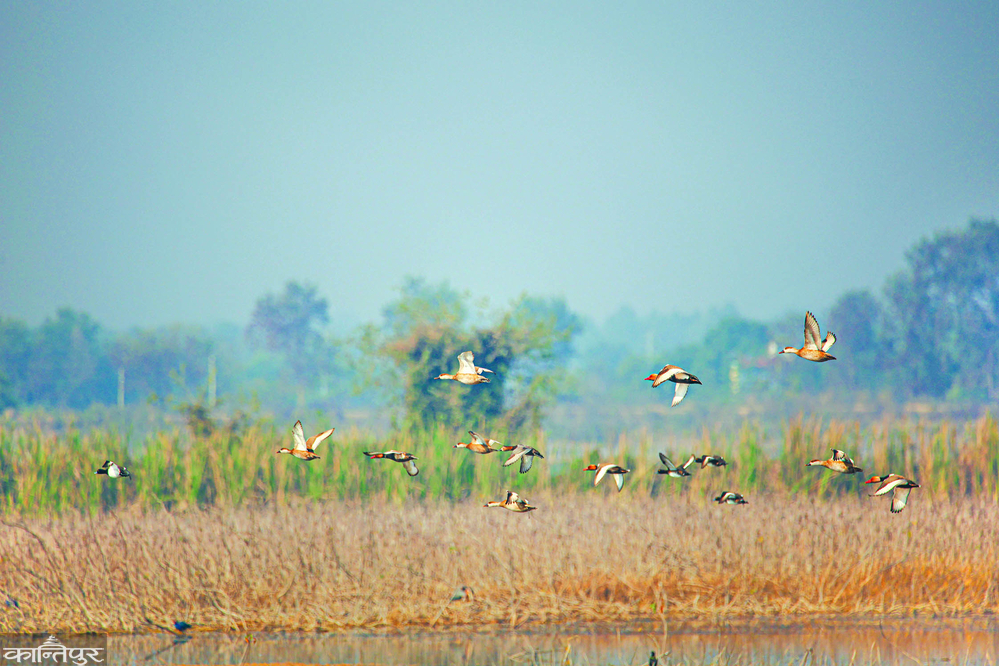
Migratory birds pay particular attention to landmarks. They trace their route based on rivers, magnetic direction, stars and moon. Most of the birds migrate at night. When you have to travel for a long time, you need to use a lot of energy from the body, the heat increases. So he prefers the coolness of the night to the heat of the day. Another benefit of flying at night is avoiding predatory birds.
Bird-concern
Climate crisis, habitat fragmentation, illegal hunting and unmanaged electrical infrastructure are the main challenges facing birds. When physical structures such as houses and hotels-restaurants are built around lakes or ponds, it has started to affect the birds. Due to garbage and noise pollution, birds have started to decrease. According to experts, 10 percent of migratory birds remain a constant security challenge.
Hathan Chaudhary, president of the Nepal Ornithologists' Association, is worried about the natural and man-made destruction of the border area. Purani Lake and Banda Lake in Kanchanpur are in the process of completion. Fishing, pesticides have been done,” he says, “The old watercourses are full of water. The condition of Badhaiya lake in Bardia is similar. The increasing destruction of bird habitats is a matter of concern.'
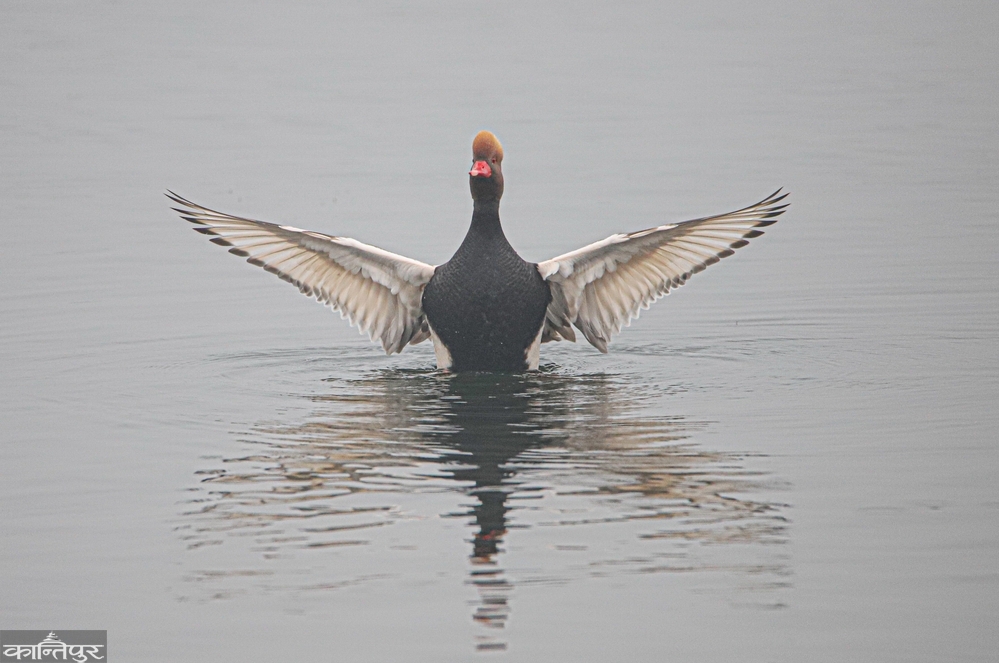
Not only around lakes and ponds, human encroachment on wetlands and wetlands has also disrupted the regular activities of birds. Ornithologist Baral says that although the forest area has increased, the birds dependent on grasslands and wetlands are still in danger. The drying up of wetlands, increasing poaching and the use of pesticides in agriculture are challenges for the birds.
In coordination with Wetlands International and Nepal Ornithologists Association, the water bird census has been completed recently. In the east, from Koshi to Dhanusha, Chitwan, Manohara, Toudah, various lakes of Pokhara, Rara, Nawalpur, Lumbini, Bardia, Shuklaphanta, the migration of winter visitor birds does not look so good, said Choudhary, president of the Ornithologists Association. "Winter may have started late. The number of birds is good, but some species were not seen this year," he says. "The main time for birds to enter is November-December, now the chances of entering are very low." Last year, about 65,000 water birds of 70 species were counted. Why do you need a
bird?
The bird is not only for ecological cycles, it is also inextricably linked with socio-cultural aspects. Laxman Prasad Paudyal, Nepal Coordinator of Wetlands International, says that the environmental balance can be understood based on how many birds there are. "Birds are also important for environmental information," he gives an example. It should be understood that there is more garbage in those areas. If the waterfowl are swimming happily in the pond, you know that the water there is clean.'
There are more than 11 thousand species of birds in the world. Out of this, about 2225 species of birds are migratory. There are 40 species of birds in Nepal, among the rarest in the world. It has only 13 water birds. 168 species of birds that we have are listed as globally threatened.
9 species of birds have become extinct in Nepal since 1846. One such species was found in Chitwan, 178 years later. In June 2073, the bird discovered by the team including ornithologist Hemsagar Baral was - Cymrikkane leocisla (Red-faced leocisla). Its ears, tail and wings are colored like those of a Cymric. This shy bird was found by Baral's team in Chitwan's Upardangdi and Siraichuli.
Since about 200 years, there are still 8 species of birds in the list of extinction in Nepal. The Pink Headed Duck used to be found in the lake in the Terai forest. This bird was last recorded in Nepal in 1846. Some experts estimate that this bird, which is found in India, Bangladesh, and the northern part of Myanmar, has disappeared from the world," says Ornithologist Baral, "Garikalav Battai, Big Forest Buckulla, Homrai, Fusro Chitrakut, Gray Musephisto, Terai Bandarchari and Green Kochowa have also disappeared from Nepal. '
Birds are beautiful gifts of nature. They help us by eating ground squirrels or rodents near the house. In this sense the bird is our dear friend. The vulture is said to be the 'Kuchikar of nature'. In Nepal, there are storks from small feisty birds up to 6 feet tall and mountain vultures weighing up to 12 kg. Bird diversity is another important aspect of Nepal's biodiversity. We should be able to get enough support from them by protecting the birds that are linked to socio-cultural aspects.
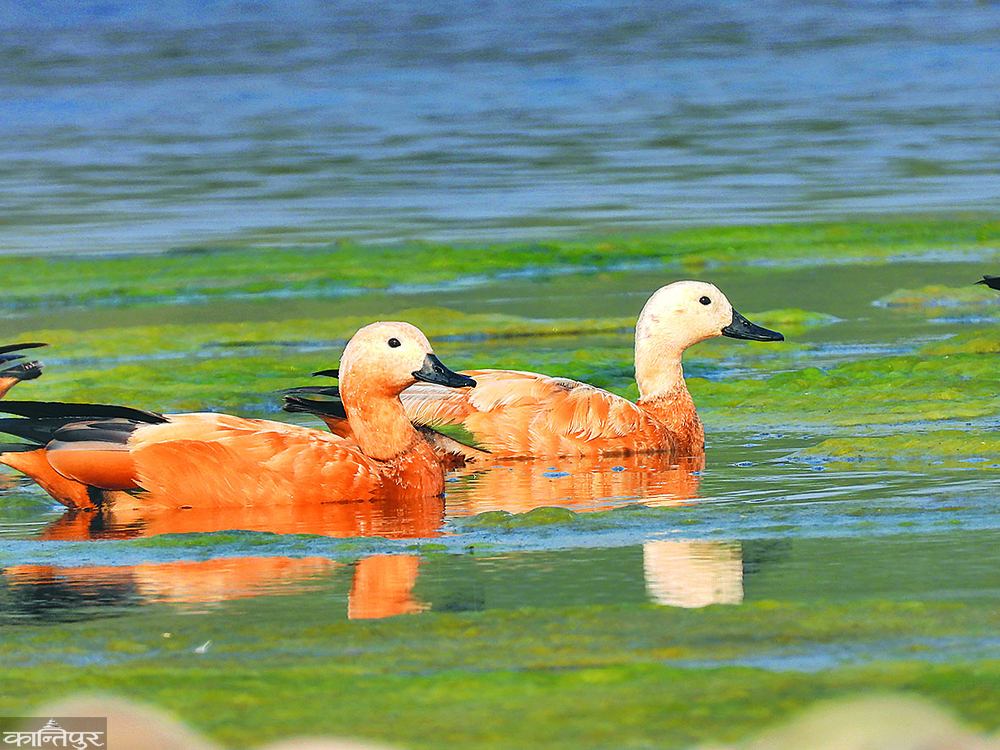
As Baral, who has been following birds for 40 years, said, 'It is enough for birds to have nature, but people need birds.'