Most of the people in the district still depend on agriculture. Apples, rice, potatoes, beans, walnuts, vegetables, fruits, animal husbandry, beekeeping, and fishing are the main sources of income here.
We use Google Cloud Translation Services. Google requires we provide the following disclaimer relating to use of this service:
This service may contain translations powered by Google. Google disclaims all warranties related to the translations, expressed or implied, including any warranties of accuracy, reliability, and any implied warranties of merchantability, fitness for a particular purpose, and noninfringement.
Khadka Bahadur Rokaya of Tatopani-1, Jumla, is excited about the news of getting a subsidized agricultural loan without collateral. He had been planning to do commercial farming for a long time. He had planned to expand his apple orchard, grow potatoes and beans commercially, and add some beehives. He lacked the financial resources to fulfill this dream. He was always worried about 'where will I get the investment?'.
He would visit the bank office from time to time to take out a loan. However, after demanding a lot of collateral, he was forced to return empty-handed. It seemed risky to seek a loan at a high interest rate in the village and start farming. Therefore, his plans were limited to paper. After a long wait, he is happy with the news of getting a loan at a subsidized rate. ‘The municipality is going to provide agricultural loans on a concessional basis,’ he said, ‘this has made small farmers happy.’
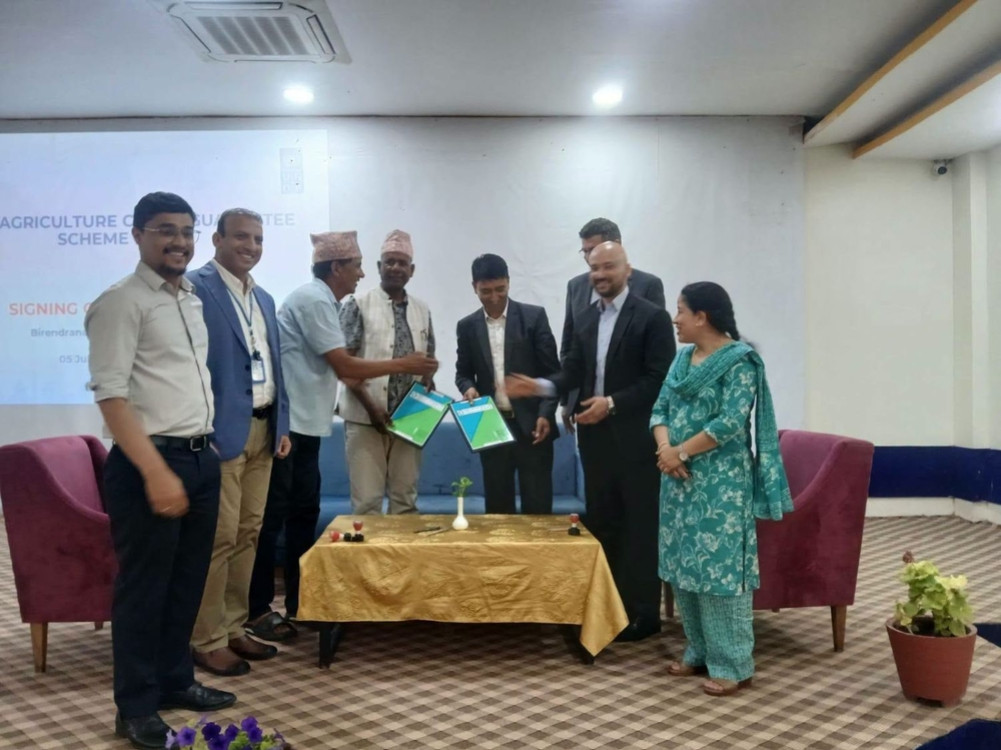
Farmers have been excited after Tatopani, Patarasi Rural Municipality and Chandannath Municipality in the district decided to provide agricultural loans to farmers at concessional interest rates without collateral. Farmers expect that this program, which is being launched in partnership with the local government, Deposit and Credit Protection Fund, the banking sector and the United Nations Development Programme (UNDP), will transform agriculture from a traditional means of livelihood into a commercial enterprise.
In the first phase, Rs 480 million will be mobilized at three local levels. Each municipality will be invested at the rate of Rs 160 million. Tatopani Rural Municipality has already agreed to mobilize Rs 300 million in agricultural loans within the next 7 years. The municipality has stated that it plans to expand this amount to Rs 500 million as needed. According to Tatopani Rural Municipality Chairman Nanda Prasad Chaulagain, there is no shortage of farmers who are willing to do agricultural work in the district.
‘But they have not been able to move forward due to lack of capital, many farmers have skills, experience, and the courage to work hard,’ he said, ‘but there is no investment required to expand the business. We have introduced concessional agricultural loans to address this shortage.’ According to him, the program will provide opportunities in the village, especially to youth who have returned from foreign employment, unemployed people seeking self-employment, and farmers who want to expand their agricultural business.
Most of the citizens in the district are still dependent on agriculture. Apples, rice, potatoes, beans, walnuts, vegetables, fruits, animal husbandry, beekeeping, and fishing are the main sources of income here. However, due to the lack of modern technology, irrigation problems, market instability, and weak financial access, agriculture has not been able to gain the expected momentum.
Janamaya Rokaya, vice-chairwoman of Patarasi Rural Municipality, describes this program as a campaign to create employment in the village. "Our aim is not to send youth abroad, but to make them entrepreneurs in the villages," he said. "Prosperity in the villages is possible by giving farmers investment opportunities." The loan will be open not only to big farmers but also to small farmers, agricultural entrepreneurs and all those who want to operate agricultural industries. Arrangements have been made to invest in everything from apples to potatoes, beans, rice, vegetables, fruits, beekeeping, animal husbandry, fisheries and agro-processing industries at concessional interest rates.
In previous years, there were complaints that the subsidy programs did not reach the actual farmers. This time, the selection of beneficiaries will be made transparent, regular monitoring will be carried out and priority will be given to production-oriented businesses, according to the local level. According to Balkrishna Budha, Vice President of the Chamber of Commerce and Industry, Jumla, the program will also encourage the private sector to invest in the agricultural sector. "Agriculture is to be made an area of potential," he said. "Such financial programs should be continuous."
According to UNDP Jumla representative Rishiraj Oli, the maximum amount of agricultural loans up to Rs 30 million will be managed by the Risk Deposit and Credit Protection Fund and the concerned local level. It is believed that this will reduce the risk of the bank and help in providing loans to farmers easily. Khadka Bahadur Rokaya is now starting to remember his old plans again. If he gets the loan on time, he will increase his apple orchard and expand potato farming,' he added.