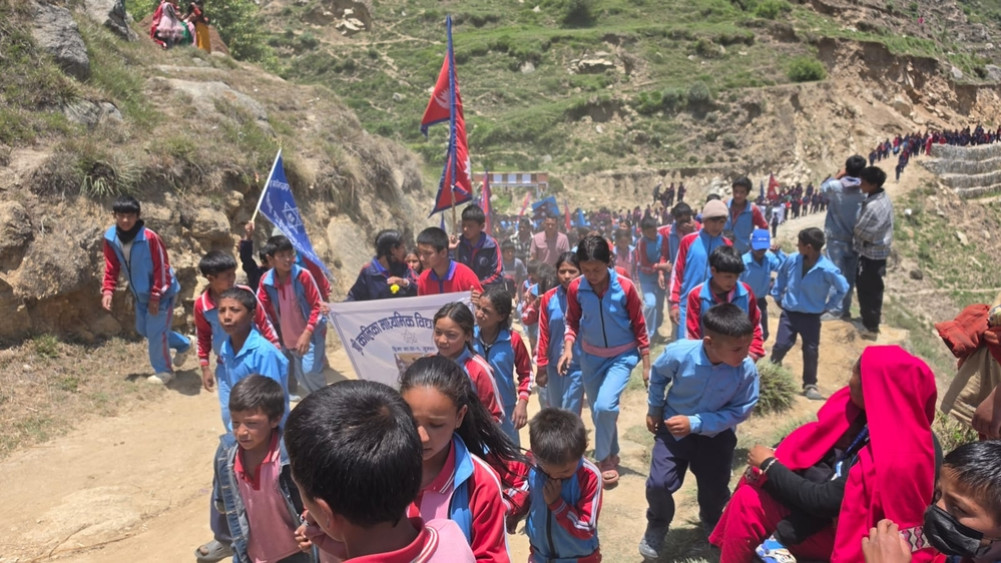
The fair was attended by teachers, students, parents, public representatives, employees, and stakeholders related to the education sector from all 19 community schools within the municipality.
We use Google Cloud Translation Services. Google requires we provide the following disclaimer relating to use of this service:
This service may contain translations powered by Google. Google disclaims all warranties related to the translations, expressed or implied, including any warranties of accuracy, reliability, and any implied warranties of merchantability, fitness for a particular purpose, and noninfringement.
Hima Rural Municipality has organized a study fair to connect education with creativity, science, culture, competition, leadership and social responsibility, not just the classroom. The fair, which was organized for the fourth time, was held on Saturday at Kalika Secondary School, Talikudu.
The fair, which was launched as a joint campaign for educational transformation, lasted for two days on Friday and Saturday. Teachers, students, parents, public representatives, employees and stakeholders related to the education sector from all 19 community schools within the municipality participated in the fair.
Students participated in competitions including creative activities, science exhibitions, cultural performances, deuda, songs, quizzes and more in the fair. Rural Municipality Chairman Laxman Bahadur Shahi said that the study fair will also play an important role as a common platform to review the educational activities of the year, self-evaluation and decide the future course of action.
He said, ‘This study fair will add a brick to the overall educational transformation of Hima. We have continued the education fair with the aim of instilling healthy competition between schools, creativity and inspiration in students to excel.'
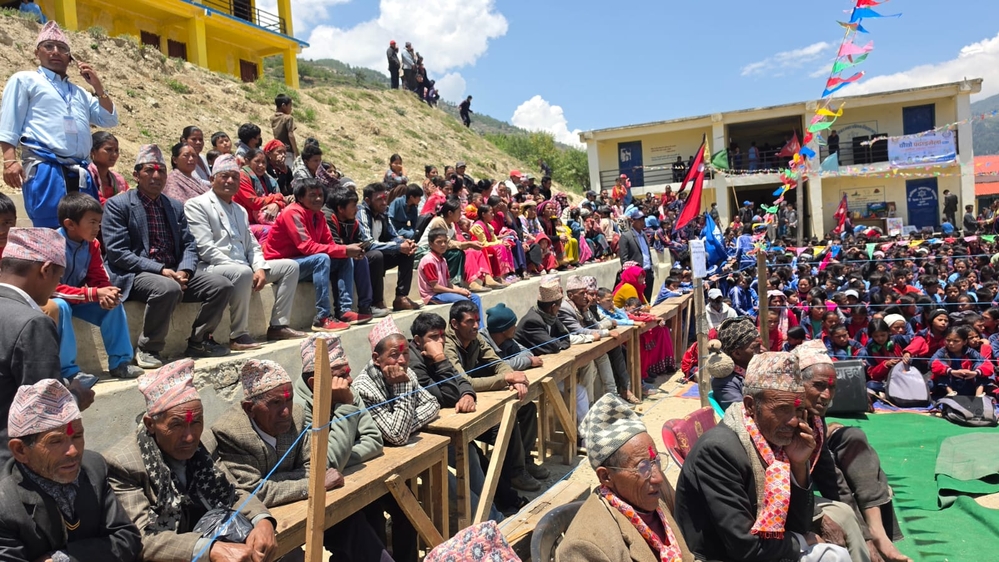
According to him, the rural municipality has invested 43.37 percent of the total development budget in the education sector and has enrolled 100 percent of out-of-school children in schools.
Similarly, the municipality has become the first literate rural municipality in the former Karnali zone. The municipality, which has made a name for itself as the second child marriage-free rural municipality in Nepal, has also become the first rural municipality in the hilly and mountainous districts to provide clean drinking water to 1,668 households through the One House, One Tap program.
At the fair, students presented scientific materials prepared using local resources through attractive science exhibitions. Somewhere solar energy models, somewhere materials related to agriculture and the environment, somewhere water conservation concepts and somewhere creative models based on technology caught the attention of the audience.
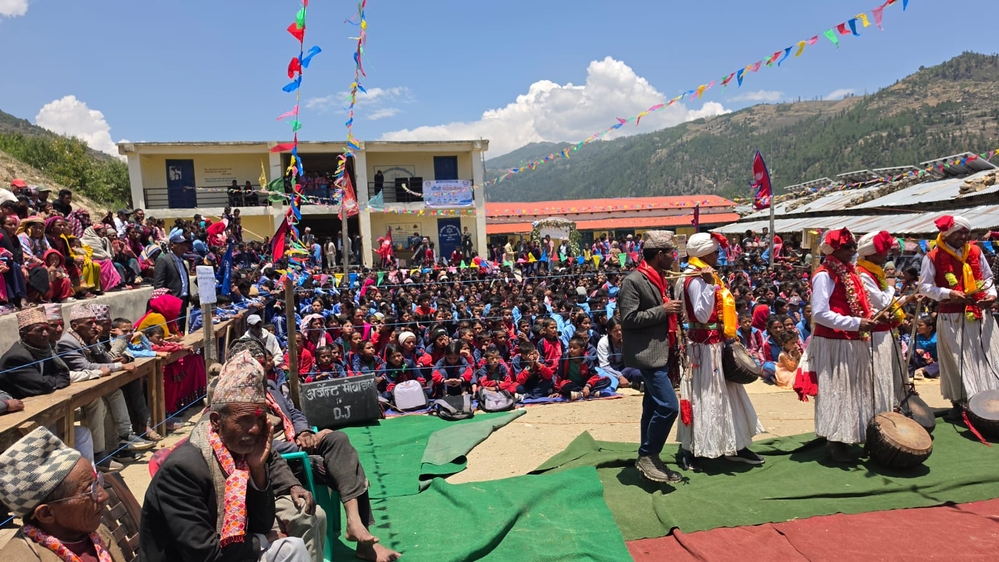
Akesh Rokaya, a student of class 10 at Netrajyoti Technical Secondary School, Odisha, said that the reading fair gave them an opportunity for practical learning along with book knowledge. He said, 'We have got the opportunity to learn, compete and showcase our talents with friends from other schools. Such programs have increased the enthusiasm towards studies.'