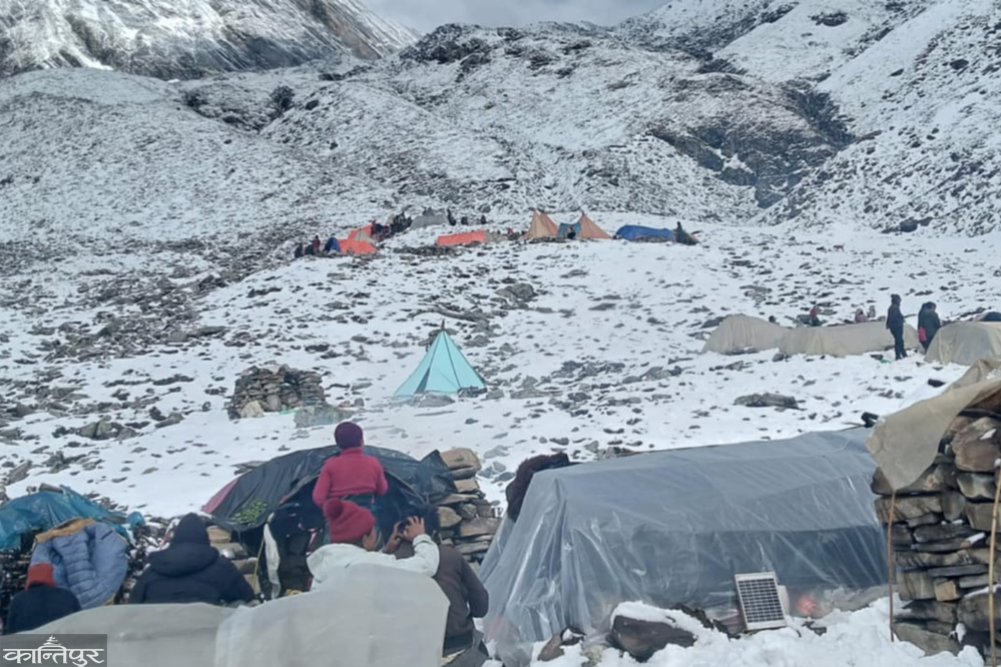
From April to August, students head to the Himalayan mountains of Patan to pick yams. After the young students head to Patan to secure their future, the village schools look deserted and deserted.
We use Google Cloud Translation Services. Google requires we provide the following disclaimer relating to use of this service:
This service may contain translations powered by Google. Google disclaims all warranties related to the translations, expressed or implied, including any warranties of accuracy, reliability, and any implied warranties of merchantability, fitness for a particular purpose, and noninfringement.
Dilraj Rawat of Jumla Patarasi Rural Municipality-3 Chaurgaun is preparing to walk towards Patan to pick yarchagumbu. Many of his friends have already reached Patan and are busy looking for yarchagumbu. That news has made him realize that it is too late now.
This yarchagumbu journey to Patan is not new for Dilraj. For the past three years, he has been continuously reaching the Patans in the Himalayas to pick yarchagumbu. However, quitting his studies at a young age and making the difficult journey to Patan is not his desire, but a compulsion. Dilraj and his friends go up to Patan every year to collect pens, pencils and study expenses for the year. His experience is that usually he returns after picking 250 to 300 yarchagumbu in a season. And, when the Dilrajs go up to Patan, the schools in his village are deserted.
The yarchagum collected through hardship on the outskirts of Patan is the basis of the future of Dilraj and his friends. Dilraj hopes to earn between Rs 100,000 and Rs 150,000 by selling yarcha at a rate of Rs 500 per piece. With this money, he not only buys pens and paper, but also takes tuition in the winter to complete his studies that he missed while going to Patan to pick yarcha. ‘When you go to Patan to pick yarcha, you miss your studies,’ says Dilraj, ‘but you also earn the money you need to study.’ In this way, Dilraj suffers terribly for two months in more than a dozen high Himalayan villages like Chapkhola, Taklekhola, Mathinthan and Changri in Patarasi. And, finally, he returns home with his friends.
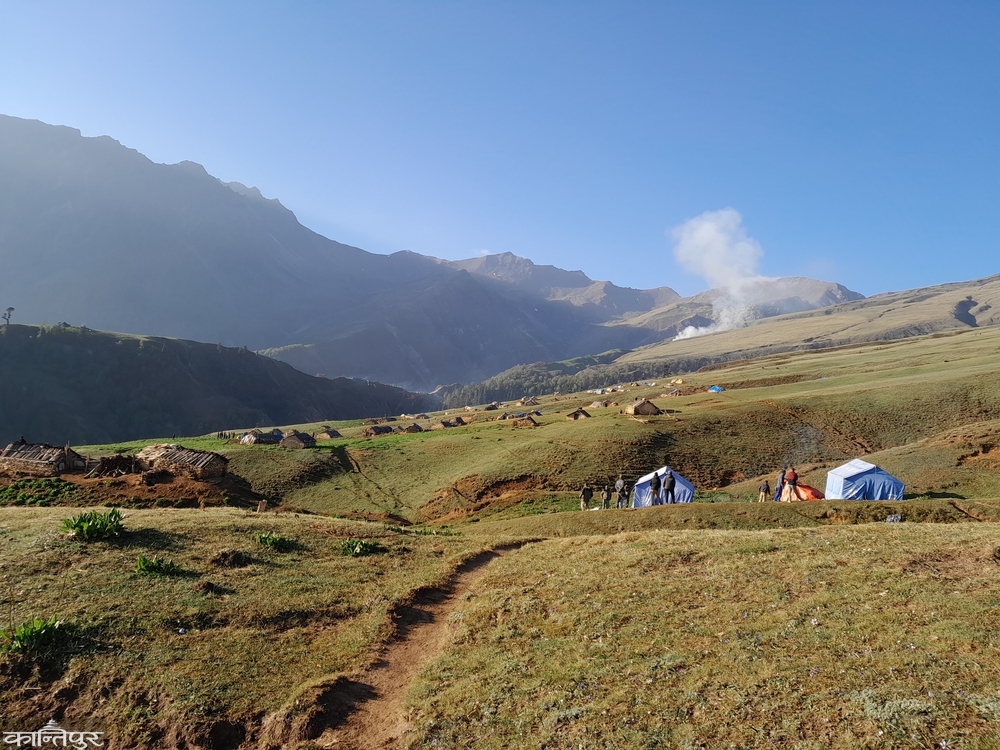 The geography of getting yarcha is difficult, but he also worries about his studies. Therefore, Dilraj’s yarcha journey is a journey of dream search. Dilraj, who is studying at Malika Secondary School Lodchaur, gave his SEE this time. School statistics say that in 2080, 50 out of 55 students in the upper class and 37 out of 48 in 2082 had reached Patan in search of Yarcha. This time, they had already left for Patan before the school opened. According to Principal Jagat Bahadur Shahi, all the older students from classes 6 to 10 go to Patan to pick Yarcha. ‘That’s why there is no education here for two months,’ says Shahi, ‘all the students go to Patan, the job of the secondary school teachers is only to ensure attendance.’
When the upper class students reach Patan, most of the lower class students go to Pakha to graze their cattle or are busy with household chores. Since there are no students studying, the schools here are completely deserted for about two months. Parents themselves go to the schools, requesting that the students be sent to Patan. ‘We constantly request the parents to send their children to school,’ says Shahi, ‘but the parents want to send their students to Patan to pick Yarcha. And they keep pressuring them to give leave.’ The rural municipality keeps requesting parents and teachers every year not to send students to Patan. However, since the Yarcha is a subject directly related to income, teachers are not able to force students to ‘come to school’.
Patarasi’s education department head Ramchandra Regmi has the experience that no matter how hard they try, students going to collect Yarcha could not be stopped. ‘We emphasize education,’ he says, ‘students and parents want to earn money. That is why the rural municipality is not able to stop students going to Patan.’
Most students from all schools in Patarasi reach Patan. When students from Patarasi-1, 2 and 3 wards go to Patan, the school is empty. They go to Patan in Baisakh and return home only in Asar or Shrawan. Students who go to Patan participate in the exams based on tuition. There are 16 schools in Patarasi. ‘We say we should not leave our studies and go to Patan,’ says branch chief Regmi, ‘They say that there is no point in studying if there is no income and keep going to Patan.’
The students here are not limited to the Patans of Jumla in search of Yarcha, they also go to the higher Patans of Dolpa and Mugu. Some follow their parents, while others travel to Patan in separate groups of their friends. According to Rima Budha of Patarasi-2, when the Yarcha season begins, students choose the outskirts of Patan over the school classroom. For them, picking Yarcha in Patan has also become a strong basis for earning their clothes, pens and paper, and household expenses. And, in this way, young hands seek a future in Patan in the Himalayas.
Most of the houses in this municipality are locked for two months. Since everyone from young people to children go to Patan, only old people are found in the village. Rima says that it is compulsory to send students to Patan. Teachers say that since all the students have to go to Patan, they are forced to appear for the exams before the course is completed. And, in the meantime, most of the students miss their studies if they continue their studies. ‘If we do not teach, the course cannot be completed,’ says Principal Shahi, ‘We must now find a new option to prevent the students’ studies from being affected during the rainy season. However, that option has not been found yet.’
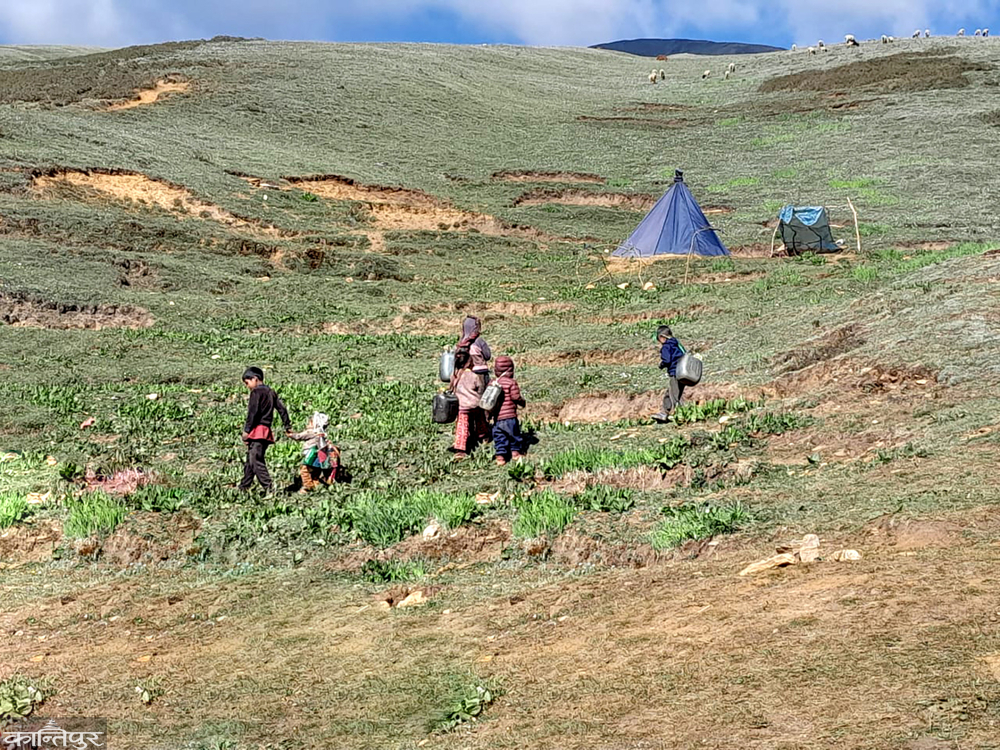 Last year, the school decided that students would not be allowed to skip classes and go to Patan and that they would not be eligible to go to the next grade if they did not have 75 percent attendance at school. However, that decision made by the principal’s meeting also did not work. Now, at least 75 percent of the students are preparing to go to Patan this season. Since all the youth and students go to Patan from Baisakh to Shrawan, the rainy season collector has demanded that the local government arrange for accident insurance.