Chaulagain is earning Rs 150,000 annually by selling honey.
We use Google Cloud Translation Services. Google requires we provide the following disclaimer relating to use of this service:
This service may contain translations powered by Google. Google disclaims all warranties related to the translations, expressed or implied, including any warranties of accuracy, reliability, and any implied warranties of merchantability, fitness for a particular purpose, and noninfringement.
Beekeeping has become a good source of income for farmers in the district . The recent increase in the price of honey is also making farmers eager to take up beekeeping . Currently, the price of honey in Jumla is Rs 2,500 per kg .
Narayan Chaulagain of Chandannath Municipality-4, Jumla, has 16 beehives . He extracts five kg of honey from one hive every year . 80 kg of honey is produced annually . Some of the honey he uses himself and some he takes to the local market . Chaulagain is earning Rs 150,000 annually by selling honey .
Chaulagain is also a trainer on beekeeping . He visits every settlement to understand the state of beekeeping and also studies in depth the problems seen in bees .
Dhanjit Budha of Chandannath 3 extracts a minimum of one quintal of honey from 20 hives. He earns Rs 250,000 by selling honey. Beekeeping is becoming a good source of income for him. The AP Serana Serana breed of bees is kept in Jumla.
He has experience in sending honey to European countries including Australia as a gift. He said that Jumla honey is also kept at agricultural exhibitions in Nepalgunj, Kathmandu, Pokhara and Surkhet.
‘Earlier, it was customary to keep beehives on steep slopes,’ he said, ‘now it is customary to keep them only around houses.’
Commercial beekeeping is not being done in Jumla. Earlier, there was a disease infection in bees. Now the disease is disappearing. Farmers say that Newton houses are more suitable than traditional hives here. Currently, due to the lack of grazing land, it is necessary to provide artificial shelter for bees. The price of honey is high, but beekeeping is a challenge.
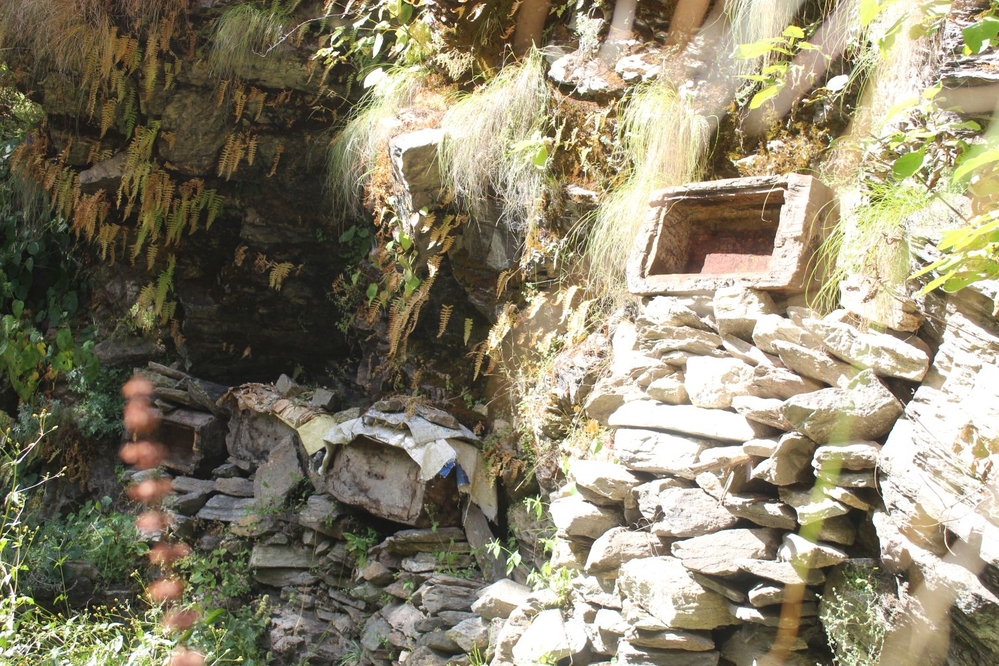
According to the data of the district-based beekeeping cooperative, more than 500 farmers are keeping bees. Beekeeping is being done with a minimum of 5 hives and a maximum of 60 hives. Recently, the incidence of drought has been increasing. 'Even if the flowers bloom, they are not full of nectar.' There are currently 1,600 hives in the district. From which at least 20 million rupees are earned annually,' said Dhanjit. 'Now it seems that a policy should be made to have one beehive for every apple orchard.'
According to him, it is difficult to save bees due to the lack of cleanliness of the hives, the increasing use of pesticides in agricultural crops, and the infection of wax moths. There is also a threat from bears, ants, ants and lizards. Despite repeated requests to the government to come up with a policy to save bees, no response has been received.
Farmers have been urging the government to introduce the concept of bee insurance for the past five years. Neither the district-based agriculture office has been able to take the initiative, nor have the state and federal governments shown interest. On the contrary, farmers have complained that they have to sit and watch bees die every year.
Farmers have demanded that a bee expert be sent to the district. Currently, due to the lack of experts to work on bees, farmers are not able to acquire the skills and knowledge required for the situation. Patarasi, Guthichaur, Kanakasundari and Tila rural municipalities in the district have good potential for beekeeping. Meanwhile, the District Agricultural Development Office, Jumla, has stated that although it introduced a bee promotion program last year, there is no bee-related program this time. Information Officer Deepak Singh Dhami said that there is no data on bees in the district. ‘There is neither data on bees, nor a bee promotion program,’ said Information Officer Dhami, ‘Discussions are underway for next year.’

