Farmers follow the weather conditions to plant and grow crops and vegetables, easy to take precautions in case of disasters
We use Google Cloud Translation Services. Google requires we provide the following disclaimer relating to use of this service:
This service may contain translations powered by Google. Google disclaims all warranties related to the translations, expressed or implied, including any warranties of accuracy, reliability, and any implied warranties of merchantability, fitness for a particular purpose, and noninfringement.
Atirupa Shahi, a member of Samaj Parintar Farmers Group located in Naraharinath Rural Municipality-9 of Kalikot, receives an SMS about the weather forecast every 3/3 days. His neighbor Tara Shahi has also been following the information received through SMS while doing farm work.
"We were preparing to harvest wheat, we received an SMS with the forecast of rain on Friday and Saturday," she said, "so the wheat harvesting day was moved to Monday after doing other household chores on that day." She belongs to the Makhamli Farmers Group.
Now about 600 farmers of Narharinath in Kalikot and Shivalaya Rural Municipality of Jajarkot, people's representatives, employees and leaders are receiving information about the 3/3 day weather forecast on their mobile phones. Arrangements have been made to send the information received from the Weather Forecast Division to the mobile phones of farmers and public representatives.
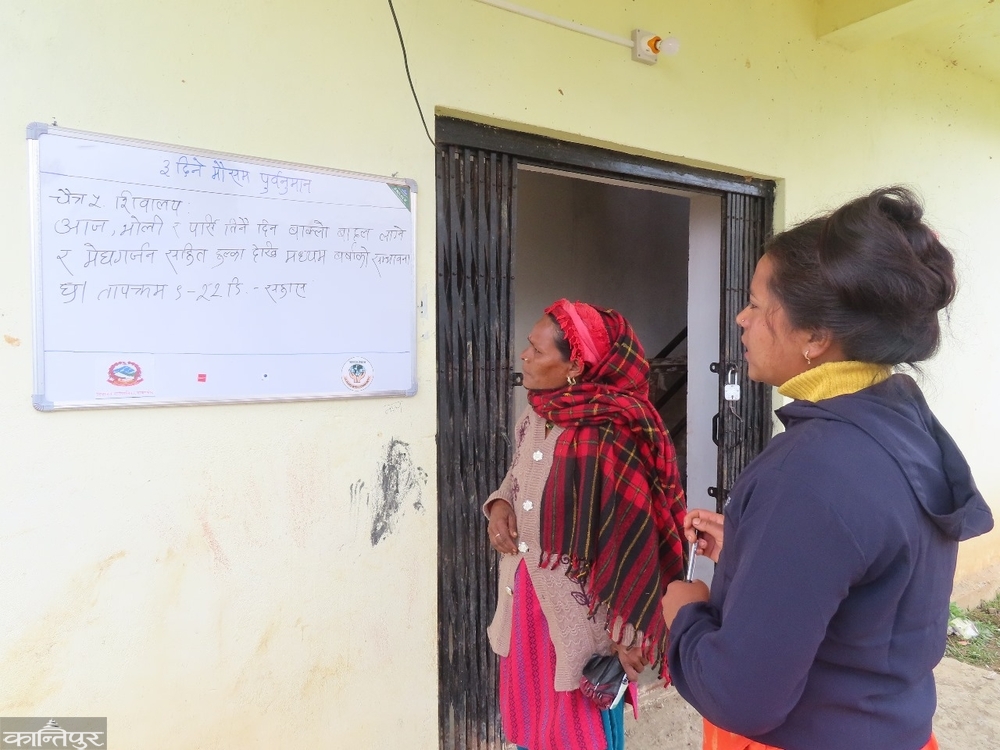
All the ward offices and subject branches of the municipality have started giving information about it on the information board (board) hung outside the working room. Pradip Bohra, spokesperson of Narharinath Rural Municipality, said that the municipality is regularly publishing information about the weather on its website.
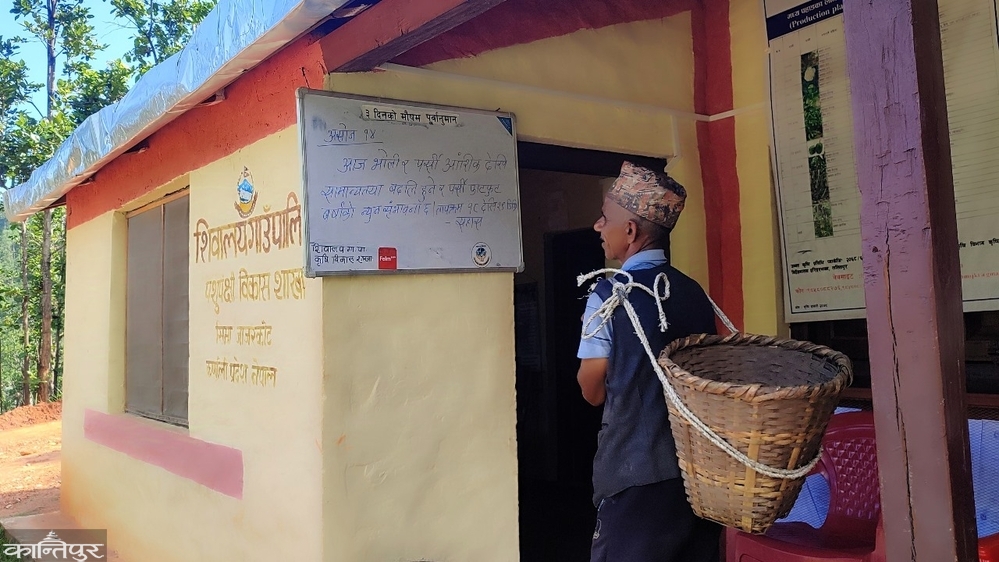
When the SMS started coming on the mobile phone, the compulsion to listen to the radio to get information about the weather ended. Bimala Khatri of Shivalaya Rural Municipality-5 Thalaraikar of Jajarkot, who needs favorable weather for planting and bringing in crops, said, "At the time of bringing in the crops grown after 5/6 months, there is a big loss when the weather is unfavorable, even when planting crops, it has become easier to work according to the weather," she said. He says that it is easy to get information about the weather with the development of technology. "We will work on the farm only after receiving a message that the weather will be clear for a few days," she said, "otherwise we will wait for a few days."
Climate change officer Sangita Pal of Nepal's Climate Change Officer, Group of Helping Hands (SAHAS), which is providing technical support to farmers, said that weather-related SMS has made it easier for farmers to do farm work and avoid natural disasters. "Apart from information about the weather, market price information is also sent to farmers' mobile phones every 3 days through SMS, which is helping in the marketing of agricultural products," she said.
Kamal Bahadur Shah, vice president of Narharinath Rural Municipality, said that the change in weather is seriously affecting people's lives and agriculture. "Due to climate change, there have been problems such as lack of rain, rising heat, drying of roots in water, floods, and the increase of weeds in the fields," he said. Nainsara Rana, a member of the Chandrasurya Farmers Group located in Shivalaya Rural Municipality-2, said that due to lack of information about the weather, there was a big damage to the paddy crop which was being brought in 3 years ago.
"The harvested paddy rotted completely in the field," she said, "Since the SMS started coming, we have started bringing in and planting crops only if the weather is favorable." She is growing various vegetables and mushrooms in 2 plastic tunnels. He says that he is earning up to 25,000 rupees per month from
. According to him, all the farmers belonging to the group have stopped using hybrid seeds and chemical fertilizers in the fields after improving the quality of their homes. She said that methods such as 'Tande nursery', 'hotbed', and 'solarization' are being adopted for soil purification. When using these methods, if the fertility of the soil does not go away in the air, the outbreak of diseases will be reduced. According to him, farmers use organic urine to control diseases and insects in vegetable fields.
Hari Prasad Adhikari, senior climate change officer of Sahas Nepal, said that the changing climate is having a major impact on the farming system. According to him, farmers are getting weather information easily while planting and importing crops and vegetables including rice, wheat, corn, millet. Chandra Bahadur Shahi, Chief of District Agriculture Development Office, Kalikot, said that lately farmers have started following the weather conditions.

