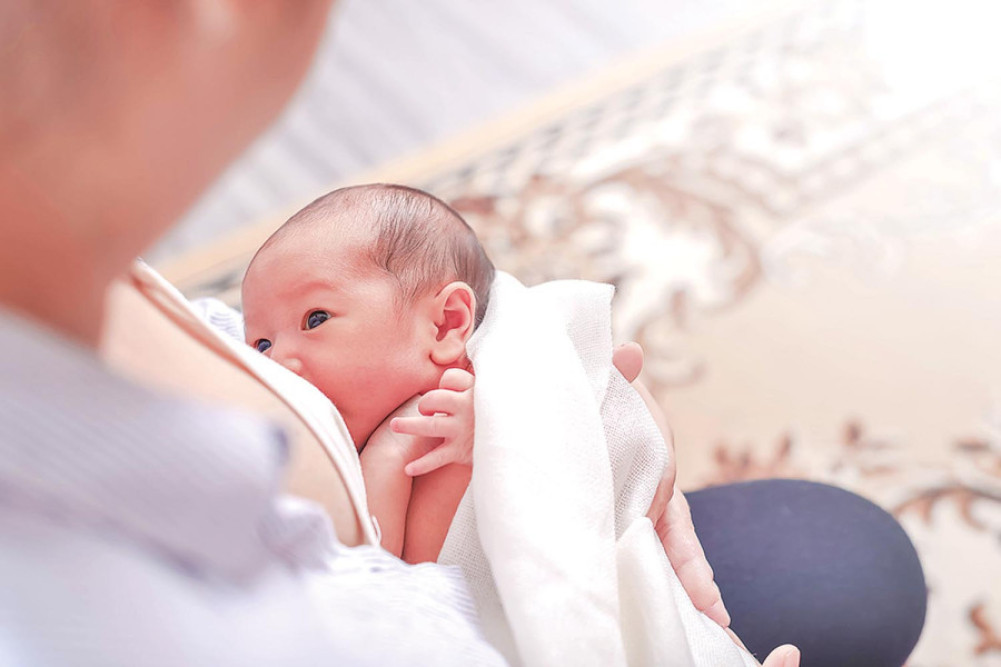
The report states that medicines such as 'Phenobarbitone', which is essential for patients who have fainted due to fever, are only available in about 25 percent of health facilities.
We use Google Cloud Translation Services. Google requires we provide the following disclaimer relating to use of this service:
This service may contain translations powered by Google. Google disclaims all warranties related to the translations, expressed or implied, including any warranties of accuracy, reliability, and any implied warranties of merchantability, fitness for a particular purpose, and noninfringement.
According to the assessment report of the Ministry of Health and Food Security, about 75 percent of health institutions providing special neonatal care in Nepal lack the necessary medicines for patients in critical conditions.
The report titled 'Evaluation of the Performance of Special Neonatal Care Units for Improving the Quality of Care for Small and Sick Newborns in Health Institutions in Nepal' mentions the shortage of essential medicines.
The report mentions that medicines such as 'Phenobarbitone', which is required for those who have fainted due to fever, are available in only about 25 percent of health institutions.
Similarly, the medicine 'Dobutamine', which is used in intensive care units, is available in only 42 percent of health institutions. Among the primary care antibiotics, 'Ampicillin' is available in 88 percent of health institutions and 'Gentamicin' in 81 percent.
The study was conducted in 85 special neonatal care units operating in 85 hospitals across the country with the support of the United Nations Population Fund. According to Dr. Madan Kumar Upadhyay, Director, Family Welfare Division under the Department of Health Services, the study examined the quality of services currently being provided and identified weaknesses in the service. He pointed out the need for improvement in many areas to reduce the mortality rate of newborns.
According to the report, only 57.6 percent of health facilities have at least one doctor available for newborn care. Only 20 percent of health facilities have the necessary modern equipment for treating infants with respiratory complications.
More than one-third of health facilities do not have a 'single kangaroo mother care chair'. More than two-thirds of health facilities do not have a 'kangaroo mother care bed'. According to health experts, Kangaroo Mother Care is the most effective and least expensive method for caring for premature and low-birth-weight babies. The lack of such services in health facilities designated for special newborn care has raised serious concerns about the quality of treatment for small and sick newborns.
The report also revealed major weaknesses in physical infrastructure. Of the 85 health facilities surveyed, only 15 had a separate 'triage' or patient admission room for newborn health checks.
According to doctors, the lack of infrastructure can delay the stabilization of sick babies and the initiation of their treatment. The study also showed that the quality assurance mechanisms in the hospitals studied were weak.
Less than 25 percent of the hospitals studied conducted quality improvement activities related to maternal and newborn death reviews. While more than 80 percent of the health facilities claimed to have active quality improvement teams.
Only one-third of health facilities reported that a monitoring team had visited their facility in the last six months. Health facilities’ contact and communication with families of sick newborns was also very low. Only 25 health facilities regularly informed mothers or caregivers about the progress of the baby’s illness and treatment. According to the report, health facilities are increasingly relying on temporary workers to operate newborn care services. This is indicated by the shortage of manpower, lack of trained staff, and the higher number of contract workers compared to permanent health workers.
The report mentions that care centers lack everything from soap and water to infection prevention and control guidelines. When observing consultations, it is seen that nurses are involved in the care of about 70 percent of sick newborns. The report mentions that 22 percent are seen by a pediatrician and 8 percent are consulted by a medical officer. According to the
report, only 54 percent of health facilities have access to soap and water for handwashing. Child health experts have said that periodic assessments are needed to understand the quality of services and address gaps to prevent maternal and newborn deaths. But such studies are rare. The study, conducted this year, has not been made public. But The Kathmandu Post has obtained the report.
According to officials, such detailed studies are only carried out when financial and technical support is available from donor agencies. 'We must be able to prevent deaths from birth complications such as hypothermia, infection, low birth weight, premature birth and asphyxia,' Upadhyay said. 'We will coordinate to develop a plan to prevent neonatal deaths.'
Nepal has reduced the child mortality rate by nearly 60 percent since 2000. According to the World Health Organization, the infant mortality rate has now reached 16.6 per 1,000 live births. The stillbirth rate has fallen to 13.5 per 1,000 live births.
The United Nations Sustainable Development Goals (SDGs) aim to reduce the infant mortality rate to 12 per 1,000 live births. The SDGs aim to end hunger, poverty and all forms of discrimination by 2030. Nepal has committed to achieving these goals.