International service providers like Pathao, inDrive, and Yango have not applied for permits
We use Google Cloud Translation Services. Google requires we provide the following disclaimer relating to use of this service:
This service may contain translations powered by Google. Google disclaims all warranties related to the translations, expressed or implied, including any warranties of accuracy, reliability, and any implied warranties of merchantability, fitness for a particular purpose, and noninfringement.
Ride-sharing service providers operating within Gandaki Province without a license are required to register mandatorily by the 15th of Saun. The Ministry of Physical Infrastructure Development and Transport Management of the Gandaki Provincial Government has announced that the 30-day public notice period regarding ride-sharing service registration will end on the 15th of Saun.
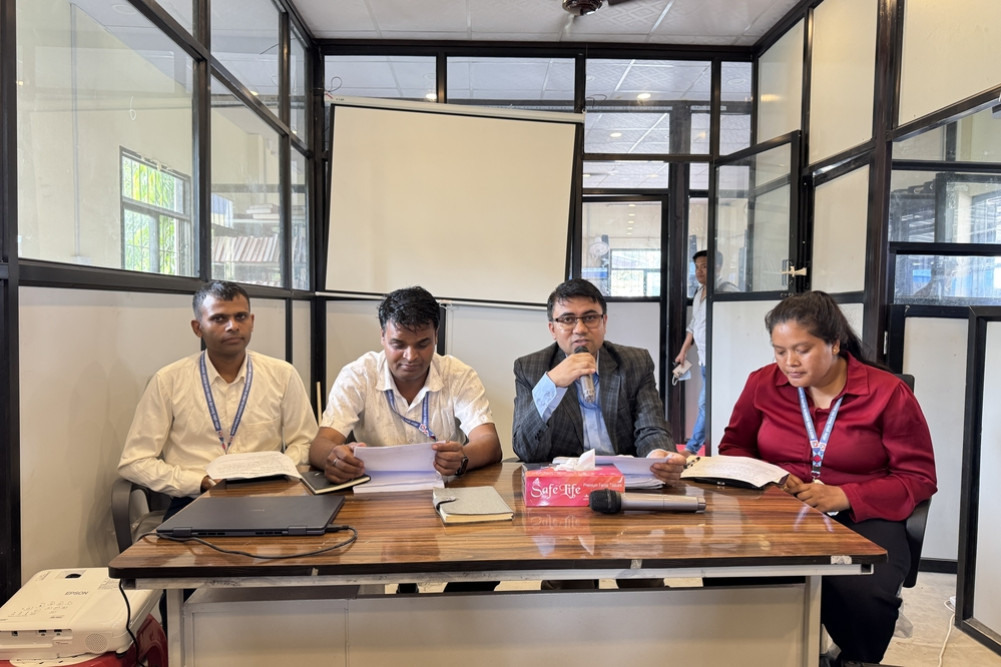
The Transport Management Office, Kaski, held a press conference on Friday calling for the registration of ride-sharing services. Office chief Dhaka Prasad Sharma stated that institutions, companies, individuals, or platforms operating services without a license within the stipulated period will be subject to legal action. According to the Gandaki Province Financial Act, 2083, operating a ride-sharing or self-drive service without a license will result in a fine of 100,000 rupees for the first offense. If the offense is repeated, the fine will be doubled. This provision is mentioned in sub-rule (7) of Rule 3 of the Gandaki Province Ride-Sharing (Regulation and Management) Rules, 2082.
Sub-rule (6) of Rule 3 of the same Rules stipulates that service providers who were already registered and operating services or providing transport services through their own app before the implementation of the Rules must also mandatorily register and operate services within 30 days from the commencement date of the Rules.
In addition, a separate fine has been set for operating services for purposes other than those specified. According to sub-rule (11) of Rule 19 and sub-rule (2) of Rule 25, if services are provided offline (not connected to the online system) or operated without adding the specified purpose, a fine ranging from 500 to 4,000 rupees will be imposed for two-wheelers, and up to 10,000 rupees for four-wheelers.
According to the Provincial Vehicle and Transport Management Act, 2076, and the Gandaki Province Ride-Sharing (Regulation and Management) Rules, 2082, ride-sharing services must be registered. As per sub-rule (2) of Rule 3 of the Rules, an application must be submitted along with documents such as vehicle and driver details, company or institution registration certificate, renewal certificate, VAT registration certificate, and tax clearance certificate. Additionally, as per Rule 7, a proprietary information technology system (app) with features ensuring passenger safety, privacy, and transparency must also be developed.
According to the Gandaki Province Financial Act, 2083, institutions or companies providing ride-sharing or self-drive services must pay a permit fee of 25,000 rupees for two-wheelers, 50,000 rupees for four-wheelers, and 70,000 rupees for both. For the registration of each vehicle, a fee of 2,500 rupees is set for two-wheelers and 10,000 rupees for four-wheelers, while public vehicles operating as old taxis will receive a 50 percent discount on the registration fee.
So far, 5 companies registered, only one has obtained a license
So far, 5 companies have been registered for ride-sharing services at the Transport Management Office, Vehicle Kaski. Sajilo Nepal Pvt. Ltd., Sawari Sewa Nepal Pvt. Ltd., Ecomo Nepal Pvt. Ltd., James Green Electro Mobility Service Pvt. Ltd., and Move In Nepal Pvt. Ltd. have been registered. Among these, only Sawari Sewa Nepal Pvt. Ltd., based in Kathmandu, has obtained a license to operate services so far, according to the office. International companies like Pathao, InDrive, and Yango have not yet applied for registration.
According to office chief Dhaka Prasad Sharma, many online platforms and individuals are actively providing services in Gandaki without following the registration process, so the office’s priority is to implement the Rules and bring everyone within the legal framework. He said, “Legal action will be initiated against service providers who do not register within the stipulated period.”
The effort to regulate ride-sharing in Gandaki Province has long been mired in controversy. The provincial government first published the Rules in the Provincial Gazette on 1 Jestha 082. In protest of these Rules, transport entrepreneurs staged protests nationwide. Later, due to the request of the federal government and circumstances such as the shutdown of public transport, the provincial government postponed the implementation of the Rules for one month.
After addressing the demands of entrepreneurs, including provisions for red plate registration and some amendments, the Rules were again passed by the Cabinet and brought into effect. With the implementation of the Rules, the ministry has also set minimum fares for vehicles used for ride-sharing. Now, the office has clarified that after the 15th of Saun deadline, action will be taken against institutions, platforms, or individuals providing services without a license.